Mkomazi National Park: Tanzania’s Hidden Wildlife Gem
Mkomazi National Park, located in northeastern Tanzania near the Kenyan border, is one of East Africa’s lesser-known but ecologically remarkable wildlife destinations. Covering approximately 3,230 square kilometers, the park is a semi-arid wilderness characterized by rugged hills, acacia savannahs, seasonal rivers, and isolated forest patches. Its remoteness from Tanzania’s major tourist circuits ensures a quiet, intimate safari experience, making it ideal for travelers seeking off-the-beaten-path adventures.
Mkomazi is part of a broader conservation landscape that links northern Tanzania with southern Kenya. Its isolation has preserved rare species and unique habitats, including semi-arid plains, volcanic outcrops, and riverine forests. Despite being relatively unknown compared to Serengeti or Ngorongoro, the park has become a critical stronghold for endangered species such as black rhinoceros, African wild dogs, Grevy’s zebras, and elephants adapted to arid conditions.
The park is also a conservation success story, demonstrating how community engagement, anti-poaching initiatives, and habitat restoration can protect wildlife while benefiting local populations. For eco-tourists, photographers, and wildlife enthusiasts, Mkomazi provides an authentic African safari experience without the crowds that dominate more famous parks.
Unique Wildlife of Mkomazi National Park
One of the aspects that makes Mkomazi exceptional is its population of rare and endangered species. The park is home to several species that are increasingly difficult to see elsewhere in East Africa.
African Wild Dogs
African wild dogs are among the park’s most notable inhabitants. These highly social predators, often called painted dogs due to their mottled fur, are rarely seen elsewhere because of habitat loss and human-wildlife conflict. In Mkomazi, wild dogs thrive in packs and are frequently observed hunting cooperatively across open plains and semi-arid landscapes. Their presence adds a dynamic element to safaris, offering thrilling wildlife encounters for both enthusiasts and photographers.
Black Rhinoceros
Mkomazi has been a focal point for black rhinoceros conservation in Tanzania. Thanks to successful translocation programs from South Africa, the park now hosts a growing population of these critically endangered animals. Visitors to Mkomazi can track black rhinos with experienced guides, gaining a rare opportunity to observe these magnificent creatures in their natural habitat. Unlike other parks, the park’s low visitor density ensures that encounters are often intimate and educational.
Elephants, Lions, and Other Herbivores
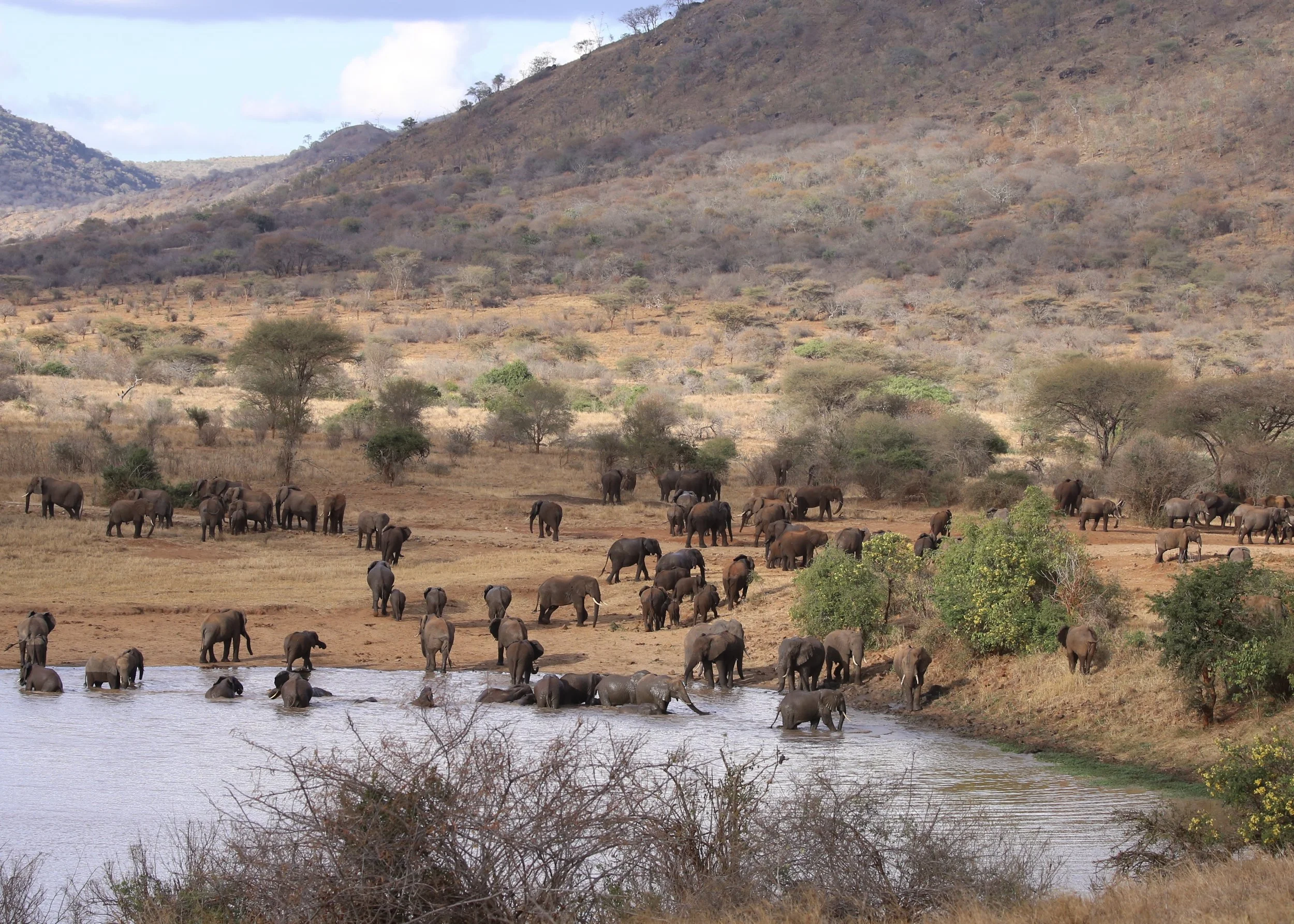
Elephants in Mkomazi are uniquely adapted to semi-arid conditions, often traveling long distances to find water and food. Lions, cheetahs, leopards, and hyenas are present but less dense than in the Serengeti, which provides more natural and undisturbed predator-prey interactions. Herbivores such as Grevy’s zebras, giraffes, oryx, impalas, and Grant’s gazelles are common, particularly near seasonal rivers where vegetation is lush during the wet season.
Birdlife
Birdwatching in Mkomazi is extraordinary, with over 400 recorded species. The park’s semi-arid and riverine habitats attract both resident and migratory birds. Notable species include the rare Taita falcon, various vultures, secretary birds, and colorful bee-eaters. Birders visiting Mkomazi can enjoy extended observation periods and capture high-quality images of endemic and migratory birds alike.
Landscapes and Scenic Beauty
Unlike Tanzania’s typical savannah parks, Mkomazi offers a semi-arid, rugged, and visually dramatic landscape. Rolling plains, rocky outcrops, seasonal riverbeds, and scattered acacia trees create varied terrain ideal for both wildlife viewing and photography. During the dry season, golden grasses and dusty paths offer classic African vistas, while the wet season transforms the plains into a lush green canvas, attracting migratory birds and vibrant wildlife activity.
The park’s hills and escarpments provide elevated viewpoints for panoramas, while riverine forests and small wetlands serve as concentrated wildlife hotspots. Photographers benefit from unobstructed views and the ability to capture wildlife in natural, undisturbed habitats without the interference of tourist traffic. Sunrises and sunsets over the semi-arid landscape create iconic African safari imagery, with long shadows, warm golden light, and dramatic skies enhancing the scene.
Seasonal Safari Experiences
Mkomazi’s wildlife and landscape experiences are heavily influenced by seasonal changes.
- Dry Season (June–October): This is the ideal time for game viewing. Water becomes scarce, causing animals to congregate near rivers and waterholes. Black rhinos, elephants, and lions are easier to spot, and trails are firm for vehicle and walking safaris. Early mornings and late afternoons offer excellent photographic conditions, with crisp light and dramatic shadows.
- Wet Season (November–May): The rains rejuvenate the vegetation, turning the plains green and rivers full. Wildlife disperses more widely, requiring more patience to track, but the wet season rewards photographers with lush scenery, reflective water bodies, and migratory birds. The wet season also showcases breeding activity for many species, adding behavioral diversity to safari experiences.
Trekking and Walking Safaris
Unlike more commercialized parks, Mkomazi emphasizes walking safaris as a way to immerse visitors in the wilderness. Guided walks allow tourists to observe smaller mammals, track wildlife footprints, and explore riverine forests up close. Walking safaris also enhance the safari experience by providing intimate encounters with the flora and fauna, revealing the park’s ecological complexity beyond the typical game drive.
Treks along the seasonal rivers showcase birdlife, reptiles, and small mammals, while hill climbs provide panoramic views of the park and neighboring Kenyan landscapes. These experiences are educational, as guides share knowledge about animal behavior, survival strategies in semi-arid environments, and the importance of habitat conservation.
Conservation and Community Engagement
Mkomazi is an exemplary model of conservation integrated with local communities. The park works closely with Maasai pastoralists, the dominant indigenous group in the region, to reduce human-wildlife conflict and promote sustainable livelihoods. Programs include community-led anti-poaching initiatives, livestock management strategies to prevent overgrazing, and eco-tourism training for local guides.
The African Wildlife Foundation and other conservation organizations have played a critical role in species translocation, black rhino restoration, and ecological monitoring. By combining community development and wildlife protection, Mkomazi has become a case study in sustainable conservation practices.
Visitors contribute directly to these initiatives through park fees and eco-tourism activities, ensuring that wildlife protection and community development are financially sustainable. This approach fosters long-term stewardship of the park’s natural resources and enhances the visitor experience by allowing tourists to learn about the human dimensions of conservation.
Accommodation Options
Mkomazi offers a range of accommodations tailored to different traveler preferences:
- Luxury Lodges: Provide comfort, fine dining, and safari packages, often with private terraces overlooking the plains. Ideal for photographers and travelers seeking high-end experiences.
- Mid-Range Lodges: Offer comfortable rooms, guided tours, and communal dining options for visitors seeking good value.
- Eco-Camps and Tented Camps: Immersive, community-run accommodations that place visitors close to wildlife and natural habitats. These camps are ideal for nature enthusiasts and conservation-minded travelers.
Staying within or near the park allows early access for morning game drives, birdwatching, and walking safaris. It also maximizes photographic opportunities and enables visitors to witness dawn and dusk wildlife activity.
Photography in Mkomazi
Photographers visiting Mkomazi can capture a unique combination of semi-arid landscapes, rugged terrain, and rare wildlife. The park’s open plains, acacia trees, and rocky outcrops offer compositional variety, while low visitor density allows for uninterrupted photography sessions. Wildlife subjects such as black rhinos, African wild dogs, and Grevy’s zebras provide dynamic and engaging content, while bird photography is enhanced by the park’s diverse avian population.
Lighting in Mkomazi is exceptional, particularly during early mornings and late afternoons, producing warm golden tones ideal for both landscape and wildlife photography. Misty mornings during the wet season add drama, creating moody and atmospheric images.
Suggested Safari Itinerary
For a 3-day Mkomazi safari:
Day 1 – Arrival and Afternoon Game Drive:
Arrive at the park, check into accommodation, and enjoy an introductory game drive exploring the semi-arid plains and riverine areas.
Day 2 – Full-Day Wildlife and Walking Safari:
Morning walking safari along riverbeds and bush trails. Observe elephants, rhinos, and birdlife. Afternoon game drive to higher elevations and rocky outcrops for panoramic photography.
Day 3 – Conservation Experience and Departure:
Visit community conservation projects, engage with Maasai cultural programs, and learn about anti-poaching initiatives. Optional short morning drive before departing for Arusha, Moshi, or Nairobi.
Longer itineraries can combine Mkomazi with nearby parks such as Amboseli in Kenya or Tarangire and Serengeti in Tanzania, offering a comprehensive East African safari experience.
Accessibility
Mkomazi is accessible via road from Arusha (approximately 6–7 hours) or via flights to nearby airstrips with charter options. The park’s remoteness contributes to its untouched wilderness feel but requires careful logistical planning, particularly for first-time visitors. Guided tours are recommended to ensure safety and optimize wildlife viewing.
Conclusion
Mkomazi National Park stands out as one of Tanzania’s hidden wildlife gems. Its unique semi-arid landscapes, rugged terrain, and remote location provide a raw and authentic safari experience. Rare species such as African wild dogs, black rhinoceros, and Grevy’s zebras make it an ecologically significant destination, while walking safaris, volcanic hill climbs, and riverine exploration offer immersive adventure.
The park’s integration of conservation, community engagement, and eco-tourism creates a sustainable model that benefits both wildlife and local people. For photographers, nature enthusiasts, and travelers seeking solitude and authenticity, Mkomazi delivers an unparalleled safari experience that contrasts dramatically with more commercialized destinations. From observing endangered species in their natural habitats to capturing breathtaking landscapes and engaging with local Maasai communities, Mkomazi National Park promises memories that last a lifetime.