



Stone Town Zanzibar Food Tour: The 10 Dishes You Must Try
A visit to Zanzibar is not complete without trying its food. The island has been a meeting point for traders from parts of the world like Arabia, Persia, India, Portugal, and Africa for a very long time. Each of these cultures brought their way of cooking, spices, and recipes that are still used today. When you walk through Stone Town, you can smell grilled seafood, fresh bread, coconut curries, and spices in the air. Every corner has something to try.
A Stone Town Zanzibar Food Tour is more than eating meals. It also tells you about the island’s history through its food. Local guides will explain where the ingredients come from, why some spices are more valuable, and how families in Zanzibar have been preparing their recipes for a long time.
Stone Town is a place recognized by UNESCO, but what many visitors love just as much are its food traditions. Whether you like seafood, vegetarian meals, desserts, or tropical fruits, Stone Town has flavors that show its diverse history.
Why Stone Town Is East Africa’s Culinary Capital
Stone Town is the center of Zanzibar’s spice trade. For a time, merchants brought spices like cloves, cinnamon, cardamom, black pepper, nutmeg, turmeric, and vanilla through its port. These spices made the cooking special and different from anywhere else in East Africa.
Food sellers start preparing meals in the morning. Fresh fish comes directly from fishing boats, and markets get vegetables, fruits, herbs, and coconuts. By the afternoon, restaurants and street vendors are busy serving people.
Unlike tourist places where you find international food, Stone Town still celebrates its own home cooking. Small family restaurants prepare meals using recipes that have not changed for generations.
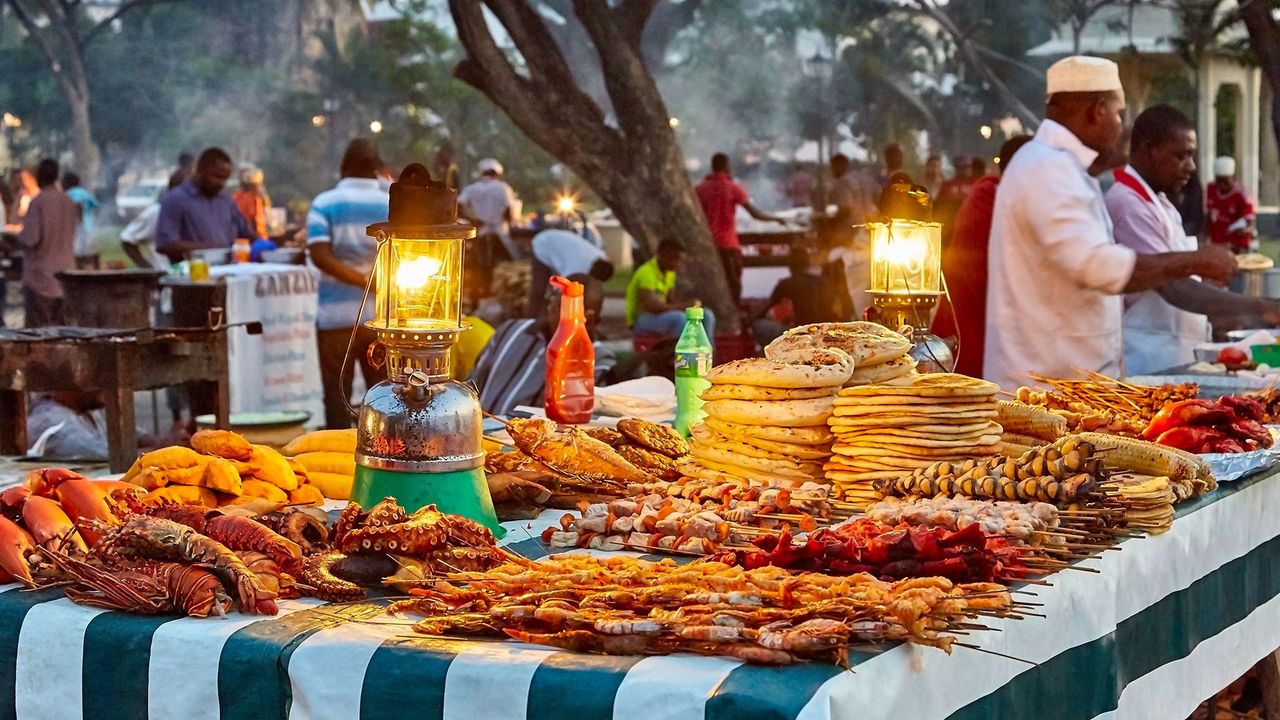
Traditional Zanzibar seafood dishes served on a Stone Town restaurant table with local spices
1. Zanzibar Pizza
Zanzibar Pizza does not taste like pizza at all.
The dish starts with dough stretched on a hot pan. Then it is filled with minced beef, chicken, vegetables, eggs, cheese, onions, and spices. The dough is folded into a shape and fried until it is crispy outside and soft inside.
Some people like versions of Zanzibar Pizza. These may have bananas, mangoes, chocolate, Nutella, or fresh coconut.
Many visitors try Zanzibar Pizza for the first time at Forodhani Gardens during the evening food market. Skilled vendors prepare each order in front of you.
2. Octopus Curry
Fresh octopus is a specialty seafood in Zanzibar.
The meat is cooked slowly until it is tender. Then it is mixed with coconut milk, tomatoes, onions, garlic, ginger, turmeric, and local spices. The creamy coconut sauce balances the flavor of the octopus.
Octopus curry is usually served with steamed rice, chapati, or flatbread. This helps soak up every drop of the sauce.
Restaurants often buy octopus directly from fishermen. This ensures that the octopus is very fresh every day.
3. Urojo Soup
Locals call Urojo “Zanzibar Mix”. It is one of the island’s street foods.
This colorful soup has potatoes, crispy bhajias, cassava, boiled eggs, coconut chutney, mango sauce, lime juice, chili, and crunchy snacks. Some vendors add grilled meat or seafood.
The result is a bowl with textures and flavors. You can taste spicy, tangy, and savory elements.
Every vendor has a different recipe. This makes it more fun to try than one version during your stay.
4. Pilau Rice
Pilau rice shows Zanzibar’s spice heritage perfectly.
The rice is cooked slowly with cloves, cinnamon, cumin, cardamom, black pepper, garlic, onions, and stock. Some recipes have beef, chicken, or vegetables. Others keep the dish simple to go with seafood curries.
Unlike rice, every bite of pilau rice has many aromatic spices. It is not too hot.
Pilau rice is often served at weddings, festivals, religious celebrations, and family gatherings. It is a part of local culture.
5. Mishkaki
Mishkaki is made of meat skewers grilled over charcoal.
Beef is the common option, but you can also have chicken and seafood. The meat is marinated with garlic, ginger, lime juice, chili, and local spice blends.
The smoky smell attracts visitors before they reach the food stall.
Mishkaki goes well with salad, chapati, or spicy sauces. It is an evening snack while exploring Stone Town.
6. Grilled Seafood
Zanzibar is surrounded by the Indian Ocean. This means fresh seafood is available all year round.
You can enjoy lobster, prawns, calamari, kingfish, tuna, snapper, barracuda, or crab. The type of seafood depends on the catch.
Most restaurants serve seafood over charcoal with garlic, butter, lime, and light spice seasoning.
This cooking method keeps the taste and adds a gentle smoky flavor.
Many restaurants show their catch. This way, guests can choose what they want before it is cooked.
7. Coconut Bean Curry
Vegetarians will like this local dish.
Red beans simmer in coconut milk with tomatoes, onions, garlic, turmeric, coriander, and cloves. The result is a filling dish with protein and flavor.
It is often served with rice, chapati, or ugali.
Coconuts are widely used in cooking. This is because coconut palms are abundant on the island.
8. Sugarcane Juice
Stone Town’s tropical climate makes fresh sugarcane juice very refreshing.
Vendors feed cut sugarcane through traditional presses. They may add lime, ginger or lemon to create a sweet drink.
Unlike soft drinks, sugarcane juice has no artificial flavors.
Watching vendors operate the hand-powered or electric presses is part of the experience.
9. Fresh Tropical Fruits
The island grows tropical fruits because of its warm climate.
You can enjoy mangoes, pineapples, passion fruits, jackfruit, coconuts, papayas, bananas, watermelons, guavas, and oranges. The type of fruit depends on the season.
Fruit vendors often slice fruit fresh while you wait.
Some food tours include stops at fruit markets. Guides explain how each fruit is grown and harvested.
Fresh coconut water from coconuts is another refreshing option.
10. Zanzibar Spice Tea
A cup of spicy tea is a great way to end a culinary experience.
Black tea is brewed with cloves, cinnamon, ginger, cardamom, and sometimes black pepper. Then milk and sugar are added.
The drink gives you warmth, fragrance, and gentle sweetness.
Many local families serve spice tea with pastries during breakfast or afternoon gatherings.
The combination shows Zanzibar’s connection with the global spice trade.
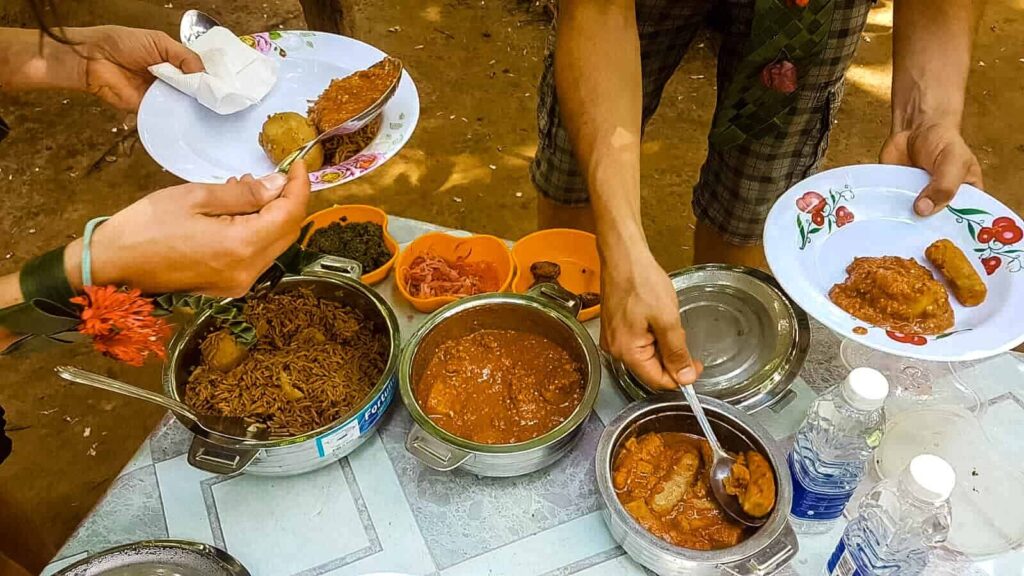
Fresh Zanzibar pizza, seafood, tropical fruits, and spice tea beautifully arranged on a traditional table
Best Places to Experience Local Cuisine
When you are in Zanzibar, you should start your food adventure at the evening market in Forodhani Gardens. This market is really something. As the sun sets over the Indian Ocean, you will see lots of food stalls selling all sorts of things like grilled seafood, Zanzibar Pizza, mishkaki, sugarcane juice, and fresh desserts.
Another great place to try food is Darajani Market. You can go there during the day. See people buying vegetables, spices, seafood, meat and fruits. You can learn how people in Zanzibar use these ingredients to make dishes.
There are also lots of family-owned restaurants in Stone Town that serve really good food. These restaurants are hidden away in the streets, but they are worth finding. You can eat there. Talk to the local chefs about how they make their food.
Tips for Enjoying a Food Tour
Make sure you are hungry when you start your food tour because you will get to try lots of dishes.
You should wear shoes because you will be walking around Stone Town.
It is a good idea to bring some water with you, especially if it is hot.
If you have any food allergies, you should tell your guide before you start the tour. They can help you find things that you can eat.
Do not be afraid to ask questions about the food. The guides like to talk about the history of the dishes.
Try a bit of everything, but do not eat too much at one time. This way you can try things.
The Role of Spices in Every Meal
Spices are a part of the food in Zanzibar.
Cloves make the food warm and sweet. Cinnamon makes it smell good. Cardamom gives it a bit of citrus flavor. Turmeric makes the food yellow, and ginger makes it fresh and spicy. Black pepper and cumin add depth to the food.
You will see these spices in lots of dishes like rice, curries, teas, grilled meats, desserts, and even some fruits.
Some people like to visit the spice farms to see how these spices are grown.
Creating Lasting Memories Through Food
The food in Zanzibar is one of the things that people remember the most. Every meal is like a story about the people who lived there a long time ago.
A food tour is a way to learn about the local culture and meet the people who make the food. You can try all sorts of dishes and learn about the history behind them.
Whether you like grilled seafood, sugarcane juice, or spicy tea, you will find something you like in Zanzibar.
If you like trying foods, you should definitely go on a food tour in Stone Town. You will learn a lot about the culture and the food. You will have a lot of fun. By the time you leave, you will understand why the food tour is one of the things to do in Zanzibar.


