


Selous Boat Safari: The Best River Wildlife Experience in Tanzania
When you think about Tanzania’s wildlife, you probably think about going on a safari.. There is a better way to see the animals. You can take a boat. Go down the river.
This is a way to see the wildlife because you can go really slow and see everything. You can notice all the things that you would miss if you were in a car. Every time the river bends, you see something. You might see elephants cooling off in the water or crocodiles sitting in the sun. You might even see birds flying above the trees.
The Selous Boat Safari is a way to see Tanzania’s wildlife. It is different from safaris because you are not just watching the animals from a car. You are actually part of the landscape. The boat moves slowly and quietly so you can hear the water and see all the animals. This is an experience that you will never forget.
A Different Side of Tanzania’s Wildlife
People who visit Tanzania go to the Serengeti or the Ngorongoro Conservation Area. These are places to see animals, but they are always crowded. If you go to Tanzania, you can see just as many animals, but there will be fewer people.
The Nyerere National Park is one of the protected areas in Africa. It has forests, wetlands, rivers, and plains. The Rufiji River is the heart of the park. It is home to all sorts of animals.
The river is what makes this place so special. It creates homes for all the animals. They come from all around to drink and eat. When it is dry, the river is more important, and you can see all sorts of animals coming to the water.
When you are on the river, you can see the animals doing what they normally do. They are not scared of you, so you can watch them. Take pictures.
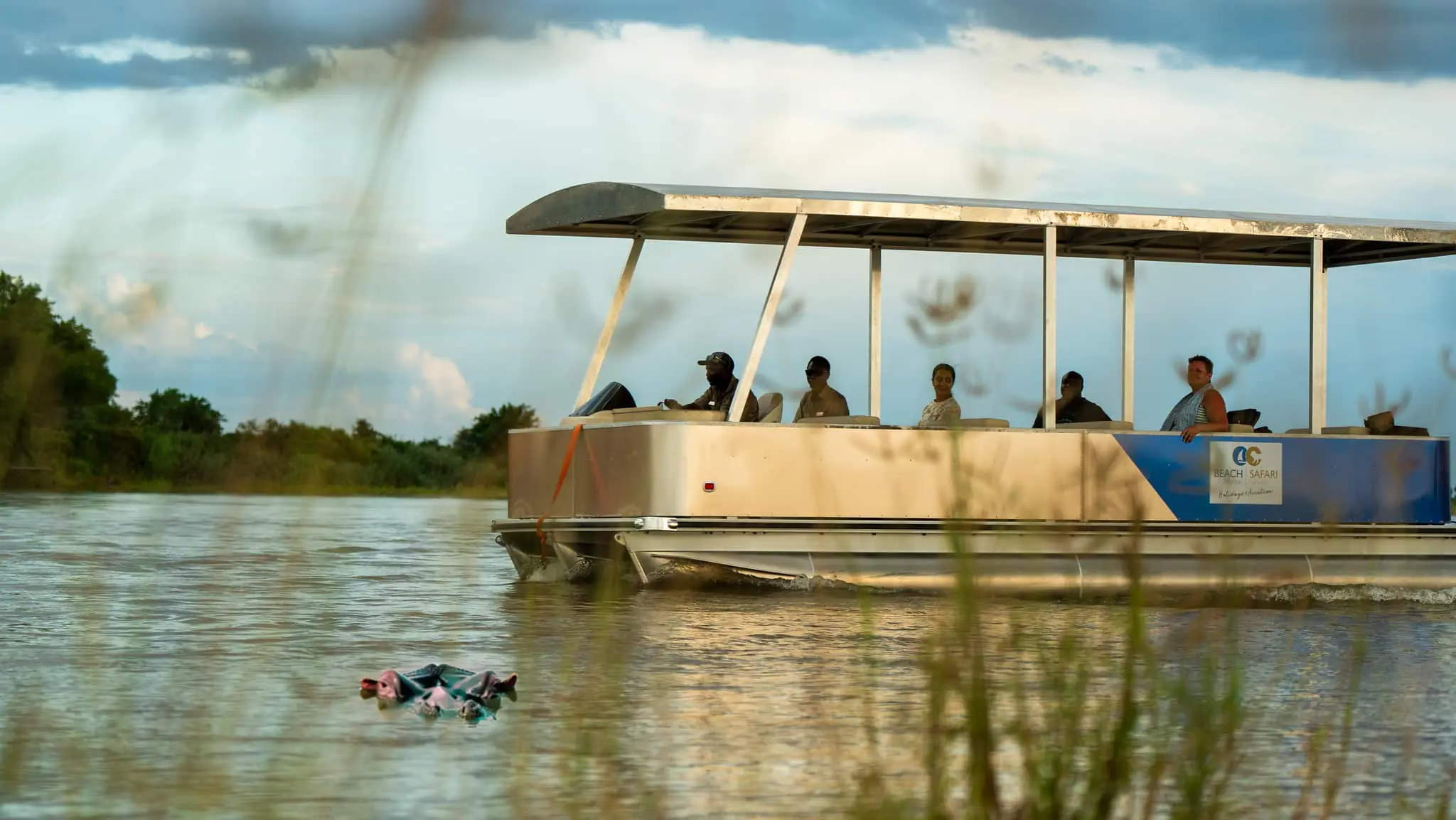
Boat safari passing elephants drinking beside the Rufiji River in the southern Tanzania wilderness.
Why Boat Safaris Feel Different
When you are on a boat safari, you feel like you are part of the environment. You are not just looking out the window of a car. You can see everything around you.
You can hear the birds and the water. The boat moves smoothly so you can talk quietly and watch the animals.
The animals are not scared of the boat, so they just keep doing what they are doing. This is great for taking pictures and watching the animals.
The guides on the boat can tell you all about the environment and the animals. They can show you birds in the trees and animal tracks in the mud. They can explain how the river changes every year and how it affects all the animals. This is a way to learn about Tanzania’s wildlife and have a really special experience.
The Wildlife You Can Expect to See
The Rufiji River is really something because it has so many different kinds of animals. Every time you go out on the river it is a little different. You can usually see some of the same animals.
The elephants are one of the things to see. They come to the river with their families to drink water and take a bath. It is really fun to watch the little elephants play in the water while the older elephants keep an eye on them.
Sometimes you see big groups of buffalo standing along the river. They like to eat the grass that grows near the river. When the buffalo are around, you might see lions too. You have to be lucky to see the lions because they do not always come out.
You can not miss the hippos. They spend most of the day in the water with just their heads sticking out. Sometimes they make loud noises that you can hear across the water. When it starts to get dark, the hippos get out of the water. Go eat grass.
The Nile crocodiles like to lie in the sun on the banks of the river. They are really big. They can be hard to see because they blend in so well. The guides know where to look for the crocodiles so you can see them up close.
You also see a lot of kinds of antelope like impalas and waterbucks, when you are on the river. They come to the river to drink water and eat the plants that grow near the river.
A Great Place for People Who Like Birds
The Rufiji River’s one of the best places in Tanzania to see birds. There are hundreds of kinds of birds that live in the area around the river.
The African fish eagles are really easy to recognize. They make a lot of noise. They are very good at catching fish.
The kingfishers are really colorful and fun to watch. They fly back and forth between the trees. They are really fast. The bee-eaters are also very colorful. They like to fly around in big groups. The herons and egrets like to stand in the water and catch fish.
Many different kinds of birds live near the Rufiji River. Even if you do not really like birds, you will probably still think they are really interesting.
The best time to see birds is early in the morning or late in the afternoon. This is because the birds are more active when it is not too hot.
The Rufiji River is Really Beautiful at Sunrise and Sunset
Some of the best times on the river are when the sun is coming up or going down. The light is really beautiful. It makes the river look very special.
When you go out on the river in the morning, the sun is just starting to rise. The mist is still rising off the water. The birds are starting to sing. The water is very calm. It reflects the trees and the sky. This is a time to take pictures.
In the evening, the river is very different. The sun is. The sky is turning pink and orange. The elephants are coming back to the river to drink water. The hippos are starting to come out of the water. When it starts to get dark, you can hear all the noises of the animals in the wild. This is a peaceful and special time.
A lot of people say that these quiet times on the river are a part of their trip to Tanzania. The Rufiji River is really something. The wildlife you can see is amazing. The Rufiji River is a place to visit.
Photography from a New Perspective
Photographers love boat safaris because they offer angles that you can’t get during traditional game drives. When you shoot close to the water, you get reflections and compositions.
* Animals coming to the river naturally face the water, giving you a chance to capture behavior instead of startled reactions. You can take photos of elephants, birds, and trees reflected in the water, which adds depth and interest to your pictures.
* The morning and evening light makes photography even better, reducing harsh shadows and producing rich natural colors.
Patience is key. The best photos often come from waiting while wildlife behaves naturally instead of rushing between sightings. You need to slow down and wait for the shot.
Learning About the River Ecosystem
A river safari is more than spotting big animals. It helps you understand how all the species in the ecosystem are connected.
* The Rufiji River supports fish that feed birds, crocodiles and local communities. When the river floods, it makes the nearby grasslands better for herbivores, which in turn helps predators survive.
* Guides explain how plants help keep the riverbanks stable, how hippos affect the water, and why wetlands are important for bird species.
These lessons help you understand that conservation is about protecting ecosystems, not just individual animals.
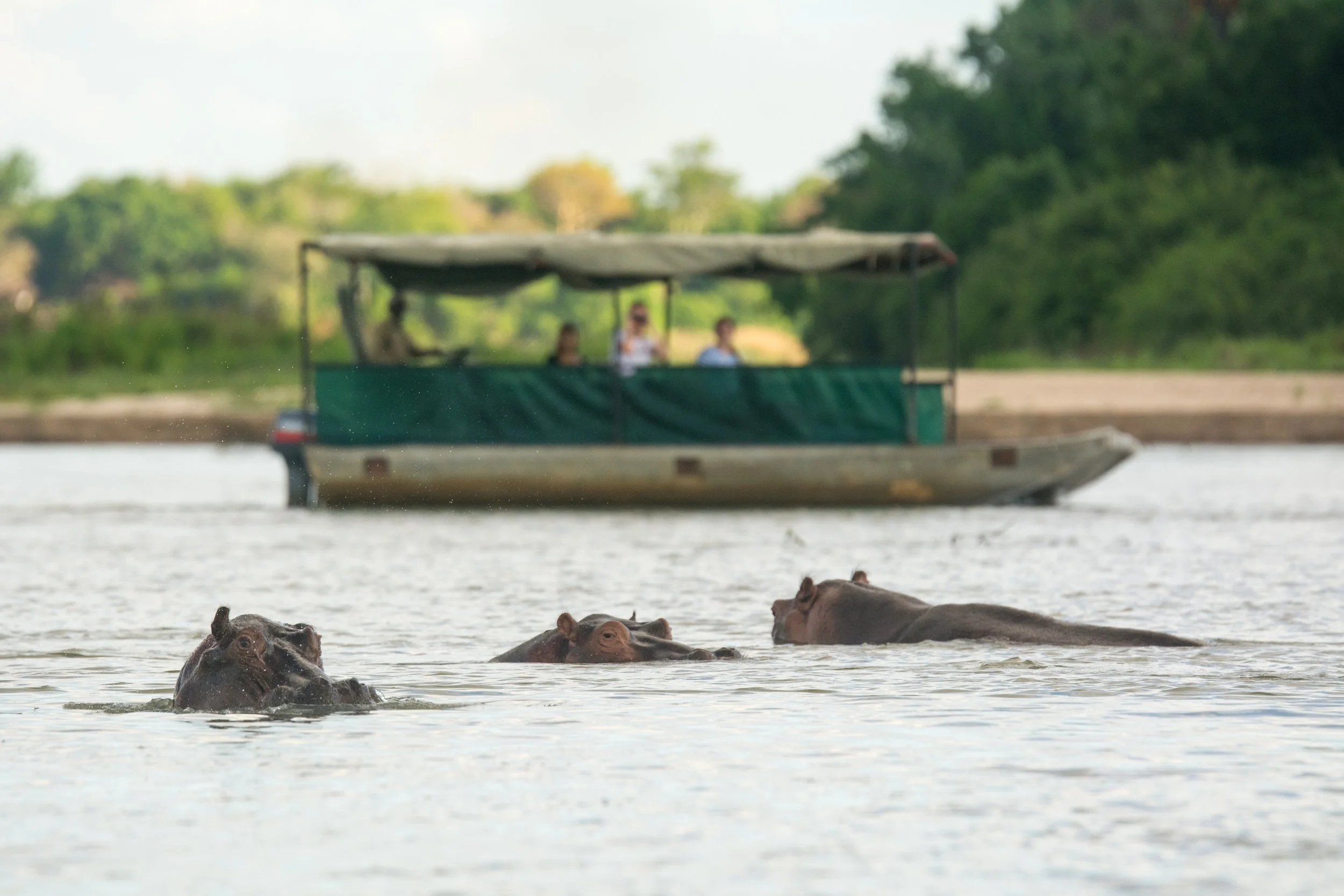
Boat safari cruising past hippos and crocodiles on the Rufiji River peacefully.
Responsible Tourism Supports Conservation
Visiting protected areas in a way helps conserve wildlife and supports local communities. Tourism money helps fund conservation efforts and community projects.
* Professional safari operators follow rules to minimize disturbance to wildlife. They keep boats at a distance, guides don’t stress animals, and visitor numbers are carefully managed.
Choosing tourism means you’re helping to preserve the wilderness for future generations.
Many nearby communities benefit from tourism through jobs, guiding services, and the sale of goods. Sustainable tourism creates incentives to protect wildlife.
Planning Your River Safari
The season from June to October is great for wildlife viewing because animals gather around permanent water sources. The vegetation is less dense, making it easier to spot animals from the river and surrounding banks.
The green season brings a kind of beauty with fresh vegetation, migratory birds, and dramatic skies. While wildlife may be spread out, the environment feels vibrant and full of life.
You can combine boat safaris with game drives and guided walking safaris to experience the wilderness from different perspectives.
Wear comfortable clothing in neutral colors. Bring a hat, sunscreen, binoculars, and a camera with batteries. It can get cooler in the evenings, so a light jacket is an idea.
A Journey That Stays With You
The best part of a river safari is slowing down. Letting nature set the pace. The gentle movement of the boat helps you notice details you might miss during travel.
Selous Boat Safari offers these moments, reminding you that unforgettable adventures are often built on patience. Every hour, the Rufiji River reveals another reason why southern Tanzania’s one of Africa’s finest wilderness destinations.
For travelers seeking an experience that combines wildlife, peaceful surroundings, breathtaking scenery, and meaningful conservation, Selous Boat Safari stands apart as an adventure that continues to inspire long after the journey ends.
Its quiet beauty, wildlife, and timeless rhythm remind you that some of the world’s greatest travel memories are found not on busy roads but on calm waters flowing through an untamed landscape.


