


Ol Pejeta Conservancy: Home to the Two Northern White Rhinos
Ol Pejeta Conservancy is a special place. It is home to the two white rhinos. Not many places in Africa can say they do a job of combining conservation, adventure, and education like Ol Pejeta Conservancy does. Ol Pejeta Conservancy is located on the Laikipia Plateau in Kenya. This place is known around the world for protecting animals that are in danger and for giving people amazing safari experiences.
When you visit Ol Pejeta Conservancy, you are helping to save animals that might not be around much longer. Ol Pejeta Conservancy is set against the backdrop of Mount Kenya. It covers 90,000 acres of grasslands, woodlands, wetlands, and riverine forests. All these different types of land are home to different kinds of animals. This makes Ol Pejeta Conservancy one of the places in Kenya to see wildlife.
Every time you go on a game drive, you might see elephants, lions, leopards, cheetahs, giraffes, buffaloes, zebras, and many different kinds of birds. What makes Ol Pejeta Conservancy really special is that it is about conservation. The people who run Ol Pejeta Conservancy do not just focus on tourism. They use the money from visitors to help protect animals that’re in danger, to learn more about them to stop people and animals from coming into conflict with each other, and to make life better for the people who live nearby.
A Conservancy Built on Conservation
This makes your safari experience more meaningful because you are helping to preserve the natural beauty of Africa for future generations. Ol Pejeta Conservancy is an example of how conservation can work. It used to be a cattle ranch. Now it is a protected area for wildlife. The people who run Ol Pejeta Conservancy have found a way to balance conservation with taking care of livestock.
Today, many wild animals roam freely at Ol Pejeta Conservancy alongside the cattle. This shows that it is possible for wildlife conservation and responsible farming to work together. The cattle help keep the grasslands healthy. They also make money that helps support conservation programs. The people who manage Ol Pejeta Conservancy keep an eye on the animals, the land, and the security of the area.
They work hard to make sure all the animals are safe. Many people visit Ol Pejeta Conservancy to see Najin and Fatu, the two northern white rhinos in the world. Their story is very sad. It also shows how determined people are to save animals that are in danger.
Meeting the World’s Last Two Northern White Rhinos
For a time, people hunted northern white rhinos and destroyed their homes. With help from around the world, there are only two of these rhinos left. Now they live at Ol Pejeta Conservancy, where they are protected all the time. Visitors can take guided tours to see these animals from a distance and learn about all the work that is being done to save them.
The guides tell you all about the history of the white rhinos, the problems they faced, and the scientific work that is being done to save them. Seeing these animals up close can be an emotional experience. Many people leave Ol Pejeta Conservancy with an appreciation for conservation and a sense of responsibility to help protect animals that are in danger.
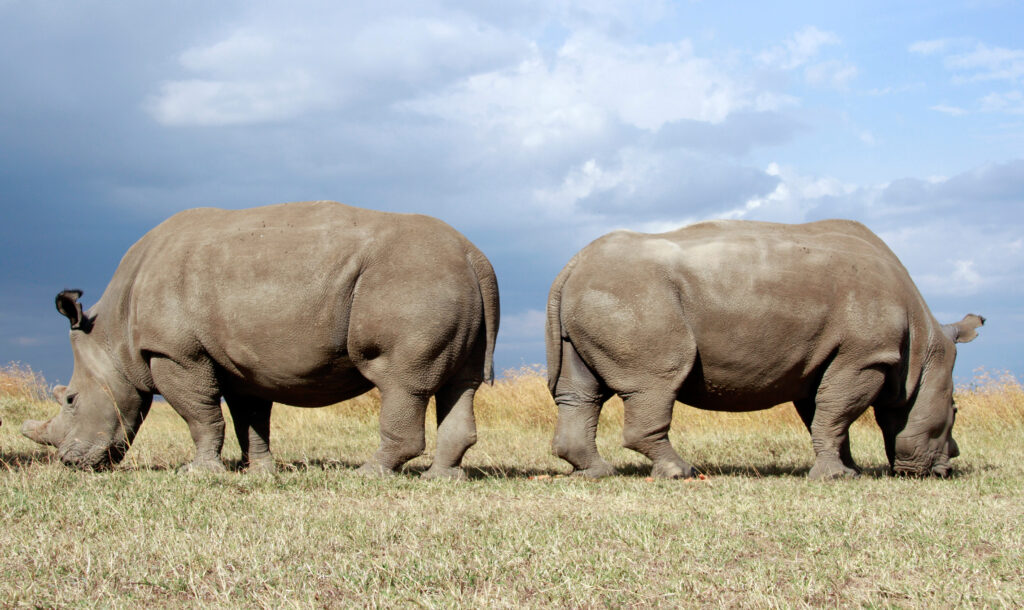
Ol Pejeta Conservancy’s northern white rhino grazing peacefully across Kenya’s protected wildlife reserve grasslands
Successful Black Rhino Conservation
Ol Pejeta has done a job with black rhino conservation. They have the black rhino sanctuary in East Africa. The endangered animals are doing well. Their numbers are growing.
Black rhinos were in trouble because people were killing them for their horns. Ol Pejeta protected them, bred them carefully, and fixed their homes. Now their population is growing steadily.
When you go on a game drive, you can see these animals eating grass on the open plains or eating leaves from bushes. Seeing black rhinos shows that conservation efforts can really work.
Exceptional Wildlife Beyond the Rhinos
Ol Pejeta has lots of wildlife besides rhinos. You can have a safari experience and see many different animals throughout the year.
Big herds of elephants roam the grasslands. You can see playful baby elephants learning to walk and move around.
Buffaloes gather near water. Giraffes eat leaves from trees on the plains.
Predators are everywhere in the conservancy.
Lions protect their territories.
Leopards rest in trees during the day.
Cheetahs look for food on the plains.
African wild dogs show up sometimes. If you’re lucky, you can see one of the predators in Africa.
Other animals like spotted hyenas, jackals, and bat-eared foxes make the conservancy more diverse.
Bird lovers can see over 300 kinds of birds. These include crowned cranes, African fish eagles, and colorful rollers.
Memorable Safari Activities
People love Ol Pejeta because there’s much to do besides the usual game drives.
Morning safaris start before sunrise. This is when predators are active, and the light is great for photos.
Evening drives show a side of the conservancy. Nocturnal animals come out at night.
You can also go on night game drives.
This is when you can see animals like aardwolves, bush babies, and porcupines.
They are hard to see during the day.
Guided bush walks let you experience nature up close.
Guides teach you about animal tracks, plants, insects, and birds.
You learn about how everything works in the ecosystem.
Photography is great here.
The open landscapes make it easy to take photos.
You can get shots without trees getting in the way.
The Sweetwaters Chimpanzee Sanctuary
The Sweetwaters Chimpanzee Sanctuary is a part of Ol Pejeta.
It’s the place in Kenya where you can see rescued chimpanzees.
The sanctuary is home to chimpanzees rescued from situations.
Veterinary experts and animal caretakers take care of them for their lives.
Visitors learn about chimpanzee behavior and conservation efforts.
Watching rescued chimpanzees interact is an experience like seeing wildlife.
It shows a side of conservation.
Supporting Local Communities
Wildlife conservation works when local communities benefit too.
Ol Pejeta invests in community development.
They support education, healthcare, and jobs.
The conservancy helps schools. Gives scholarships.
They improve healthcare for villages.
Many employees come from communities.
This creates jobs and builds local expertise.
Community programs also help farmers.
They learn to protect their animals and crops from wildlife.
These partnerships help protect wildlife in the run.
The Best Time to Visit
Wildlife viewing is good all year round because animals stay in the protected conservancy and do not travel far.
The dry seasons, which are from June to October and January to February, are great for seeing animals because they gather near water and there is vegetation.
The rainy seasons make the landscape green. The skies look dramatic. It is also a time for birdwatching. Many animals have babies during these months, so you can see them.
Photographers like the scenery after the rains, and there are visitors making the safari experience quieter.
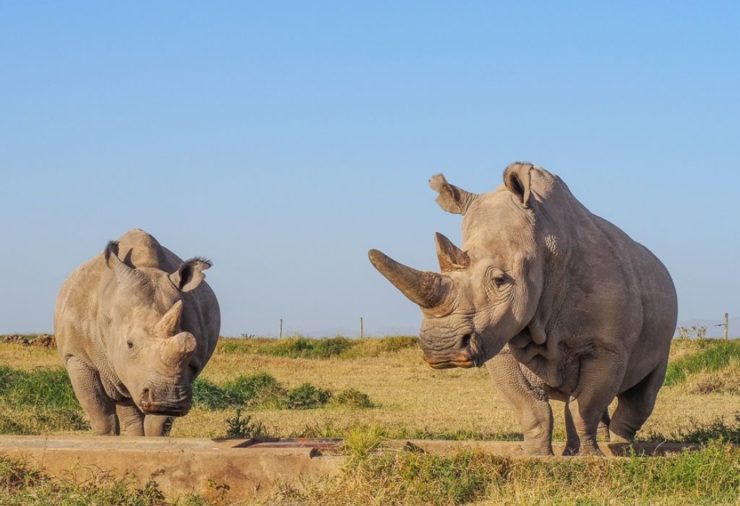
Two northern white rhinos are resting safely within Ol Pejeta Conservancy under ranger protection today
Where to Stay
There are places to stay for all budgets and travel styles. Luxury lodges have rooms, good food, spa services, and great views of wildlife. Mid-range camps are comfortable. Have a real safari feel. Budget-friendly options make it possible for more people to visit.
Many places to stay have views of waterholes or open plains, where you can see elephants, zebras, antelopes, and buffaloes every day.
Some places focus on being environmentally friendly, using energy-saving water, employing local people, and operating responsibly.
Responsible Tourism Makes a Difference
Every visitor helps conservation efforts by paying park fees, staying in accommodations, doing guided activities, and donating to conservation.
This money helps with poaching patrols, taking care of animals, research, restoring habitats, training rangers, community projects, and breeding programs for endangered species.
Responsible tourism shows that wildlife is more valuable when alive than when it is used illegally. Each safari helps create incentives for protecting natural ecosystems instead of turning them into farms or industrial land.
Visitors can also help by respecting wildlife viewing guidelines, not littering, following guide instructions, and learning about species.
Planning Your Visit
Ol Pejeta is three to four hours from Nairobi, making it good for short visits or longer safaris. Many people visit Ol Pejeta and other places like Samburu National Reserve, Lake Nakuru National Park, Maasai Mara National Reserve, or Aberdare National Park to see Kenya’s wildlife regions.
Packing light colored clothes, comfortable shoes, sunscreen, binoculars, a camera, insect repellent, and a reusable water bottle will make your safari comfortable. It can be cool in the mornings and evenings, so a light jacket is useful.
Professional guides accompany activities, sharing knowledge about animal behavior, conservation efforts, local ecology and the history of the conservancy. Their expertise makes wildlife sightings memorable. Helps you understand Africa’s biodiversity.
Ol Pejeta Conservancy: Home to the Two Northern White Rhinos is more than a safari destination. It represents hope, determination, and the idea that conservation can protect Earth’s endangered wildlife. Every visit supports the mission to preserve species that might disappear forever while creating memories in some of Kenya’s most spectacular landscapes.


