
Mgahinga Gorilla National Park: Uganda’s Volcanic Wildlife and Cultural Haven
Mgahinga Gorilla National Park, located in Uganda’s southwestern corner, is the country’s smallest national park, covering just 33.7 square kilometers. Despite its size, it is one of the most biodiverse and scenically stunning destinations in East Africa. The park is part of the greater Virunga Conservation Area, which stretches across Uganda, Rwanda, and the Democratic Republic of Congo, making it a critical stronghold for mountain gorillas and golden monkeys. Its volcanic terrain, dense montane forests, bamboo zones, and afro-alpine habitats provide both wildlife and adventure experiences unmatched in other regions.
Visitors are drawn to Mgahinga not only for the chance to trek mountain gorillas and golden monkeys but also to hike volcanic peaks, photograph rare flora and fauna, and immerse themselves in the rich cultural traditions of the Batwa people. Unlike larger parks such as Bwindi Impenetrable Forest, Mgahinga offers a more intimate and less crowded trekking experience, allowing travelers to feel deeply connected to the forest and its inhabitants.
The park’s volcanic peaks—Mount Sabinyo, Mount Gahinga, and Mount Muhabura—create dramatic landscapes and trekking opportunities. Mount Sabinyo, often referred to as the “old man’s teeth,” marks the tri-border point of Uganda, Rwanda, and Congo. Mount Muhabura offers panoramic views of the Virunga landscape, including crater lakes, forested hills, and Rwanda’s rolling highlands, making it a photographer’s dream destination.
Mountain Gorilla Treks in Mgahinga
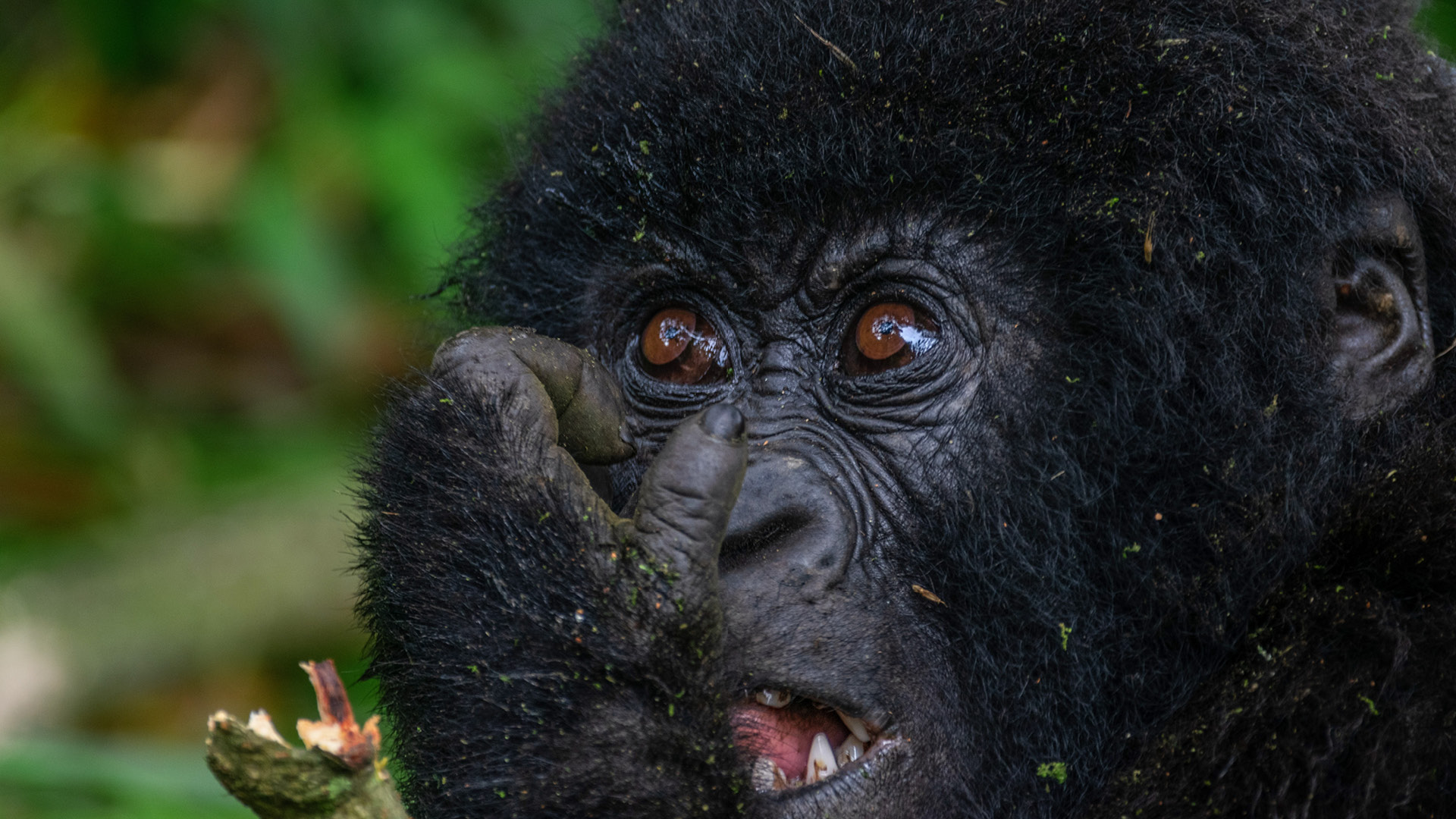
Mgahinga is home to habituated mountain gorilla families, including the well-known Nshongi group, which allows trekkers to observe these critically endangered primates in their natural habitat. Gorilla trekking in Mgahinga is unique because it is less crowded, giving visitors the chance to experience the forest and its inhabitants in a tranquil setting.
Mountain gorillas are known for their complex social structures, led by dominant silverbacks who protect their family groups and mediate social interactions. During the hour-long observation, visitors can witness intimate behaviors such as grooming, playful interactions among juveniles, and displays of communication through vocalizations and body language. Each gorilla encounter is an educational and emotional experience, providing insights into primate behavior, conservation, and the fragility of their montane forest environment.
The trekking experience varies depending on the gorilla group’s location, terrain, and daily activity. Trails often pass through dense forests with moss-covered trees, bamboo thickets, and winding streams, requiring moderate fitness. Unlike Bwindi, which has larger, steeper areas, Mgahinga’s compact terrain allows for shorter treks, making it suitable for first-time trekkers and those seeking a less strenuous adventure.
Golden Monkey Tracking
In addition to mountain gorillas, Mgahinga offers the rare opportunity to observe golden monkeys. These vibrant primates inhabit the park’s bamboo zones, and their playful, energetic behavior makes them a favorite among visitors. Golden monkey tracking is usually less demanding than gorilla trekking, allowing for a mix of wildlife observation and scenic hiking.
Golden monkeys feed primarily on bamboo, which makes them particularly vulnerable to habitat loss. Conservation efforts in Mgahinga focus on protecting bamboo forests to ensure the survival of these monkeys. Observing golden monkeys provides a complementary experience to gorilla trekking, offering insights into the park’s biodiversity and the importance of specialized habitats for endangered species.
Volcanic Landscapes and Hiking Opportunities
Mgahinga’s volcanic peaks are one of the park’s defining features. Each volcano offers a distinct trekking experience and spectacular views:
- Mount Sabinyo: Known as the “old man’s teeth,” this volcano forms the tri-point border between Uganda, Rwanda, and Congo. Trekking here is challenging but rewarding, with breathtaking views of the surrounding forest, distant crater lakes, and other volcanic peaks.
- Mount Gahinga: This dormant volcano offers moderate hiking and panoramic vistas of rolling hills and montane forests. Its slopes are covered with bamboo, and trekkers may encounter golden monkeys along the trails.
- Mount Muhabura: At 4,127 meters, Mount Muhabura is the highest peak in the park. Ascending it involves afro-alpine terrain, moss-laden forests, and occasional mist, providing exceptional photography opportunities. From the summit, trekkers can see the full expanse of the Virunga Conservation Area and Rwanda’s scenic highlands.
The volcanic terrain contributes to rich soils that support diverse flora, including giant lobelias, orchids, and endemic plants, offering a botanical treasure trove for visitors interested in nature photography. Sunrise and sunset hikes are particularly rewarding, with dramatic lighting enhancing the volcanic landscape and creating a magical atmosphere.
Birdlife and Biodiversity
Mgahinga Gorilla National Park is also a birdwatcher’s paradise, hosting over 180 species. The mix of afro-montane forests, bamboo, and volcanic slopes provides habitats for both endemic and migratory birds. Notable species include the Rwenzori turaco, mountain illadopsis, and various sunbirds.
In addition to primates and birds, the park supports elephants, buffalo, bushbucks, duikers, and a variety of small mammals. Despite its small size, Mgahinga’s biodiversity is remarkable, offering visitors the chance to experience a wide spectrum of East African wildlife in a compact area. Photographers often find unique opportunities to capture rare species against volcanic backdrops, moss-draped forests, and misty slopes.
Cultural Heritage and Community Experiences
Mgahinga is home to the Batwa people, one of Uganda’s indigenous communities. The Batwa historically lived as forest hunters and gatherers, and today they share their knowledge of the forest, traditional hunting methods, and crafts with visitors. Cultural walks and village visits allow tourists to engage with Batwa heritage while supporting sustainable tourism initiatives.
Tourism revenues from Mgahinga Gorilla National Park contribute to community development, education, and conservation programs. Visitors can witness the delicate balance between wildlife conservation and human livelihoods, gaining a deeper understanding of the social and ecological context of protected areas in Uganda.
Seasonal Considerations for Visiting Mgahinga
The park’s best visiting times are during the dry seasons, from June to September and December to February. Trails are firmer, wildlife sightings are more predictable, and trekking conditions are optimal. During the rainy seasons, March to May and October to November, the forest becomes lush, misty, and photogenic, though trails can be muddy and more challenging.
Dry season visits allow for easier access to gorilla trekking trails, volcano hikes, and golden monkey habitats. Rainy season visits, while more physically demanding, reward visitors with fewer crowds, vibrant green landscapes, and excellent birdwatching opportunities. Photographers often prefer the rainy season for its dramatic lighting, misty mornings, and reflections in forest streams.
Accommodation Options
Despite its small size, Mgahinga offers a range of accommodation options:
- Luxury lodges: These provide comfort, fine dining, and proximity to gorilla trekking starting points. Many lodges feature private terraces overlooking the forest and volcanoes.
- Mid-range lodges: Comfortable accommodations with essential amenities, offering guided tours and cultural experiences.
- Community and eco-camps: These provide immersive experiences close to nature, often run in partnership with local communities.
Staying within or near the park allows visitors to maximize early morning treks, enjoy sunset photography, and immerse themselves in the forest environment.
Trekking Etiquette and Tips
- Always follow ranger instructions during gorilla and golden monkey treks.
- Maintain a safe distance from primates and avoid direct eye contact, which can be interpreted as a threat.
- Avoid flash photography to prevent disturbing wildlife.
- Wear neutral-colored clothing to blend into the forest environment.
- Carry water, snacks, and walking sticks, especially for longer hikes and volcanic ascents.
- Respect local communities and cultural sites.
Conservation Significance
Mgahinga Gorilla National Park plays a vital role in the conservation of mountain gorillas, golden monkeys, and afro-montane habitats. Cross-border collaboration with Rwanda and Congo ensures habitat protection and anti-poaching efforts. Gorilla trekking fees contribute directly to conservation programs, supporting ranger patrols, ecological research, and community development initiatives.
Researchers use Mgahinga to study primate behavior, forest ecology, and the impacts of climate change on montane ecosystems. Visitors often learn about these conservation efforts during pre-trek briefings and guided tours, deepening their appreciation for the park’s ecological importance.
Photography Opportunities
Mgahinga offers some of the most rewarding photography experiences in Uganda. Mountain gorillas and golden monkeys provide dynamic wildlife subjects, while the volcanic landscapes create dramatic backdrops. Misty mornings, sunlit slopes, and afro-alpine vegetation add depth and texture to compositions. Photographers can capture close-up behavioral shots, panoramic landscapes, and intimate forest scenes all within a compact park. Bird photographers also benefit from over 180 species, including colorful turacos and sunbirds that inhabit different altitude zones.
Combining Mgahinga With Regional Safaris
Mgahinga is often included in multi-destination itineraries that cover Bwindi Impenetrable Forest, Queen Elizabeth National Park, and Rwanda’s Volcanoes National Park. These combinations allow travelers to experience Uganda’s montane gorillas, savannah wildlife, and cultural encounters in a single journey. The tri-country Virunga experience—including Congo’s Virunga National Park—offers adventurous travelers the opportunity to observe gorillas in diverse habitats while exploring volcanic landscapes and cross-border ecosystems.
Conclusion
Mgahinga Gorilla National Park may be Uganda’s smallest park, but it is a giant in terms of biodiversity, scenery, and adventure opportunities. From mountain gorilla trekking and golden monkey encounters to volcano hikes, rare flora, and cultural immersion, the park offers a compact yet comprehensive East African experience. Its combination of intimate wildlife encounters, dramatic volcanic landscapes, and rich cultural heritage makes it a must-visit destination for photographers, conservation enthusiasts, and adventure travelers.
Whether trekking through mist-laden forests, capturing golden monkeys at play, or ascending volcanic peaks for panoramic views, every moment in Mgahinga offers memories that last a lifetime. The park’s careful balance of conservation, tourism, and community engagement ensures that visitors contribute to protecting one of the planet’s most iconic and endangered species while experiencing the awe-inspiring beauty of Uganda’s southwestern highlands.