

What Should I Know About Road Conditions During the Rainy Season?
Drive Safely in Rain, The rainy season brings much-needed relief from heat and drought, but it also presents significant challenges for drivers. Wet weather affects road conditions, visibility, and vehicle performance, increasing the risk of accidents. Understanding how rain impacts roads and knowing how to drive safely in such conditions can prevent mishaps and ensure a smooth journey.
This article explores key aspects of rainy-season road conditions, including:
-
How Rain Affects Road Surfaces
-
Common Hazards During the Rainy Season
-
Essential Driving Tips for Wet Weather
-
Vehicle Maintenance for Rainy Conditions
-
Emergency Preparedness for Heavy Rains
By the end of this guide, you’ll be better equipped to handle the challenges of driving in the rain.
1. How Drive Safely in Rain Affects Road Surfaces
Rain significantly alters road conditions in several ways:
A. Reduced Traction
Wet roads reduce tire grip, making braking and steering less effective. The first few hours of rain are particularly dangerous because water mixes with oil and dust, creating a slippery film.
B. Hydroplaning Risk
Hydroplaning occurs when a layer of water separates tires from the road, causing loss of control. This is more likely at high speeds or when tires are worn out.
C. Potholes and Road Damage
Heavy rains weaken road surfaces, leading to potholes and cracks. Water seeping into asphalt erodes the foundation, making roads uneven and hazardous.
D. Flooding and Poor Drainage
Inadequate drainage can cause water to pool on roads, leading to flooding. Deep water can stall engines, damage electrical systems, or even sweep vehicles away in extreme cases.
2. Common Hazards During the Rainy Season
Several risks emerge when driving in the rain. Being aware of these can help you stay cautious.
A. Reduced Visibility
Rain, fog, and spray from other vehicles can drastically reduce visibility. Windshield wipers may struggle to keep up, and glare from wet surfaces can impair vision.
B. Slippery Road Markings
Painted lines and pedestrian crossings become extremely slippery when wet, increasing the risk of skidding.
C. Falling Debris and Landslides
In hilly or forested areas, heavy rain can loosen rocks, branches, and mud, leading to landslides or debris on roads.
D. Increased Traffic and Accidents
Wet conditions lead to slower traffic, sudden braking, and a higher likelihood of rear-end collisions.
E. Hidden Obstacles
Flooded roads may conceal potholes, open manholes, or debris, making driving unpredictable.
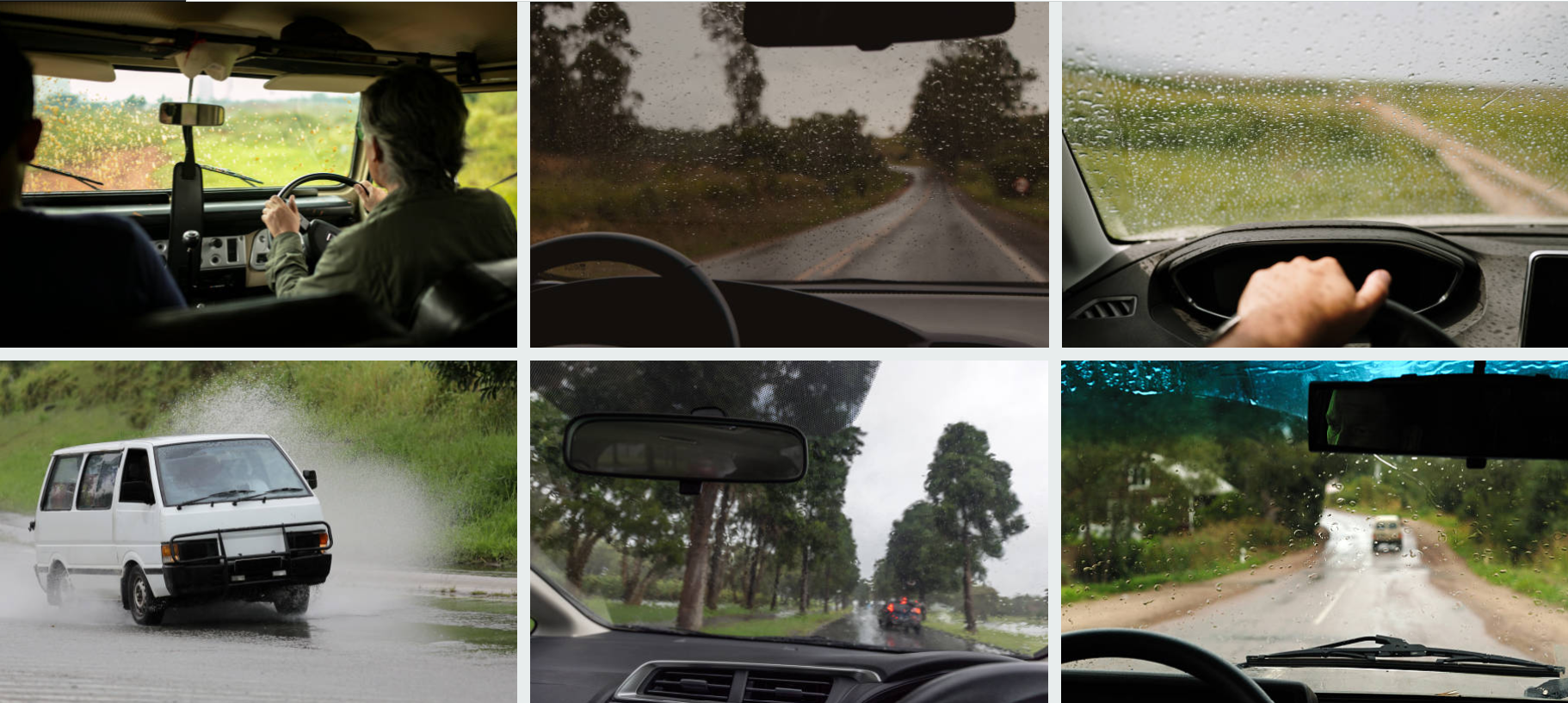
3. Essential Driving Tips for Wet Weather
Safe driving in the rain requires adjustments in speed, following distance, and general awareness.
A. Slow Down
-
Wet roads double stopping distances.
-
Drive at least 5–10 mph slower than usual.
B. Increase Following Distance
-
Maintain a 3–4 second gap (instead of the usual 2 seconds) from the car ahead.
-
This allows more time to react if the vehicle in front brakes suddenly.
C. Avoid Sudden Movements
-
Brake and accelerate gently to prevent skidding.
-
Steer smoothly to maintain control.
D. Use Headlights (Not High Beams)
-
Turn on low-beam headlights to improve visibility.
-
Avoid high beams, as they reflect off rain and reduce visibility.
E. Watch for Standing Water
-
Avoid driving through deep puddles (more than 6 inches).
-
If you must cross, drive slowly to prevent water from entering the exhaust.
F. Be Cautious at Intersections
-
Roads are slickest when rain starts due to oil mixing with water.
-
Brake earlier than usual when approaching traffic lights or stop signs.
G. Use Defoggers and Wipers
-
Keep windshield wipers in good condition.
-
Use the defogger to prevent window condensation.
H. Stay in the Middle Lanes
-
Water tends to pool in the outer lanes, so the middle of the road is often safer.
4. Vehicle Maintenance for Rainy Conditions
A well-maintained car performs better in wet weather. Key checks include:
A. Tire Health
-
Tread Depth: Worn-out tires increase hydroplaning risk. Use the penny test (if Lincoln’s head is visible, replace tires).
-
Proper Inflation: Underinflated tires reduce traction.
B. Brake Inspection
-
Ensure brakes are responsive and not worn out.
-
Wet conditions require optimal braking performance.
C. Windshield Wipers
-
Replace wipers if they streak or skip.
-
Top up windshield washer fluid.
D. Lights and Signals
-
Check that all lights (headlights, brake lights, turn signals) are working.
E. Battery and Electrical Systems
-
Rain can expose weak batteries or faulty wiring.
-
Ensure all electrical components function properly.
F. Avoid Cruise Control
-
Using cruise control on wet roads can lead to loss of control if hydroplaning occurs.
5. Emergency Preparedness for Heavy Rains
Sometimes, despite precautions, emergencies happen. Being prepared can make a difference.
A. Carry an Emergency Kit
-
Include a flashlight, jumper cables, first-aid kit, and reflective triangles.
-
Keep a raincoat and umbrella handy.
B. Know Alternate Routes
-
Flooding can block roads. Have GPS or maps to find detours.
C. Avoid Driving Through Floods
-
6 inches of water can stall most cars.
-
12 inches can float a vehicle.
-
24 inches can sweep away SUVs and trucks.
D. If Your Car Stalls in Water
-
Do not restart the engine (can cause hydro-lock and severe damage).
-
Exit the vehicle if water is rising and seek higher ground.
E. Stay Informed
-
Check weather forecasts before traveling.
-
Listen to traffic alerts for road closures or flood warnings.
Driving in the rainy season requires extra caution due to slippery roads, reduced visibility, and potential flooding. By understanding how rain affects road conditions, recognizing common hazards, and following safe driving practices, you can minimize risks.
Regular vehicle maintenance and emergency preparedness further enhance safety. Remember: slow down, stay alert, and prioritize safety over speed.
With these tips, you can navigate the rainy season confidently and reduce the chances of accidents. Safe driving!