

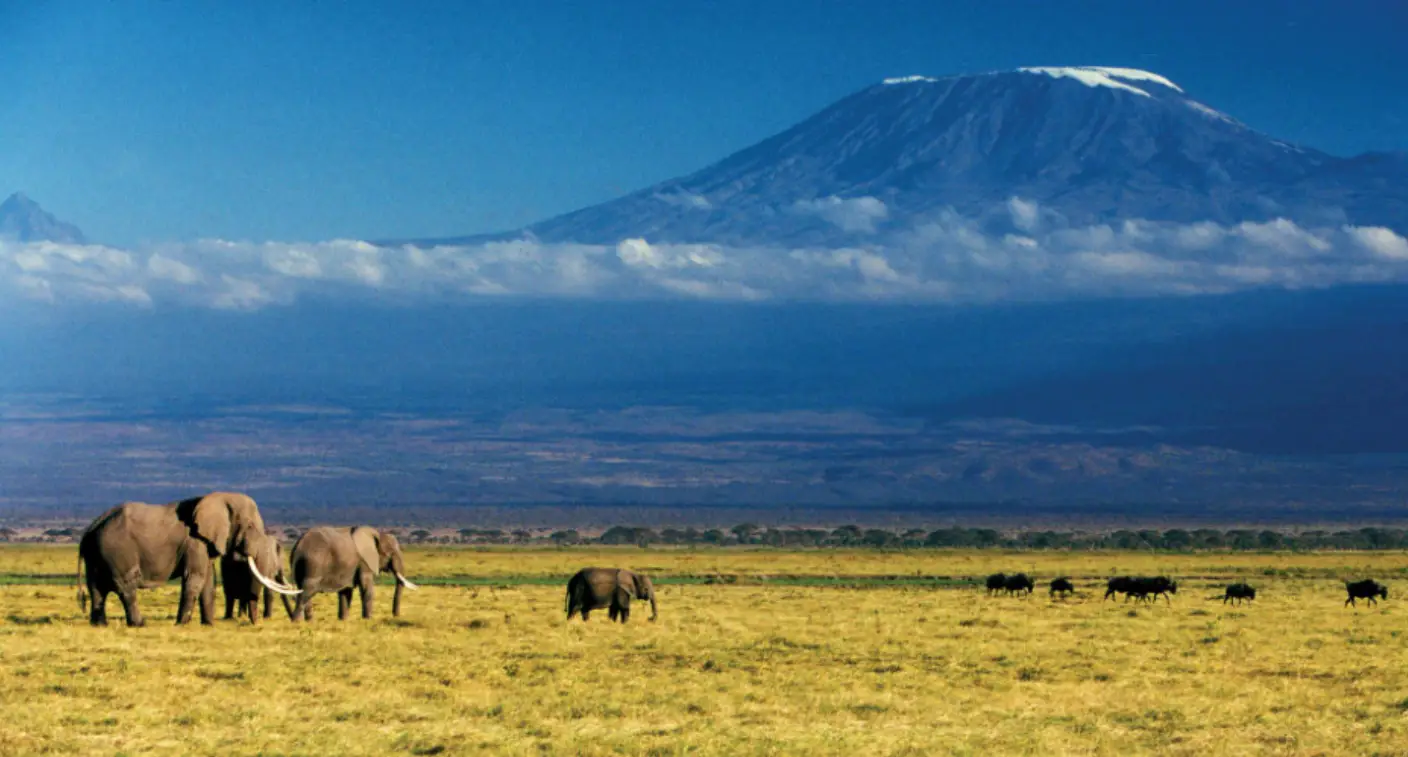
Mount Kilimanjaro: The Roof of Africa Awaits Your Footsteps
There is a moment that changes everything. It happens when you stand at 5,895 meters (19,341 feet) above sea level, watching the sun rise over a sea of clouds, with the glaciers of Africa’s highest peak glinting below you. Your legs ache. Your lungs burn. But your heart? Your heart is full. This is Mount Kilimanjaro, and this is the moment you will remember for the rest of your life.
Kilimanjaro is not just a mountain. It is a dream. It is a challenge. It is a story you will tell your grandchildren. And it is waiting for you.
🏔️ Mount Kilimanjaro at a Glance: Your Quick Inspiration Table
| What | Details |
|---|---|
| Location | Kilimanjaro Region, Tanzania, East Africa |
| Height | 5,895 meters (19,341 feet) above sea level |
| Rank | Highest mountain in Africa, highest free-standing mountain in the world |
| Type | Dormant stratovolcano with three cones: Kibo, Mawenzi, and Shira |
| First Ascent | 1889 by Hans Meyer and Ludwig Purtscheller |
| Best Time to Climb | January to March (warm, clear) or June to October (dry, cool) |
| Closest Town | Moshi or Arusha |
| Closest Airport | Kilimanjaro International Airport (JRO) |
| Difficulty | Moderate to challenging (altitude is the biggest obstacle) |
| Success Rate | Approximately 65% overall; higher on longer routes |
| Minimum Age | 10 years (some operators require 12 or older) |
🌍 Why Kilimanjaro Is Special
Kilimanjaro is not like other mountains. You do not need ropes, ice axes, or technical climbing skills to reach the summit. It is a trekking peak, which means anyone with determination, good health, and the right preparation can stand on the Roof of Africa.
But do not be fooled. Kilimanjaro is not easy. The altitude is the great equalizer. It does not care how fit you are or how many mountains you have climbed before. It demands respect, patience, and humility. And in return, it gives you a journey through five distinct climate zones, each one more surreal than the last.
| Climate Zone | Altitude | What You’ll See |
|---|---|---|
| Cultivation Zone | 800m – 1,800m | Farmland, villages, coffee plantations, banana groves |
| Rainforest Zone | 1,800m – 2,800m | Dense jungle, monkeys, birds, lush greenery, mist |
| Heath & Moorland | 2,800m – 4,000m | Giant heather, lobelias, senecios, open landscapes |
| Alpine Desert | 4,000m – 5,000m | Barren, rocky, cold, dusty, almost moon-like |
| Arctic Zone | 5,000m – 5,895m | Ice, snow, glaciers, and the summit of Uhuru Peak |
🛤️ The Routes: Which Path Will You Choose?
There are seven main routes to the summit of Kilimanjaro. Each has its own personality, scenery, difficulty, and success rate. Choosing the right route is one of the most important decisions you will make.
| Route | Duration | Difficulty | Scenery | Success Rate | Best For |
|---|---|---|---|---|---|
| Marangu | 5–6 days | Moderate | Good | Lower (~50%) | Budget climbers, those wanting huts |
| Machame | 6–7 days | Moderate–Hard | Excellent | Good (~65%) | Scenery lovers, popular choice |
| Lemosho | 7–8 days | Moderate–Hard | Spectacular | High (~75%) | Best overall experience |
| Rongai | 6–7 days | Moderate | Good | Good (~65%) | Northern approach, quieter |
| Shira | 6–7 days | Moderate–Hard | Excellent | Good (~65%) | Acclimatization focus |
| Umbwe | 5–6 days | Very Hard | Good | Low (~40%) | Experienced trekkers only |
| Northern Circuit | 9–10 days | Moderate | Outstanding | Highest (~85%) | Maximum acclimatization, solitude |
My recommendation? If you have the time, choose Lemosho (8 days) or the Northern Circuit (9–10 days) . The extra days allow your body to acclimatize properly, dramatically increasing your chances of reaching Uhuru Peak. The scenery is also breathtaking.
📅 A Typical Day on Kilimanjaro
Life on the mountain follows a gentle rhythm. Here is what a typical day looks like:
| Time | Activity |
|---|---|
| 6:00 AM | Wake up with a warm drink and a bowl of warm water for washing |
| 6:30 AM | Breakfast in the mess tent |
| 7:30 AM | Begin the day’s trek. Walk slowly, “pole pole” (Swahili for slowly) |
| 12:00 PM | Stop for a packed lunch or a hot meal |
| 1:00 PM | Continue trekking, enjoying the changing landscapes |
| 4:00 PM | Arrive at camp. Tea and snacks are served |
| 6:00 PM | Dinner in the mess tent |
| 7:30 PM | Briefing for the next day. Then sleep under the stars |
The porters, guides, and cooks are the unsung heroes of Kilimanjaro. They carry your gear, set up your camp, cook your meals, and encourage you every step of the way. Treat them with kindness and respect. A smile and a “Asante” (thank you) go a long way.
🌟 The Summit Night: The Final Push
The summit night is the hardest and most memorable part of the journey. You will wake around 11:00 PM or midnight, dress in your warmest layers, and begin the slow, cold, and dark ascent to the summit.
| Stage | What to Expect |
|---|---|
| Midnight Start | Headlamps on. One step at a time. The cold is biting. |
| Stella Point | 5,739m. The first milestone. Many turn back here due to altitude. |
| Uhuru Peak | 5,895m. The highest point in Africa. You made it. |
The moment you reach Uhuru Peak is indescribable. You will cry. You will laugh. You will hug your guide. You will watch the sunrise paint the sky in colours you have never seen before. You will feel like you can do anything. Because you just did.
💪 How to Prepare: Body and Mind
Kilimanjaro is not a race. It is a journey. And preparation is key.
| Preparation | Why It Matters |
|---|---|
| Train for 3–6 months | Build cardiovascular fitness and leg strength. Hiking, running, cycling, stair climbing. |
| Practice with your gear | Wear your boots, backpack, and layers before the climb. No surprises. |
| Acclimatize properly | Choose a longer route. Drink water. Walk slowly. Listen to your body. |
| Pack smart | Layers, layers, layers. Warm sleeping bag. Good boots. Sunscreen. Lip balm. |
| Mental preparation | Altitude affects everyone differently. Stay positive. Breathe. One step at a time. |
| Travel insurance | Ensure it covers high-altitude trekking up to 6,000m. |
| Get a medical check-up | Consult your doctor about altitude sickness medication (Diamox). |
📦 What to Pack: The Essentials
| Category | Items |
|---|---|
| Clothing | Moisture-wicking base layers, fleece mid-layers, insulated jacket, waterproof shell, hiking pants, warm hat, gloves, buff |
| Footwear | Broken-in hiking boots, camp shoes, thick socks, liner socks |
| Gear | 4-season sleeping bag, headlamp, trekking poles, water bottles, camelback, duffel bag, daypack |
| Health | Sunscreen, lip balm, Diamox, painkillers, blister kit, wet wipes, hand sanitizer |
| Documents | Passport, visa, travel insurance, cash (USD for tips), permit |
| Extras | Camera, power bank, snacks, hydration tablets, earplugs, eye mask |
💰 How Much Does It Cost?
| Expense | Estimated Cost (USD) |
|---|---|
| Park Fees | $800 – $1,000 (depends on route and days) |
| Guide & Porter Tips | $200 – $400 |
| Operator Package | $1,500 – $4,000+ |
| Gear Rental | $100 – $300 |
| Flights & Visas | Varies |
| Total Estimate | $2,500 – $6,000+ |
Kilimanjaro is not a cheap adventure. But it is worth every single penny. Choose a reputable operator that pays fair wages to porters and guides. Your experience will be richer for it.
🌍 Beyond the Mountain: Explore Tanzania
Kilimanjaro is often the highlight of a larger Tanzanian adventure. Why not combine your climb with a safari?
| Destination | What to Experience |
|---|---|
| Serengeti National Park | The Great Migration, Big Five, endless plains |
| Ngorongoro Crater | The “Garden of Eden,” black rhinos, stunning caldera |
| Tarangire National Park | Baobab trees, massive elephant herds |
| Lake Manyara | Tree-climbing lions, flamingos, Rift Valley scenery |
| Zanzibar Island | White beaches, Stone Town, spice tours, relaxation |
🌅 Final Thoughts: Your Mountain Is Waiting
Mount Kilimanjaro is more than a mountain. It is a teacher. It teaches you patience. It teaches you resilience. It teaches you that you are stronger than you think.
You will not return home the same person. You will return with a quiet confidence. You will return with stories. You will return with a heart full of gratitude.
So start training. Start saving. Start dreaming.
The Roof of Africa is waiting for you. One step at a time. Pole pole.