

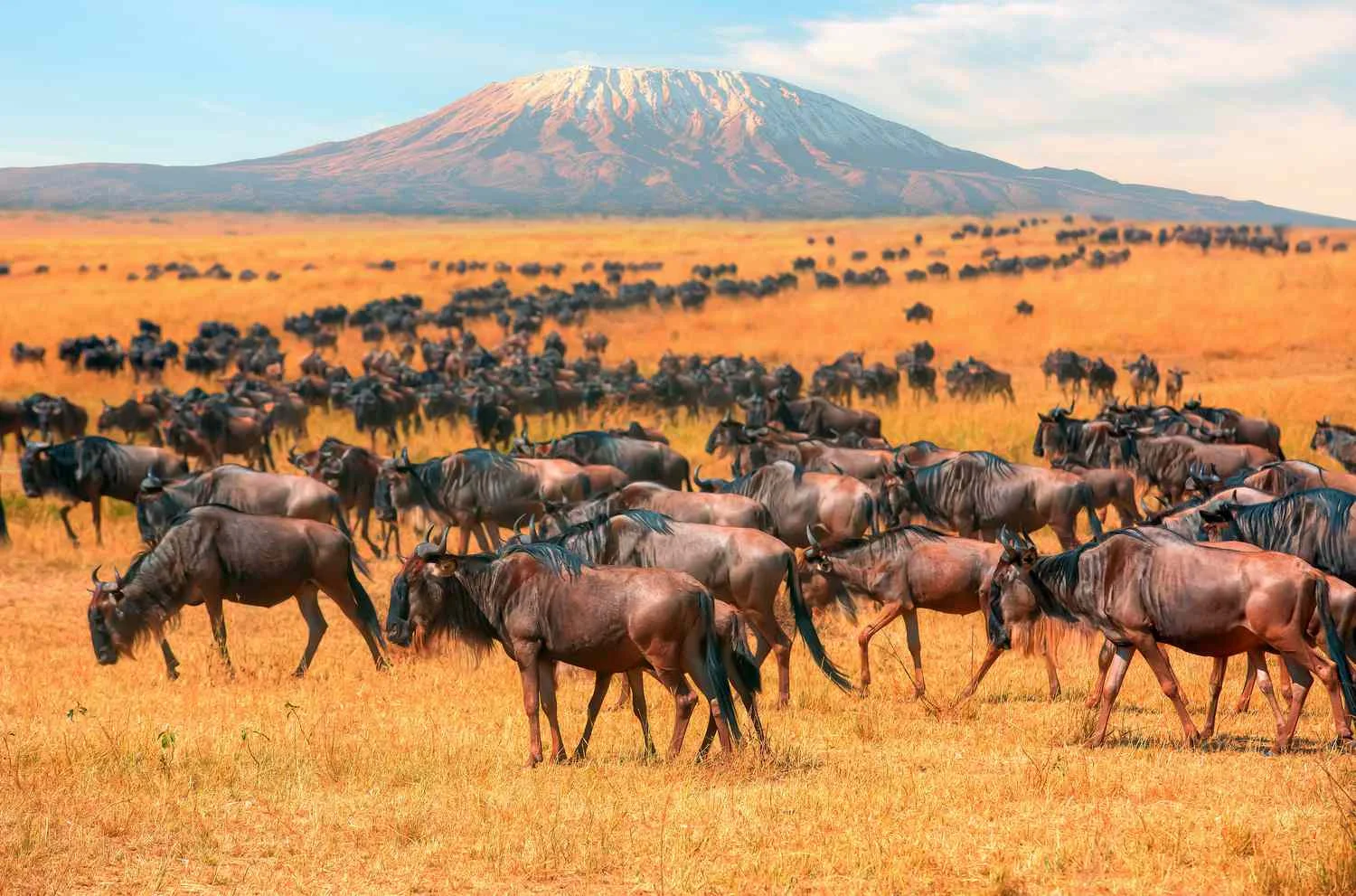
Masai Mara National Reserve: Where the Wild Writes Its Greatest Story
There is a place in Kenya where the earth trembles under the hooves of millions. Where lions lounge on golden grass, cheetahs scan the horizon from termite mounds, and the air carries the distant rumble of thunder—or perhaps it is a stampede. This is the Masai Mara National Reserve, and it is not just a destination. It is the beating heart of African wildlife.
The Mara is Kenya’s most celebrated wildlife area, a vast expanse of rolling savannah, acacia woodlands, and riverine forests that stretches across 1,510 square kilometers in the Great Rift Valley . It forms the northern extension of Tanzania’s Serengeti ecosystem, and together they host the greatest wildlife spectacle on Earth: the Great Migration . Every year, over two million wildebeest, zebra, and gazelle move in a great circle of life, crossing crocodile-infested rivers and dodging predators in a drama that has played out for millennia .
But the Mara is not only about the migration. It is a year-round sanctuary for the Big Five, for cheetahs, hyenas, hippos, and over 500 species of birds . It is also the ancestral home of the Maasai people, whose culture and traditions are woven into the fabric of this land . To visit the Mara is to step into a living story—one that will change you forever.
🦁 Masai Mara at a Glance: Your Quick Inspiration Table
| What | Details |
|---|---|
| Location | Narok County, southwestern Kenya, bordering Tanzania’s Serengeti |
| Area | 1,510 km² (583 sq mi) |
| Established | 1961 (as a wildlife sanctuary); became a national reserve in 1974 |
| Altitude | 1,500 – 2,170 meters above sea level |
| Best Time to Visit | July to October (Great Migration, dry season); January to March (calving, predator action) |
| Getting There | 45-minute flight from Nairobi Wilson Airport to Mara airstrips, or 5–6 hour drive from Nairobi |
| Currency | Kenyan Shilling (KES) |
| Language | Swahili, English, Maa (Maasai language) |
| Famous For | Great Migration, Big Five, Maasai culture, hot air balloon safaris |
| Wildlife | Lion, leopard, cheetah, elephant, buffalo, rhino, hippo, crocodile, hyena, wild dog, over 500 bird species |
| Entry Fee | $80–$100 USD per adult per day (non-resident) |
🦬 The Great Migration: The Greatest Show on Earth
The Great Migration is the Mara’s crown jewel. Between July and October, millions of wildebeest, zebra, and gazelle cross the Mara River from the Serengeti into the Masai Mara, driven by the scent of fresh grazing . It is a journey fraught with danger. Crocodiles lie in wait in the river. Lions, cheetahs, and hyenas patrol the banks. And yet, the herds come, wave after wave, in a spectacle that defies imagination .
| Stage of Migration | Months | What Happens |
|---|---|---|
| Calving in Serengeti | January – March | Over 500,000 wildebeest calves are born in the southern Serengeti |
| Moving North | April – June | Herds move through the Serengeti, mating season begins |
| Crossing the Mara River | July – October | The dramatic river crossings into the Masai Mara |
| Return to Serengeti | November – December | Herds move back south as rains return |
The river crossings are the most dramatic moments. Thousands of wildebeest gather at the water’s edge, hesitating, calling, until one brave soul leaps in—and then the floodgates open. Dust rises. Water churns. Crocodiles strike. It is brutal, beautiful, and utterly unforgettable .
🐆 Wildlife: Big Cats and Beyond
The Masai Mara is one of the best places in Africa to see lions, leopards, and cheetahs. The open plains make spotting easy, and the reserve’s healthy prey populations support dense predator numbers.
| Animal | Where to See Them | Best Time |
|---|---|---|
| Lion | Throughout the reserve; Musiara, Mara Triangle | Year-round |
| Cheetah | Open plains; Masai Mara Triangle | Year-round, best in dry season |
| Leopard | Riverine forests along Mara River | Year-round, best in early morning |
| Elephant | Mara River, Musiara Swamp | Year-round |
| Buffalo | Grasslands, near water | Year-round |
| Black Rhino | Mara Triangle (protected area) | Year-round, rare |
| Hippo | Mara River | Year-round |
| Crocodile | Mara River | Year-round |
| Wild Dog | Northern Mara, Olare Motorogi | Rare, occasional sightings |
| Hyena | Throughout the reserve | Year-round |
The Mara Triangle —the western third of the reserve managed by the Mara Conservancy—is particularly excellent for wildlife viewing. It has fewer vehicles, better management, and some of the highest predator densities in Africa .
🎈 Hot Air Balloon Safari: The Ultimate Perspective
If there is one experience that defines the Masai Mara, it is the hot air balloon safari. You rise before dawn, drive to the launch site, and watch as the balloon inflates against the starry sky. Then, as the sun begins to rise, you lift off—silently, gently—and float over the plains below .
| What to Expect | Details |
|---|---|
| Duration | 1 hour flight, 3–4 hours total experience |
| Cost | $450–$550 USD per person |
| Includes | Bush breakfast, champagne, certificate |
| Best For | Photographers, honeymooners, anyone wanting a once-in-a-lifetime experience |
| Booking | Book well in advance, especially in high season |
From above, the Mara reveals its secrets. You see herds of elephants moving like grey rivers, lions returning from the hunt, hippos wallowing in the river. It is a perspective that changes how you see the world .
🏕️ Where to Stay: From Luxury Lodges to Tented Camps
The Masai Mara offers accommodation for every style and budget. The choice of where to stay can shape your entire experience.
| Category | Options | Highlights |
|---|---|---|
| Ultra-Luxury | Angama Mara, Mara Plains Camp, Mahali Mzuri | Stunning views, exceptional service, private conservancies |
| Luxury | Mara Serena Safari Lodge, Ashnil Mara Camp, Keekorok Lodge | Great locations, good amenities, reliable wildlife viewing |
| Mid-Range | Basecamp Explorer, Mara Sopa Lodge, Sentrim Mara | Comfortable, good value, pool, buffet meals |
| Budget | Mara Explorers Camp, Destiny Eco Camp | Basic but clean, camping options, social atmosphere |
| Conservancies | Olare Motorogi, Naboisho, Mara North | Fewer vehicles, night drives, walking safaris, community benefits |
Staying in a conservancy adjacent to the national reserve offers a more exclusive experience with fewer vehicles, night game drives, and walking safaris. These conservancies also directly benefit local Maasai communities through lease fees and employment .
🏛️ Maasai Culture: The Heart of the Mara
The Masai Mara is named after the Maasai people, whose culture is as rich and vibrant as the wildlife. Traditionally pastoralists, the Maasai have coexisted with wildlife for centuries. They live in manyattas (traditional homesteads), wear brightly colored shukas (cloths), and are famous for their jumping dances and beadwork .
| Cultural Experience | What to Expect |
|---|---|
| Maasai Village Visit | Tour a manyatta, learn about traditions, watch dancing, buy beadwork |
| Maasai Guided Walk | Learn about medicinal plants, tracking, and the ecosystem from a Maasai guide |
| Cultural Performance | Traditional jumping dance (adumu), singing, storytelling |
| Community Projects | Visit schools, clinics, or conservation projects supported by tourism |
A visit to a Maasai village is a highlight for many travelers. It is a chance to learn, to connect, and to understand the human story behind the wildlife .
📅 A Typical Day on Safari in the Mara
| Time | Activity |
|---|---|
| 5:30 AM | Wake up call. Tea or coffee delivered to your tent. |
| 6:00 AM | Depart for morning game drive. The best time for predators. |
| 9:00 AM | Return to camp for breakfast. |
| 10:00 AM | Relax, swim, read, or optional cultural visit. |
| 1:00 PM | Lunch at camp. |
| 3:00 PM | Siesta or pool time. |
| 4:00 PM | Afternoon game drive. |
| 6:30 PM | Sundowner in the bush. Watch the sun set over the plains. |
| 7:30 PM | Return to camp. Dinner under the stars. |
| 9:00 PM | Optional night game drive (in conservancies). |
💡 Simple Tips for Your Mara Journey
| Tip | Why It Helps |
|---|---|
| Book Early | The Mara is popular. Lodges and balloon safaris fill up months in advance. |
| Bring Binoculars | Essential for spotting distant wildlife. |
| Pack Layers | Mornings and evenings can be cold. Midday is hot. |
| Carry Cash | For tips, souvenirs, and conservancy fees. |
| Respect Wildlife | Keep your voice down. Never ask your guide to off-road. |
| Support Local | Stay in conservancies, buy from Maasai artisans, tip your guides well. |
| Be Patient | The Mara rewards those who wait. Sit quietly. Watch. Listen. |
🌅 Final Thoughts: The Mara Changes You
The Masai Mara is not just a place you visit. It is a place that visits you. It leaves a mark on your heart. It slows your breath. It reminds you of what matters: wildness, beauty, and connection.
Whether you are watching a million wildebeest cross the Mara River, floating silently over the plains in a hot air balloon, or sharing stories with a Maasai elder around a fire, the Mara will hold you gently and never let go.
So come to the Mara. Let the wild remind you what it means to be alive