



Dar es Salaam Fish Market: A Morning with Tanzania’s Fishermen
Dar es Salaam Fish Market is a place to visit. The sun is not even up when the first boats come to the coast of Dar es Salaam. You can hear the boats before you see them. The boats have bodies, and they make a lot of noise when they hit the small waves. The people on the boats are talking to each other across the water.
By 5:30 in the morning, there are a lot of people on the shore near Kivukoni. The men are pulling nets out of the water. The women are putting fish into boxes. The people who want to buy fish are checking how heavy they are. This is where the day really starts. If you have been to Dar es Salaam Fish Market, you know that it is a place to see the boats come in. It makes the rest of the day exciting.
The Kivukoni Fish Market is near the Indian Ocean. It is close to the place where people take the ferry to go to Zanzibar. This market has been here for a long time. Before Dar es Salaam was a big city, people were selling fish here. The fishermen come from all the villages around the coast. They bring their fish here because it is one of the places where you can buy fresh fish. The fish goes from the boat to the person who buys it in a few hours. There is no cold storage room. The people just use their skills and work fast. They also shout a lot.
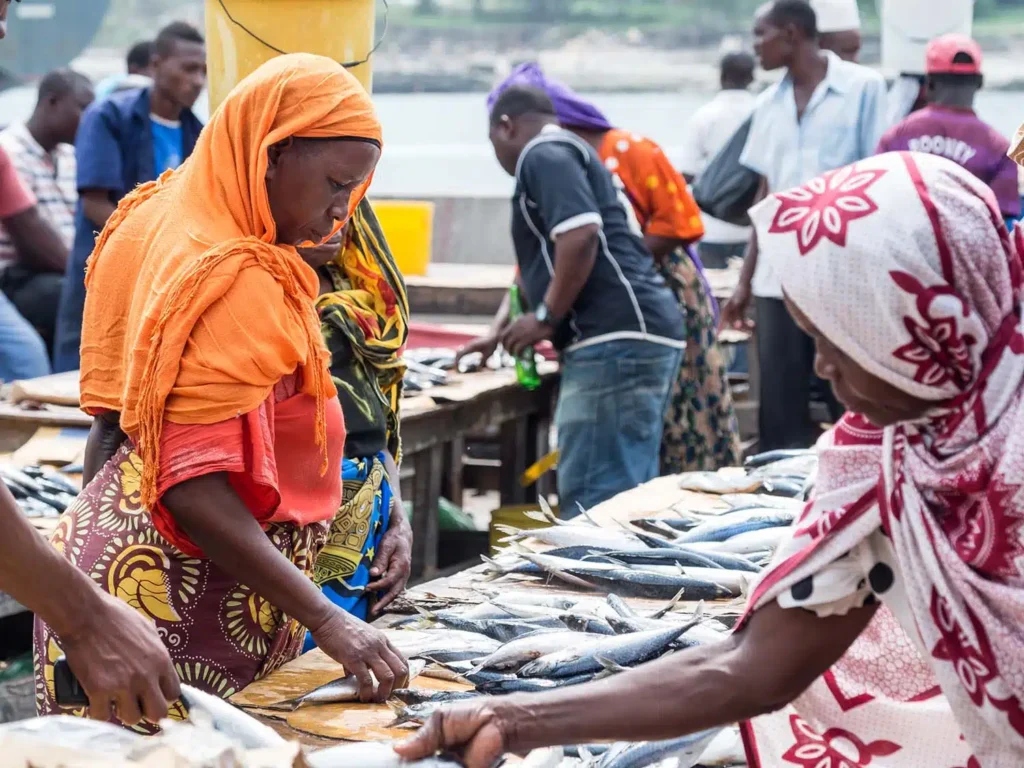
alt text of 12 words: Fishermen unloading fresh catch at dawn on Dar es Salaam’s busy coastal fish market.
The Boats Come In
Watching the boats come in is part of visiting Dar es Salaam Fish Market. It is a moment that you will remember for a time. Small boats come to the shore one after another. The fishermen jump into the water. Start taking out the fish. They throw baskets of fish onto the sand. The fish are all kinds, like tuna, kingfish, and octopus. Some fishermen carry buckets on their shoulders. They have to move because if the fish sits in the sun for too long, it is not good to eat.
These men left their homes before midnight. They went fishing with lines and nets. They worked all night when the water was calm, and the fish were easy to find. If they had a night, they might catch fifty kilograms of fish. If they had a night, they might not catch anything. These men do not have a guaranteed paycheck. They just have to hope that the sea gives them some fish.
When the sun is up, the beach is very busy. The men are shouting prices. The women are bargaining. The porters are running around carrying boxes on their heads. If you stand still for a minute, someone will tell you to move. Everyone is in a hurry.
Inside the Market
When the fish is taken from the beach, it goes into the market building. This building has two floors. It is not in condition, but it works well. This part of the market is where things start to move. The ground floor smells like salt and fish. The floor is always wet because people are always washing it. The vendors sit behind tables with all their fish. They call out to people walking by in Swahili. They offer them prices if they stop to look.
You will see all kinds of fish that you might not have seen before. There are tuna that are as long as a man’s arm. There are silver fish that are dried and salted. There are octopuses with their arms curled up. There are crabs tied together with string. Every table has a story to tell about what the sea gave up that night.
Upstairs, there is a room where people bid on the fish. The middlemen buy a lot of fish from the fishermen. Then sell it to shop owners and restaurant suppliers. The bidding moves fast. People use Swahili. Hand signals to bid. The prices can change in a few minutes. It depends on how many fish were caught that morning. If someone buys early, they might pay too much. If they wait too long, they might miss out. The people who do this work well have been doing it for years. They know what they are doing.
The People Who Make It Work
When you visit this place, what stays with you is not the fish. It is the people who make it work. You see fishermen who have spent forty years on this stretch of coast. Their hands are rough from years of pulling nets and gutting catch. Then there are men just starting. They learn from their fathers and uncles. They absorb knowledge that you cannot learn in a classroom. You also see women who run the stalls. Some of them are widows of fishermen. Others are skilled traders. They know how to spot a fresh fish from a tired one.
If you ask any fisherman here why he still does this work, the answer is usually simple. The fishing work feeds his family. It is what his father did and his father before him. There is pride in that. On hard days when the catch is small and the buyers offer less than expected the fishermen are proud. Spending a morning with Tanzania’s fishermen teaches you something about resilience. The fishermen wake before their children, work through darkness and rough water, and still show up the next day ready to do it again. The fishing work is what the fishermen do.
The economic weight of this market extends beyond the beach. Thousands of families in Dar es Salaam and along the coast depend directly or indirectly on the fishing trade. This includes the men who build and repair boats, the women who smoke and dry fish for sale in markets. A single morning at Kivukoni connects fishermen, traders, cooks, and customers in a chain that has kept running for decades. The fishing trade has been adapting to changing tides in both the ocean and the economy. The fishing trade is important to the people who make it work.
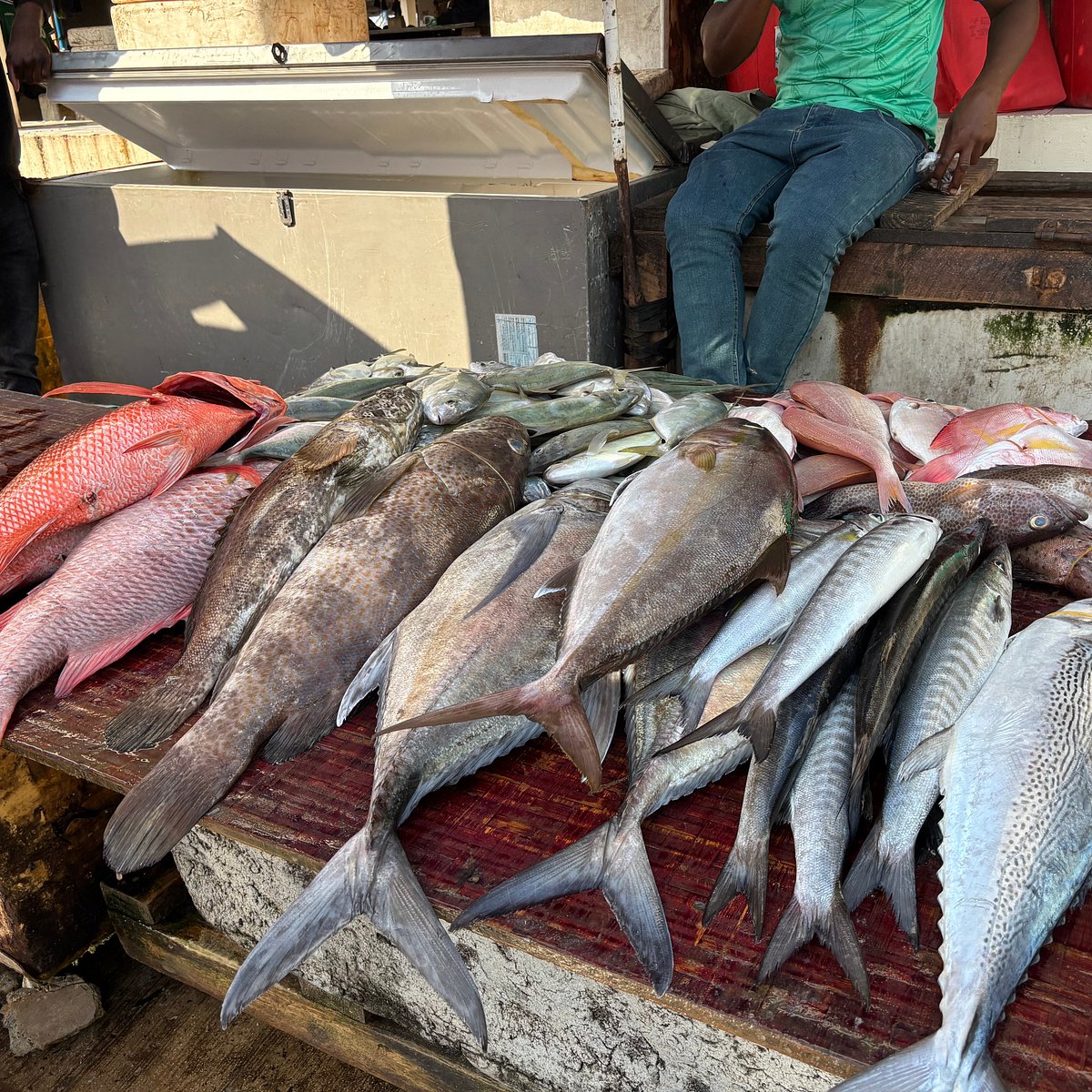
Tanzanian fisherman hauling a fresh tuna catch onto the shore at Kivukoni market.
Why the Market Still Matters Today
Tanzania’s fishing industry faces pressure. Overfishing, changing weather patterns, and competition from commercial operations have made life harder for small-scale fishermen. Fuel costs rise catch sizes shrink in seasons and younger generations sometimes look toward the citys other industries instead of following their fathers onto the water. Despite all this, the market at Kivukoni keeps functioning morning after morning. The market keeps functioning because the demand for fish in a coastal city never really stops. The people who make it work are the reason the market keeps functioning.
Local chefs still walk through the aisles picking out the cuts for that evening’s menu. Home cooks still haggle over the price of prawns for a Sunday meal. Exporters still send agents to secure grade tuna bound for markets outside the country. The market survives because it serves a purpose that nothing else in the city quite replicates. The market connects the ocean directly to the table without steps in between. The fishing trade is what makes this connection possible.
If you ever find yourself in Dar es Salaam, get up early. Go see it for yourself. Arrive before 6 a.m. If you want to catch the boats coming in. Wear shoes you do not mind getting wet and be ready for the smell the noise and the constant motion. A Dar es Salaam Fish Market visit is not a tourist experience. It is raw, loud, and completely genuine. The genuine experience is what makes it worth seeing. The people who make it work are the reason it’s worth seeing.
Standing on that beach as the sun rises over the Indian Ocean watching men haul in the nights work while the city slowly wakes up around them you start to understand something about this place. The Dar es Salaam Fish Market is not a walk through stalls of fish. It is a window into how a coastal community has survived and adapted for generations, one boat, one net, and one early morning at a time. The fishing trade is what has allowed the community to survive and adapt. The people who make it work are the reason the community has survived and adapted.
Come back a year later. The scene will look almost the same. The same fishermen, older by a year, still pulling in their nets before sunrise. The same women at their tables are still calling out prices to anyone who walks past. The city around this market has changed a great deal over the past few decades, with new roads, new buildings, and new industries reshaping the skyline. This small stretch of coast keeps its own rhythm tied to the tides rather than the clock. The rhythm of the fishing trade is what keeps the community going. The people who make it work are the reason the community keeps going.


