Can I See Jackals in the Serengeti?
Spotlight on Wild Dogs of the Night with Great Migration Adventure
Jackals—those sleek, cunning, golden-eyed canids of the African plains—are present in the Serengeti ecosystem, yet they often blend into the shadows of sunrise and twilight. At Great Migration Adventure, we understand that jackals bring rich wildlife storytelling to any safari. With expert guiding, patient timing, and strategic itinerary design, you can see them—and we make it happen.
1. Which Jackal Species Roam the Serengeti?
The Serengeti houses two native jackal species:
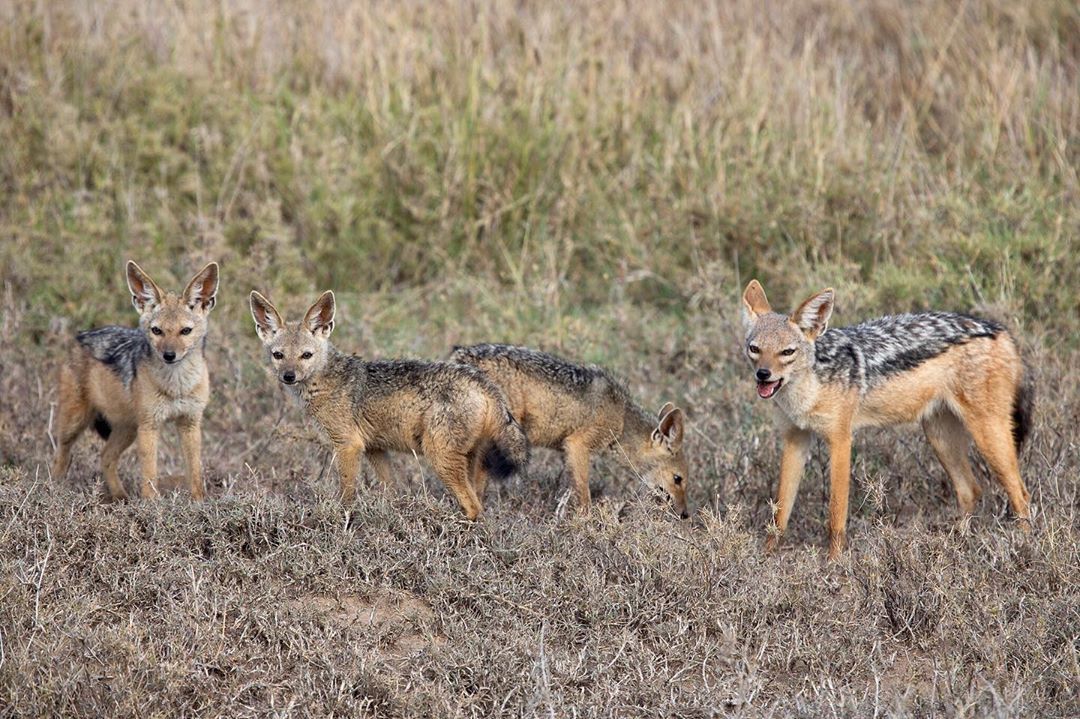
Black‑Backed Jackal (Canis mesomelas)
Smaller, with dramatic black dorsal saddle patches contrasted by orange‑brown flanks and white underbelly. These agile predators inhabit open grassland edges, acacia woodland margins, and riverine corridors.
Side‑Stripped Jackal (Canis adustes)
More secretive and forest-edge oriented. Fainter in coloration, side-striped jackals frequently remain under canopy near forested kopjes, proving more elusive than their black-backed cousins.
While not as dominant as hyenas or wild dogs, jackals play a key ecological role: scavenging, seed dispersal, and controlling small mammal populations.
2. Where and When to Spot Jackals in the Serengeti
Prime Habitats
-
River edges and woodlands along the Seronera River and Moru Kopjes — ideal for black‑backed jackals hunting small rodents during dusk.
-
Woodland savanna in Ndutu and southern plains—especially where acacias and short grass meet.
-
Edge habitats bordering tree clusters or rocky kopjes where side‑striped jackals take cover.
Best Viewing Windows
Jackals are most active during:
-
Early dawn—searching for fresh carcasses or prey along trails.
-
Late afternoon through dusk—when they venture from dens to forage.
-
Occasional night drives (where permitted)—jackals often emerge to feed on dung beetles, insects, or leftover scraps near waterholes and lion kills.
Natural guide observation and patience make dusk hours particularly fruitful.
3. What You’ll See: Jackal Behavior & Ecology
Foraging & Scavenging
You might observe jackals following larger predators—hyenas, lions, vultures—seeking food scraps, carrion tissues, or fresh bone marrow.
Pair Bonds and Family Groups
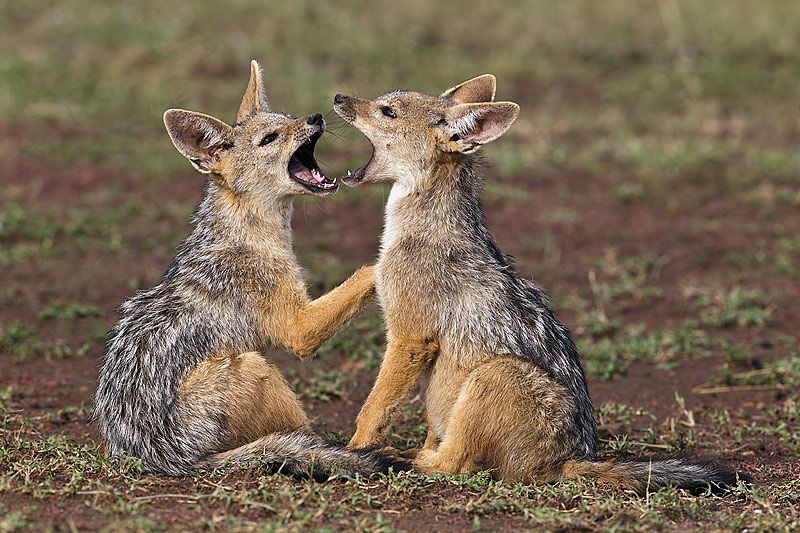
Black‑backed jackals usually form monogamous pairs, raising pups in dens near kopjes. They may appear in twos or three as family units emerge for early forage.
Alert Posture & Keen Senses
Jackals may stand erect, ears cocked forward, sensing distant disturbances—making them highly alert to predator or prey activity.
Male-Female Pair Displays
Pairs often communicate through body posture and short howls at dusk. If you spot this behavior, you are witnessing intimate wild-canid dynamics rarely seen during broad game drives.
4. Why Jackals Matter in the Serengeti Ecosystem
Jackals are indispensable to the Serengeti’s balance as versatile omnivores and scavengers. They clean up small carcasses, disperse seeds after fruit feeds, and help control rodent populations.
Additionally, jackals serve as prey and parasitic hosts for larger carnivores—or disease indicators when population stress appears. Observing jackals adds detail and nuance to your safari narrative beyond the usual “big five” focus.
5. Crafting a Jackal-Friendly Safari Itinerary
Sample 5-Day “Jackal & Night Encounters” Route
Day 1 | Arrival & Afternoon Game Drive
Enter the Seronera area in time for a late drive. Guides scan kopje fringes and wood edge zones for early rising jackals.
Day 2 | Morning Riverbank Drive & Evening Dusk Patrol
Search for jackal pairs near river edges at dawn. Return midday, then prepare for an evening antelope plains drive—watching for jackals on termite mound ridges.
Day 3 | Day in Western Corridor or Ndutu Plains
Explore open plains where small prey species abound, ideal terrain for black‑backed hunting behavior. At dusk, stop for jackals silhouetted on rising skyline.
Day 4 | Optional Night‑Drive / Spotlight Session
Where permitted in Serengeti buffer zones or under special permits, conduct a sunset spotlight drive near waterholes and den sites for nocturnal jackal observation.
Day 5 | Final Dawn Expedition & Departure
Early morning walk or short vehicle drive near kopjes to search for dens or returning pairs. Then depart for onward safari or return.
Combining with Other Safari Highlights
Integrate jackal tracking with:
-
Leopard spotlit hunts on kopje slopes
-
Lion pride activity around river crossings
-
Cheetah mother and cub sightings in open plains
-
Large scavenger flocks—vultures, hyenas, storks—signaling scavenging activity
Adding jackal detection makes your safari both layered and memorable.
6. Essential Gear & Best Practices
-
Binoculars or spotting scopes help track jackals before they slip into low cover.
-
Silent observation—no engine revs or sudden movements during dawn/dusk scanning.
-
Soft light photography—<800 ISO for early or late hour frames; practice silhouette shots when sun is low.
-
Respect distance—jackals are sensitive to noise and may retreat; patience yields reward.
-
Work with local guides who know known dens, pair territories, and wildlife movement patterns.
7. Frequently Asked Questions
Are jackals common in the Serengeti?
Yes—but elusive. Black‑backed jackals are more visible than side‑striped, especially near open wood edges. They are present across most zones but seen mostly at dawn or dusk.
Can guests walk near them?
No—jet-trekking is prohibited near canids. All sightings must be from vehicle or approved walking trails, with guides supervising.
Will I risk predator interruptions?
Jackals may avoid lions or hyenas and will retreat subtly. They are not a threat to humans. Viewing respect ensures natural behavior remains intact.
Do they hunt alone?
Both—pairs hunt together. Occasionally solitary individuals forage in dense undergrowth, particularly side-stripped ones.
8. Why Great Migration Adventure Enhances Jackal Viewing
At Great Migration Adventure we understand that to see jackals well requires planning and local insight. What we bring:
-
Guides trained in small‑carnivore tracking
-
Flexible early/latedrive schedules timed to jackal activity
-
Naturalist commentary on vocal calls, foraging techniques, pair dynamics
-
Managed routes that avoid disturbing den sites or known jackal territories
-
Photography support, including light levels, lens options, and silent observation strategy
You don’t just get a drive; you get defined moments of wild detail.
9. Conservation & Ethical Safari Focus
Jackals are often overlooked in safari culture. Supporting their observation and respect reflects a deeper engagement with ecosystem complexity. Great Migration Adventure promotes:
-
Non‑intrusive wildlife watching, away from dens or feeding sites
-
Support for predator research in Serengeti buffer zones
-
Low‑impact approach that avoids nocturnal flash disturbance
-
Educational experiences that speak to scavenger roles and species interdependence
Your sighting supports conservation and broadens your understanding of Serengeti life beyond megafauna.
10. Additional Wildlife to View Alongside Jackals
-
Bat‑eared foxes in the northwestern Serengeti (similar niche but more nocturnal)
-
Serval and genet sightings near woodland edges
-
Vultures, marabou storks, Egyptian geese gathering at kill sites
-
Leopard and cheetah observations along edges and kopje shadows
Spotting jackals enriches your safari tapestry with ecological layers often hidden from casual observation.
11. Timing Guide: Best Months for Jackal Spotting
Jackal activity remains consistent year-round, but:
-
Dry seasons (June–October, December–March) enhance viewing—less flooding, higher visibility, more prey movement.
-
Green seasons (April–May, November) bring greener grass, which may obscure jackal movement but increase insect life and rodent populations—good if you’re patient and observant.
Overall, planning to stay a few nights near Seronera or Ndutu improves your odds and allows natural fluctuations in behavior.
12. Final Reflections: Jackals As Safari Stories
Jackals are more than wildlife guests—they’re narrative wildcards. Their presence enriches the safari experience with:
-
small-carnivore intelligence
-
scavenger ecology
-
canine family bonds and vocal expression
-
twilight drama under endless skies