Are There Birding Hides in Uganda? A Deep Dive with Great Migration Adventure
Uganda, often dubbed the “Pearl of Africa,” is a lush paradise for birders from around the world. With over 1,070 bird species recorded across its verdant landscapes—more than half the total bird species found in Africa—Uganda is an undisputed birdwatching haven. But for the discerning traveler asking the deeper question: “Are there birding hides in Uganda?”—the answer is a resounding yes.
At Great Migration Adventure, we go beyond just safaris and gorilla trekking. We design immersive birding experiences that take you into the heart of Uganda’s feathered biodiversity—often right into birding hides strategically positioned in national parks, wetlands, forests, and private reserves. In this article, we unpack the concept of birding hides, explore Uganda’s best locations offering them, and show how these unique vantage points can transform your birdwatching safari.
Understanding Birding Hides: Why They Matter
Birding hides—also known as blinds—are concealed shelters that allow birdwatchers to observe birds at close quarters without disturbing them. They are often camouflaged and built with natural materials to blend seamlessly into the surroundings. These hides offer birders and photographers the chance to stay still and unnoticed, enabling sightings of elusive or skittish species that would otherwise remain hidden or fly away.
For bird photography, hides are essential. They give photographers the luxury of time, stability, and proximity. For naturalists, hides provide the quiet, undisturbed window into bird behavior—mating rituals, feeding patterns, territorial displays, and more.
Uganda’s Birding Landscape: Where Hides Make a Difference
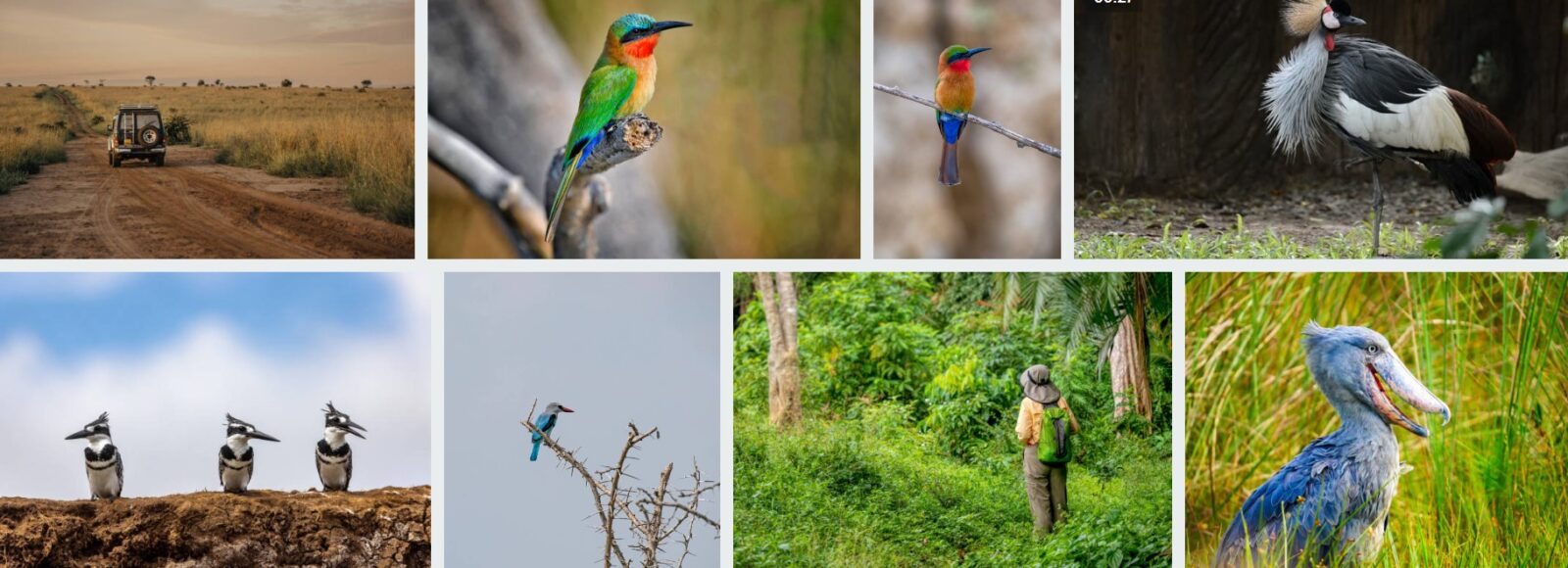
Uganda’s ecosystems range from the Albertine Rift montane forests to savannahs, papyrus swamps, crater lakes, and riverine habitats. These environments are home to iconic species like the Shoebill, African Green Broadbill, Green-breasted Pitta, African Finfoot, and Great Blue Turaco.
Birding hides are typically found in places where patience is more rewarding than mobility—like wetlands and forest clearings. Fortunately, Uganda is evolving as a birding destination with infrastructure supporting serious ornithologists and leisure birders alike. Let’s now explore the top birding destinations in Uganda with hides and how Great Migration Adventure integrates them into curated safari experiences.
1. Mabamba Bay Wetland (Shoebill Central)
Type of hide: Canoe blinds, papyrus-fringed channels
Birding highlights:
-
Shoebill Stork
-
Lesser Jacana
-
African Pygmy Goose
-
Malachite Kingfisher
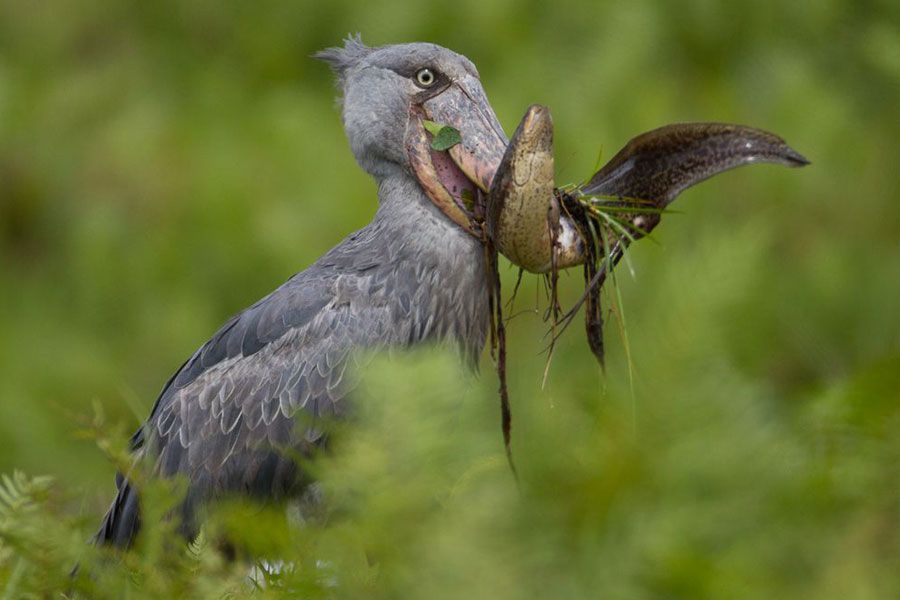
Why it matters: While Mabamba doesn’t have a conventional wooden hide, the papyrus channels themselves act as natural blinds. Our experienced guides navigate traditional canoes quietly through narrow channels to give you undisturbed views of Shoebills and swamp specialists. These floating hides—maneuvered by pole—offer one of the best Shoebill viewing experiences in Africa.
Great Migration Tip: Sunrise canoe safaris offer the best photographic lighting and increase the chance of spotting a Shoebill feeding on lungfish.
2. Bigodi Wetland Sanctuary
Type of hide: Elevated viewing platforms and wooden observation points
Birding highlights:
-
Papyrus Gonolek
-
White-winged Warbler
-
Black-and-white Casqued Hornbill
-
Blue Turaco
Bigodi, near Kibale Forest, is a well-managed community-run swamp sanctuary. Raised boardwalks and viewing shelters have been built to give guests comfortable, concealed access to birds. The strategic location at forest edge and wetland makes Bigodi a magnet for both forest species and waterbirds.
Great Migration Tip: Combine Bigodi with a morning of chimpanzee tracking in Kibale to create a dual primate-birding adventure.
3. Semuliki National Park
Type of hide: Forest blinds, riverine viewing points
Birding highlights:
-
Congo Serpent Eagle
-
Nkulengu Rail
-
White-crested Hornbill
-
Yellow-throated Cuckoo
Semuliki’s lowland forest, an extension of the Ituri Forest in the Congo Basin, is a birder’s dream—home to over 441 bird species, many of them Central African endemics. The park management, in collaboration with conservation NGOs, has established hides in forest clearings and salt licks, where birds gather regularly. Semuliki offers some of Uganda’s most unusual bird hides.
Great Migration Tip: For serious birders, our 3-day Semuliki Hide Package includes dawn and dusk blind sessions, camping near the hides, and nocturnal birding for owls and nightjars.
4. Queen Elizabeth National Park (Kazinga Channel & Maramagambo)
Type of hide: Water-level hides and crater lake overlooks
Birding highlights:
-
African Skimmer
-
White-backed Night Heron
-
Martial Eagle
-
Greater Flamingo (seasonal)
In the Mweya peninsula, we take advantage of strategically located spots near water edges, using boats and tented hides. Queen Elizabeth’s hides are more ad-hoc but highly effective. Along Maramagambo Forest, the bat cave lookout is excellent for observing forest birds like the Narina Trogon and Tambourine Dove.
Great Migration Tip: A full-day boat-birding safari on the Kazinga Channel is one of our most popular add-ons, with packed lunches and shaded boat blinds.
5. Kibale Forest National Park
Type of hide: Forest observation decks
Birding highlights:
-
Green-breasted Pitta
-
Dusky Long-tailed Cuckoo
-
Yellow-spotted Barbet
-
Blue-breasted Kingfisher
While better known for its primates, Kibale is also a birder’s forest. Hides here are elevated to catch light breaks in the canopy. With patience and silence, the Green-breasted Pitta—one of Africa’s most elusive birds—can be spotted during dawn display rituals.
Great Migration Tip: Our Kibale Pitta Watch package includes pre-dawn hikes to forest hides accompanied by our expert birding guides.
6. Budongo Forest Reserve (Royal Mile & Busingiro)
Type of hide: Forest floor hides and fruiting tree vantage points
Birding highlights:
-
Chocolate-backed Kingfisher
-
Ituri Batis
-
Yellow-footed Flycatcher
-
Cassin’s Hawk Eagle
Budongo, part of the greater Murchison ecosystem, is a forest birding gem. The Royal Mile, in particular, has designated observation points and forest hides along key birding routes. We station our guests in mobile blinds near fruiting trees where hornbills, pigeons, and turacos congregate.
Great Migration Tip: Combine Budongo’s birding hides with chimp tracking and a boat safari on the Nile for an unbeatable wildlife blend.
7. Mgahinga Gorilla National Park
Type of hide: Bamboo forest hides and crater edge overlooks
Birding highlights:
-
Rwenzori Turaco
-
Archer’s Robin-Chat
-
Alpine Chat
-
Dusky Crimsonwing
This park is not only about gorillas. Its birding hides in bamboo zones provide excellent chances to spot high-altitude species rarely seen elsewhere in Uganda. Our local Batwa guides also help locate birds based on traditional knowledge and calls.
Great Migration Tip: Our Virunga Bird Hide Trek includes a hike with packed breakfast, stopping at hides built near salt-lick clearings and ridgelines.
8. Lake Mburo National Park
Type of hide: Waterhole blinds and acacia woodland hides
Birding highlights:
-
Red-faced Barbet
-
African Finfoot
-
White-winged Black Tit
-
Rufous-bellied Heron
Lake Mburo is Uganda’s only park where you can take guided birding walks through savannah and woodland. Hides are located near watering points, and our customized birding vehicle has built-in photographic windows and a roof platform for bird photography.
Great Migration Tip: Bird from horseback or mountain bike in zones where vehicles can’t reach. Our birding-riding combo safari is a favorite with adventurous travelers.
9. Private Birding Lodges with Custom Hides
Several exclusive lodges in Uganda have invested in high-quality birding infrastructure:
-
Buhoma Lodge (Bwindi) – has a private birding trail and platform overlooking the forest canopy.
-
Semuliki Safari Lodge – features a riverside hide ideal for kingfishers and bee-eaters.
-
Kibale Forest Camp – built a mini-hide near their dining deck for forest edge birds.
-
Mihingo Lodge (Lake Mburo) – includes a waterhole hide for nocturnal birding.
Great Migration Tip: Ask about lodge-based hides when planning your safari with us. We customize itineraries based on your target species.
Why Choose Great Migration Adventure for Birding Hides?
At Great Migration Adventure, we believe that the best birdwatching experiences come not from chance encounters, but from thoughtful, patient observation. That’s why our birding safaris are designed with:
Expert ornithologists and bird guides
Custom hide schedules and pre-dawn sessions
Bird checklists tailored to each location
Combo safaris (gorillas + birds, chimpanzees + birds)
Comfortable accommodations with birding trails or hides on-site
Whether you’re a passionate lister, a professional bird photographer, or simply curious about the feathered world, our guides and itineraries open up the invisible world of Uganda’s birds—one hide at a time.
Conclusion: Uganda’s Birding Hides Are Hidden Jewels
So, yes—Uganda does have birding hides, and they are growing in number and sophistication. From the swampy channels of Mabamba to the forest edges of Kibale and the secretive blinds of Semuliki, these hides provide unforgettable opportunities to witness the avian richness of Uganda without intrusion or haste.
When you travel with Great Migration Adventure, you don’t just tick off names from a checklist. You immerse yourself in nature, listening to the rustle of wings, the melodies of dawn, and the rustling reeds where shoebills lurk. And when you’re inside a hide, time slows down—and the magic of birding comes alive.