


Amboseli at Sunrise: Watching Elephants Against Kilimanjaro
The sky over Kenya turns orange around 6:15 in the morning. That’s when Amboseli National Park starts to look amazing. You sit in a safari vehicle with cold hands wrapped around a thermos. In front of you, Africa’s tallest mountain, Kilimanjaro, rises out of the mist. Then the elephants arrive. Not just. Two. Sometimes forty, fifty moving through the grass in family lines. Their shapes turn gold as the light hits them. This is why people travel far for a morning. Watching elephants against Kilimanjaro is one of those experiences that photos can’t fully capture.
A Small Park With a Big View
Amboseli National Park sits at the base of Mount Kilimanjaro. The mountain is in Tanzania across the border. That’s what makes this place special. You get to see Kilimanjaro without needing a Tanzanian visa. The park covers 392 square kilometers. It’s small. That size helps. Wildlife gathers around the swamps and open plains. You don’t spend hours driving to find elephants. You find them within twenty minutes of leaving camp. Often they’re out before the sun has fully risen.
Why the Elephants Here Are Different
The elephants here are special. Amboseli is home to a well-studied elephant population. There are 1,600 elephants in the park and surrounding areas. Researchers have been tracking family units since 1972. Many of the elephants you photograph have names and family trees. Some of the matriarchs were calves when the research project began. When you watch a herd cross the plains with Kilimanjaro rising behind them, you’re seeing elephants. You’re seeing animals with mothers, sisters, and grandmothers. Their relationships have been documented in detail. Few other elephant populations can match this. The elephants in Amboseli are a part of what makes this place so amazing.
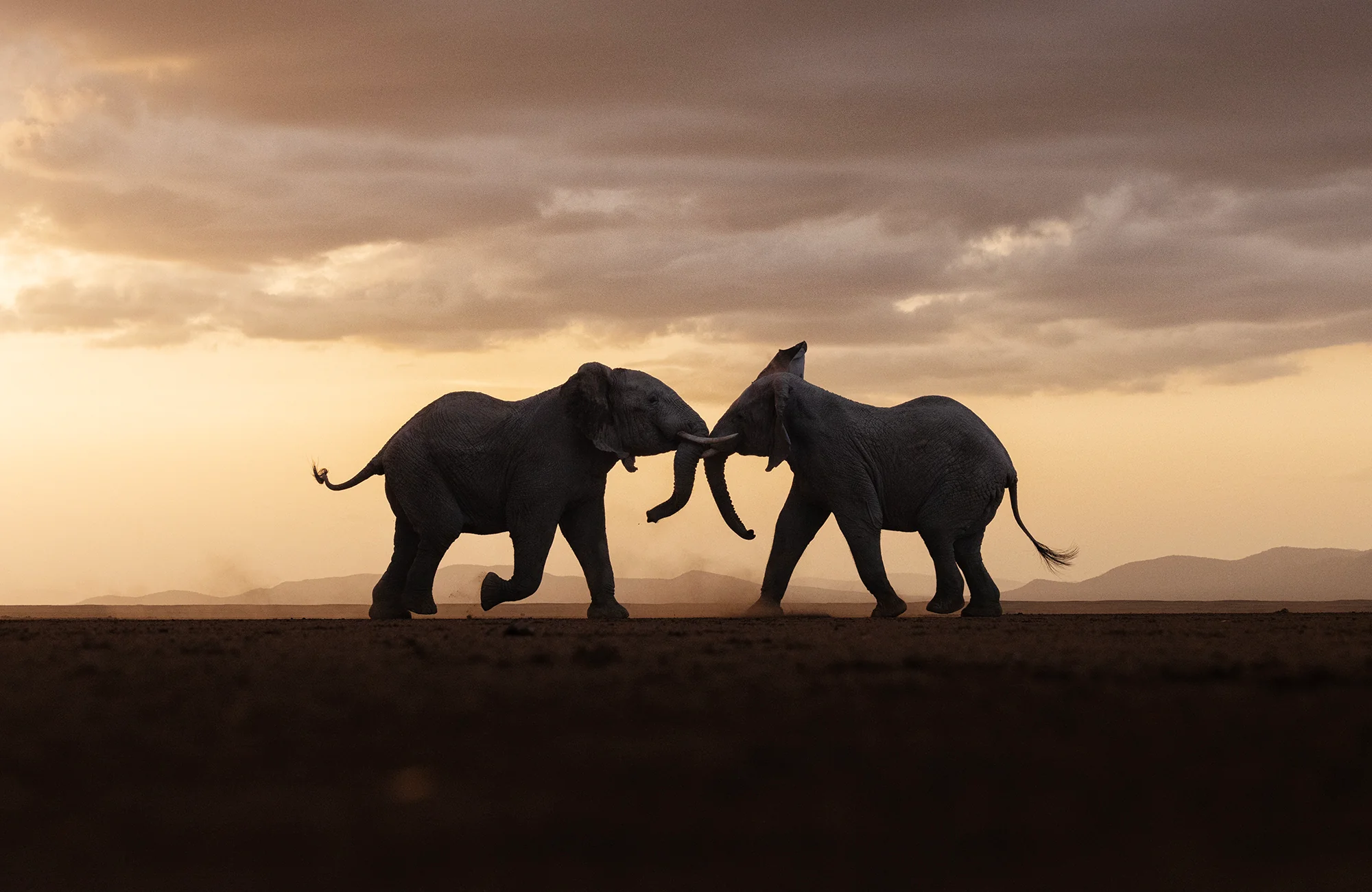
Amboseli at Sunrise: Watching Elephants Against Kilimanjaro
Getting the Timing Right
To get a shot of the sunrise, you need to plan. This is where a lot of people who are visiting Kilimanjaro for the first time go wrong. Kilimanjaro is a shy mountain. The clouds start to cover it up as the day goes on, and by the time it’s mid-morning, the mountain is often hidden behind a big wall of haze, even if it was clear as can be at dawn. The people who live around there will tell you the thing that guides have been saying for a long time: if you want to see the top of Kilimanjaro, you need to get up early. The best time to see it is usually between 6:00 and 9:00 in the morning and again at dusk if you are lucky. If you miss this time, you might spend three days in the park without getting a view of Kilimanjaro. This is why serious photographers plan their trip around the sunrise. Taking a picture of elephants against the backdrop of Kilimanjaro at sunrise in Amboseli is not one of many options; it is the only way to get that specific picture.
The Best Months to Visit
The time to visit is during the dry season, which is from June to October. This time of year gives you the chance of seeing Kilimanjaro clearly. There are clouds, so you can see the mountain more often, and the dry ground makes the elephants go to the swamps in the middle of the park, where you can see them easily. January and February are also months to visit because the grass is shorter and the mornings are clearer than they are during the rainy season that starts in March. If you can choose when you want to go, try to go during these months. If you cannot choose, do not worry. Even if you can only see part of Kilimanjaro with the sun shining on the snow and the elephants eating below it is still worth the trip to see Kilimanjaro.
Where to Position Yourself in the Park
Where you’re in the park is just as important as when you are there. There is a hill called Observation Hill near the middle of the park, and it is one of the few places where you can get out of your car and walk around. From the top of this hill, you can see the whole herd of elephants moving through the grass long before they get to the water. Guides also like to go to the areas around Enkongo Narok and Longinye swamps, where the elephants go to drink and eat in the morning. Ask your driver to park the car so that the sun is behind you and Kilimanjaro is right in front of you. This is simple. It makes a big difference in your pictures. You do not want a picture with the sun behind the elephants; you want one where you can see every detail on their skin because the light is shining on them.
Planning Your Visit
What to Pack
You should bring a camera lens that’s longer than you think you need, something between 200 and 400mm if you are serious about taking pictures of elephants at Amboseli. This is because the elephants often stay away from the cars even when they are calm. A wide-angle lens is also good because you can use it to take pictures of the herd with Kilimanjaro in the background. You should also bring clothes that you can wear in layers because it can get very cold in the morning, even if it gets hot in the afternoon. Most of the camps offer to take you out early around 5:30, which seems like an idea until you are sitting in the dark, watching the sky change color, and then you realize that it is worth it.
Where to Stay
Staying near the park makes it a lot easier to get to the spots for sunrise. There are a lot of tented camps and lodges outside the park, and they can get you to the good spots quickly. Ol Tukai Lodge and Tortilis Camp are two places that’re close enough to the park to get you to Observation Hill before the sun starts to rise. You should book your stay well in advance during the dry season because a lot of people want to see Amboseli at sunrise with the elephants and Kilimanjaro, and the camps get full quickly.
Park Fees and Permits
It costs around 60 US dollars per day to get into the park. You need to pay with a card that works internationally or you can arrange to pay through your lodge. You also need to get a permit for your car. Your safari operator can usually take care of that for you. It is not hard to do. It is a good idea to take care of it before you get to the park so that you can spend your first morning watching the sunrise instead of dealing with the details
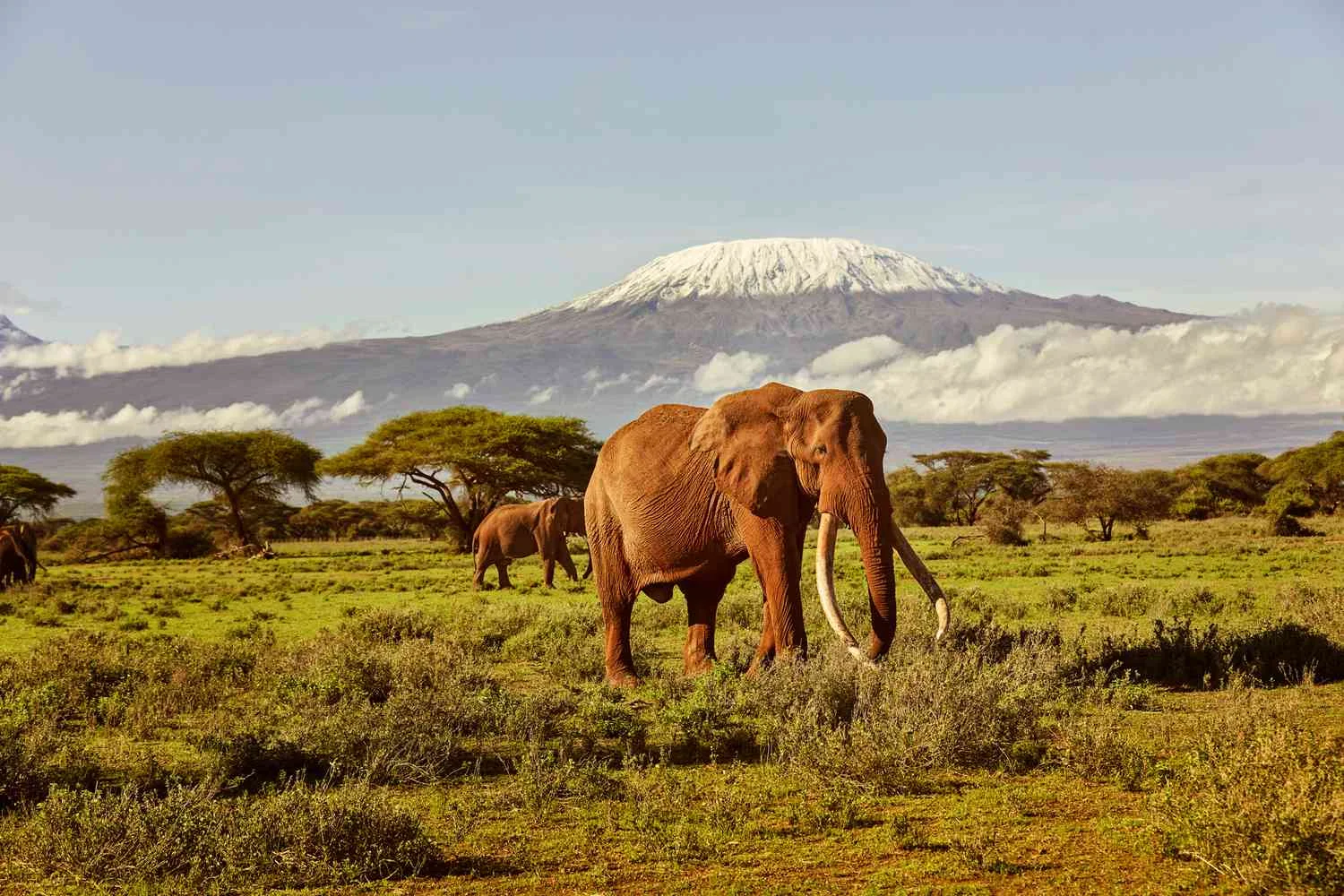
Golden morning light hits an elephant herd crossing the Amboseli swamp near Kilimanjaro.
More Than a Photograph
The sound in this place is really important. Most people do not expect it to be so important. Before the sun comes up all the way, the park is very quiet. You can hear birds singing. Sometimes you can hear a low rumble. This rumble is from an elephant talking to its family across the swamp. The rumble is too low for most people to hear. You can feel it in your chest if you are close enough to the elephant and the vehicle is not making any noise. When the elephants get closer, you can hear sounds too. You can hear them eating grass and splashing in the water. Sometimes a young elephant will make a noise if it gets scared. You cannot hear these sounds in photographs. That is why it is a good idea to put your camera away for a few minutes and just watch the elephants.
The guides here are very important. They know a lot about the elephants. Can you tell me which elephant is in charge of the group? They can also tell you why the elephants are moving to the swamp early. The guides have been watching the elephants for a time and know a lot about them. They can make your trip to see the elephants very educational. You should ask them questions. Most of the guides in Amboseli have been watching the elephants for a long time and know more about them than most people.
There is a side to this experience that is easy to miss. If you sit still and watch the elephants, you can see how they work together. The baby elephants stay close to the adults. The older females watch everything that is going on. They watch the vehicle and the horizon. They are always paying attention. You can see that each elephant has its own personality. Some elephants are cautious. Some are brave. This is the part of the experience that people remember long after they have forgotten about their camera settings. You came to see the mountain and the elephants. You leave remembering the elephants and how they communicate with each other.
Building Your Morning Around It
What makes Amboseli special is not the mountain or the elephants. It is the combination of the two. There are no places where you can see elephants and a big mountain like Kilimanjaro. Amboseli is special because it has both of these things and a lot of history. If you stand on Observation Hill and watch the sun rise over Kilimanjaro, you can see why people come back year after year.
If you only have one morning in Amboseli, you should get up early. Set your alarm for 5:00. Get in the vehicle before the sun starts to rise. Let the guide take you to the swamp where the elephants are. The rest of your trip will be good. Seeing the elephants at sunrise is the best part. It is worth planning your day around it. Amboseli at sunrise, with the elephants and Kilimanjaro, is the reason you came here.


