

Great Migration Predator Action: Lions, Cheetahs and Hyenas in the World’s Greatest Wildlife Drama
The Great Migration predator action is one of the most intense wildlife spectacles on Earth, unfolding across the vast savannahs of the Serengeti in Tanzania and the Masai Mara in Kenya. While millions of wildebeest, zebras, and gazelles move in search of fresh grazing and water, they are constantly shadowed by Africa’s most efficient hunters. Among them, lions, cheetahs, and hyenas dominate the landscape, each using distinct strategies to exploit the chaos of the migration.
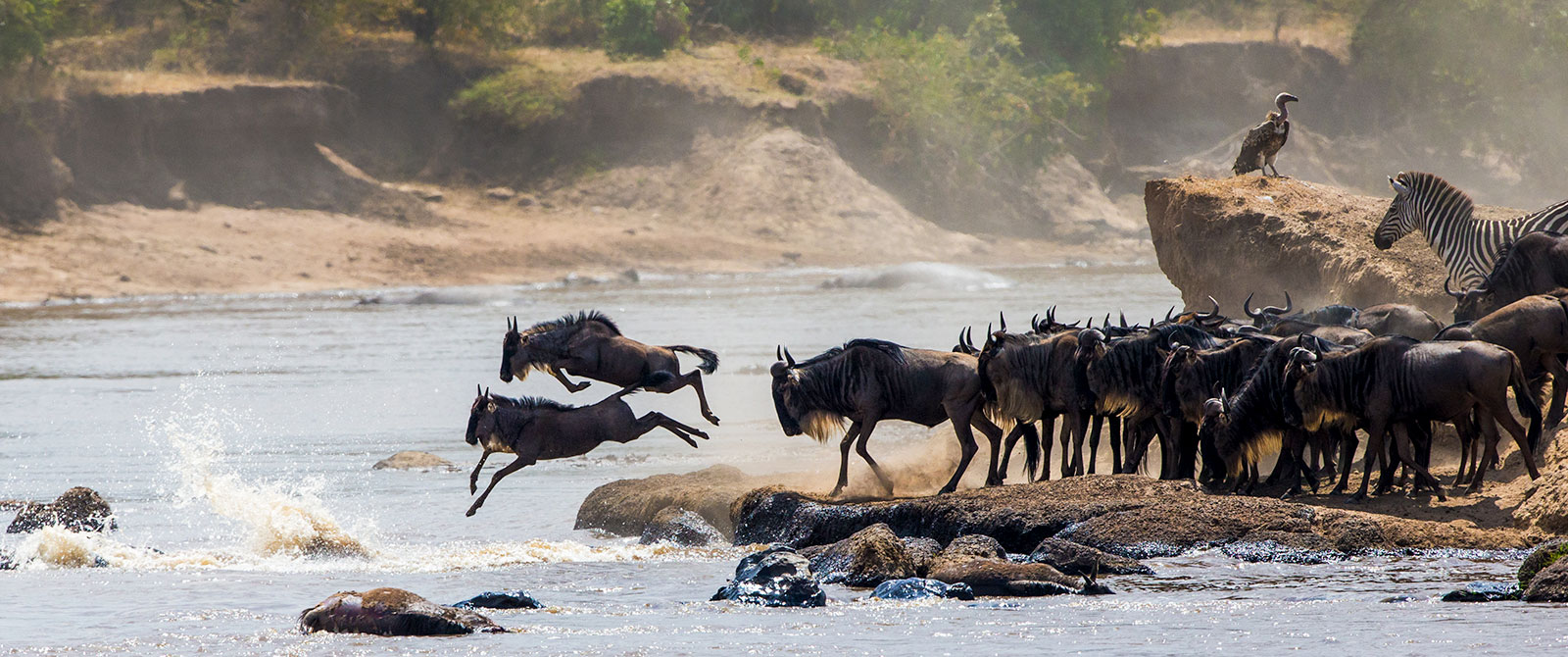
This dramatic predator-prey interaction is not random but follows seasonal patterns tied to rainfall and river crossings, particularly the famous Mara River crossings where animals face crocodile-infested waters on one side and ambush predators on the other. The migration is therefore not just a journey of survival for herbivores but a continuously evolving battlefield where survival depends on instinct, speed, coordination, and opportunity.
Understanding predator behavior during the Great Migration reveals the hidden structure of the ecosystem, where every chase, ambush, and failed hunt plays a role in maintaining ecological balance. Lions, cheetahs, and hyenas do not compete in a simple way; instead, they occupy different hunting niches that reduce direct conflict while maximizing survival efficiency.
The Serengeti-Mara Ecosystem: Stage of the Predator Drama
The Serengeti-Mara ecosystem provides the perfect hunting ground due to its open grasslands and high prey density, making it one of the richest predator environments in the world. The migration itself fuels this abundance, drawing over a million wildebeest and hundreds of thousands of zebras and gazelles into predictable movement corridors.
This predictable movement creates seasonal “hot zones” of predator activity, especially around river crossings, calving grounds, and resting plains. In the southern Serengeti during calving season, predators take advantage of vulnerable newborns, while in the northern Masai Mara, river crossings become deadly bottlenecks where exhaustion and confusion increase predator success rates.
The balance between predator and prey is maintained through constant adaptation and counter-adaptation, where prey animals evolve vigilance, herd coordination, and speed, while predators refine ambush tactics, endurance hunting, and social cooperation. This ongoing evolutionary pressure shapes every interaction seen during the migration.
Lions: The Strategic Powerhouses of the Migration
Lion
Lions are the dominant social predators of the Great Migration ecosystem, operating in structured prides that allow them to hunt large prey and defend territories across vast savannah landscapes. Unlike solitary hunters, lions rely on teamwork, coordination, and strategic positioning to bring down animals that often outweigh them.
During the migration, lions maximize their success by targeting night hunts and ambush scenarios, particularly when herds are resting or crossing into unfamiliar terrain. Their strength lies in patience and timing, as they often stalk prey for long periods before launching a short, explosive attack that overwhelms the target within seconds.
The presence of large herds forces lions to adapt their hunting patterns seasonally, often focusing on weaker individuals such as calves, injured adults, or isolated animals separated from the main herd. In the southern Serengeti, lionesses are especially active during the calving season when newborn wildebeest provide easy opportunities.
Despite their power, lions are not always the most efficient hunters individually, with success rates heavily dependent on cooperation. Their dominance in the ecosystem comes not from speed but from their ability to control territory and monopolize access to prey-rich areas during peak migration periods.
Cheetahs: Speed Specialists of the Open Plains
Cheetah
Cheetahs represent the ultimate expression of speed and precision in the Great Migration predator hierarchy, built for short, explosive chases across open terrain. Their slender bodies, enlarged lungs, and specialized claws allow them to accelerate rapidly and reach speeds unmatched by any other land animal.
During migration periods, cheetahs rely heavily on visibility and isolation to hunt effectively, preferring areas where tall grass or scattered shrubs allow them to approach unnoticed before launching a high-speed pursuit. Their strategy is highly selective, targeting smaller and more vulnerable prey such as young gazelles or isolated wildebeest calves.
Unlike lions, cheetahs avoid confrontation and competition with stronger predators, often relinquishing kills to hyenas or lions shortly after a successful hunt. This behavioral adaptation ensures survival in a landscape dominated by larger, more aggressive carnivores.
The success of a cheetah hunt depends entirely on energy efficiency and precision timing, as their bodies overheat quickly after sustained sprints. As a result, every chase must be calculated, short, and decisive, making each hunting attempt a high-stakes event during the migration.
Hyenas: The Underrated Masters of Opportunism
Spotted hyena
Hyenas play one of the most complex and misunderstood roles in the Great Migration ecosystem, acting as both skilled hunters and highly efficient scavengers. Their success lies not in speed or strength alone but in intelligence, coordination, and adaptability.
Unlike the solitary approach of cheetahs or the structured pride system of lions, hyenas operate in large clans with sophisticated social hierarchies, allowing them to overwhelm other predators through numbers and endurance. These clans can track migrating herds over long distances, waiting for opportunities created by exhaustion, injury, or conflict.
During migration events, hyenas often exploit chaos rather than initiate it, arriving at kills made by lions or cheetahs and using their numerical advantage to claim or steal food. However, they are also capable hunters, especially when targeting weaker individuals or during nighttime pursuits.
Their ability to endure long chases and consume nearly every part of a carcass makes them essential to ecosystem balance, ensuring that no kill goes to waste. This scavenging efficiency also reduces disease risk and recycles nutrients back into the environment.
Predator Interactions: Competition and Coexistence
The Great Migration creates intense but structured competition between predators, where lions, cheetahs, and hyenas constantly overlap yet rarely follow identical strategies. This reduces direct conflict while ensuring that each predator exploits a different ecological niche.
Kill theft is one of the most common interactions between species, with hyenas often challenging cheetah kills and lion prides dominating access to carcasses. These interactions create a constant power balance that shifts depending on numbers, timing, and terrain.
Despite competition, these predators collectively stabilize the ecosystem, preventing overpopulation of herbivores and ensuring natural selection continues shaping migration dynamics.