

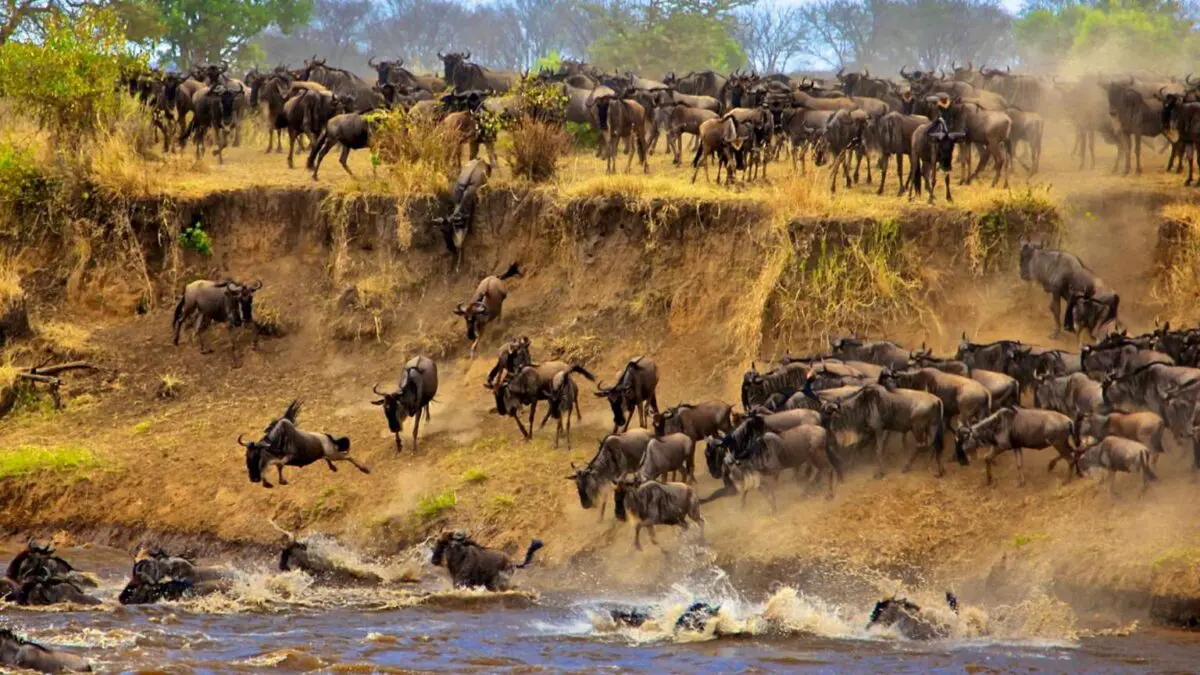
Great Migration January: Calving Season Peak in Ndutu
Overview of the January Great Migration in Ndutu
January in Tanzania marks one of the most dramatic and rewarding phases of the Great Migration, as vast herds of wildebeest settle in the fertile plains of Ndutu for the calving season. Located within the southern reaches of the Serengeti National Park and the Ngorongoro Conservation Area, the Ndutu region transforms into a wildlife-rich ecosystem fueled by seasonal rains and nutrient-dense grasses.
This period is defined by life, vulnerability, and ecological intensity, offering a completely different experience compared to river crossings seen later in the year. Instead of dramatic river chaos, January delivers intimate wildlife encounters, newborn animals, and heightened predator activity, making it a prime time for photographers and safari enthusiasts seeking raw and authentic African wilderness moments.
The landscape itself becomes a vital part of the experience, as green plains stretch endlessly under dramatic skies. These open habitats provide excellent visibility, allowing visitors to witness wildlife behavior on a large scale while still enjoying close-up encounters in designated off-road areas.
Ndutu Plains: The Center of Calving Activity
The Ndutu plains are the epicenter of the Great Migration during January, providing ideal conditions for calving due to their nutrient-rich short grasses. These grasses are essential for pregnant wildebeest, offering high calcium and protein content that supports both mothers and newborn calves.
Seasonal rains rejuvenate the entire ecosystem, creating a vibrant and productive environment. The fresh vegetation not only sustains massive herds but also attracts other herbivores such as zebras and gazelles, which move alongside the wildebeest in large numbers.
Ndutu’s open terrain plays a crucial role in survival. With minimal tree cover, predators are easier to spot, giving mothers and calves a better chance to react quickly to danger. This natural advantage makes the region a strategic calving ground year after year.
The Calving Season: A Spectacle of Life
January signals the beginning of the calving season, a period that builds toward its peak in February but already sees thousands of births across the plains. Wildebeest synchronize their calving within a short timeframe, a natural survival strategy that overwhelms predators through sheer numbers.
Newborn calves demonstrate extraordinary resilience from the moment they are born. Within minutes, they are able to stand and walk, and within a few hours, they can run alongside the herd. This rapid adaptation is critical for survival in an environment filled with predators.
The emotional intensity of the calving season is unmatched. Witnessing mothers nurturing their young, calves taking their first steps, and herds moving in unison across the plains creates a deeply moving and unforgettable safari experience.
Predator Activity: High Drama on the Plains
The abundance of vulnerable calves attracts a high concentration of predators, making January one of the most action-packed months in Ndutu. Lions, cheetahs, hyenas, and jackals are all present in significant numbers, taking advantage of the seasonal food supply.
Predator-prey interactions are frequent and intense. Hunting activity increases during this period, offering rare opportunities to witness real-time wildlife drama. For photographers and wildlife enthusiasts, this creates exceptional opportunities to capture dynamic and powerful moments.
Despite the losses, the migration remains resilient. The sheer number of births ensures that the population continues to thrive, maintaining the ecological balance of the Serengeti ecosystem.
Wildlife Diversity Beyond the Migration
Ndutu’s ecosystem supports a wide variety of wildlife beyond the migrating herds. Zebras and gazelles accompany the wildebeest, contributing to the region’s biodiversity and enhancing game viewing opportunities.
Larger mammals such as elephants, giraffes, and buffalo are also present in surrounding areas. These species add depth to the safari experience, allowing visitors to encounter a broader range of wildlife within a relatively small area.
Birdlife flourishes during the green season. Seasonal water bodies attract numerous bird species, making Ndutu an excellent destination for birdwatching alongside traditional safari activities.
Weather and Landscape in January
January falls within the green season, characterized by short rains that rejuvenate the landscape without significantly disrupting travel. Rainfall is typically brief and followed by sunshine, creating fresh, vibrant scenery and dramatic skies.
Temperatures are warm and comfortable. Daytime temperatures generally range between 25°C and 30°C, while mornings and evenings can be cooler, especially after rainfall.
The visual appeal of the landscape is at its peak. Lush grasslands, scattered trees, and cloud-filled horizons provide stunning backdrops for wildlife viewing and photography.
Best Safari Strategies for January in Ndutu
Planning your safari around wildlife behavior and timing is essential for maximizing your experience. Early morning and late afternoon game drives offer the best opportunities for observing both predator and prey activity.
Choosing accommodation within or near Ndutu enhances accessibility. Staying close to key wildlife areas reduces travel time and allows for more flexible game drives.
Working with experienced guides significantly improves sightings. Professional guides understand animal movement patterns and can position vehicles strategically for optimal viewing.
Flexibility is key during the migration. While January reliably hosts large herds in Ndutu, exact locations may vary depending on rainfall patterns, making adaptability an important part of the safari experience.
Photography Opportunities During Calving Season
January offers some of the most rewarding wildlife photography opportunities in Africa. The combination of abundant animals, dramatic interactions, and lush landscapes creates ideal conditions for capturing compelling images.
Lighting conditions are particularly favorable during early mornings and evenings. Soft, golden light enhances the quality of photographs, adding depth and warmth to wildlife scenes.
Behavioral photography is a highlight of this season. From newborn calves taking their first steps to predators stalking prey, the range of photographic subjects is diverse and dynamic.
Why January is One of the Best Times for the Great Migration
January provides a unique perspective on the Great Migration, focusing on birth and survival rather than movement. This makes it one of the most intimate and emotionally engaging times to witness the cycle of life in the wild.
Wildlife density is exceptionally high. The concentration of animals in Ndutu ensures consistent sightings and reduces travel time between locations.
The balance between predator and prey creates continuous action. Every game drive offers the potential for new and exciting wildlife encounters.
Conclusion
January in Ndutu represents one of the most extraordinary phases of the Great Migration, where life begins amidst constant challenge and survival. The calving season brings together vast herds, newborn animals, and predators in a powerful display of nature’s cycles.
For travelers seeking an authentic and immersive safari experience, this period offers unmatched opportunities to witness wildlife behavior, ecological balance, and breathtaking landscapes. From the first steps of newborn calves to the strategic movements of predators, every moment in Ndutu during January is a testament to the raw beauty of the natural world.