Great Migration November: Calving Season Begins — What to Know
November marks the start of a transformative period in the Great Migration, as herds of Blue Wildebeest gradually move back into the southern Serengeti and prepare for the calving season. For travellers planning a safari in 2026, November offers a unique and compelling experience, distinct from the high-intensity river crossing months of August and September.
During this time, the focus shifts from dramatic northern crossings to the renewal of life on the southern plains, with thousands of newborn wildebeest appearing within dense herds. The landscape transforms, predator activity intensifies, and the ecosystem begins a new cycle that will dominate the coming months.
Migration Movements in November
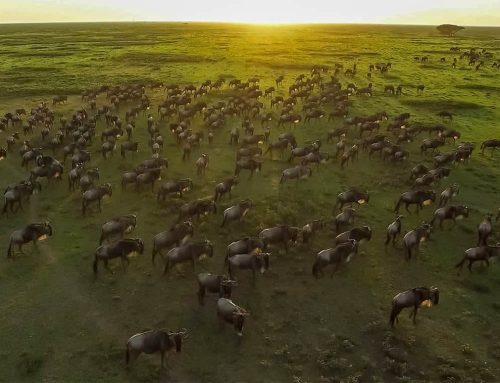
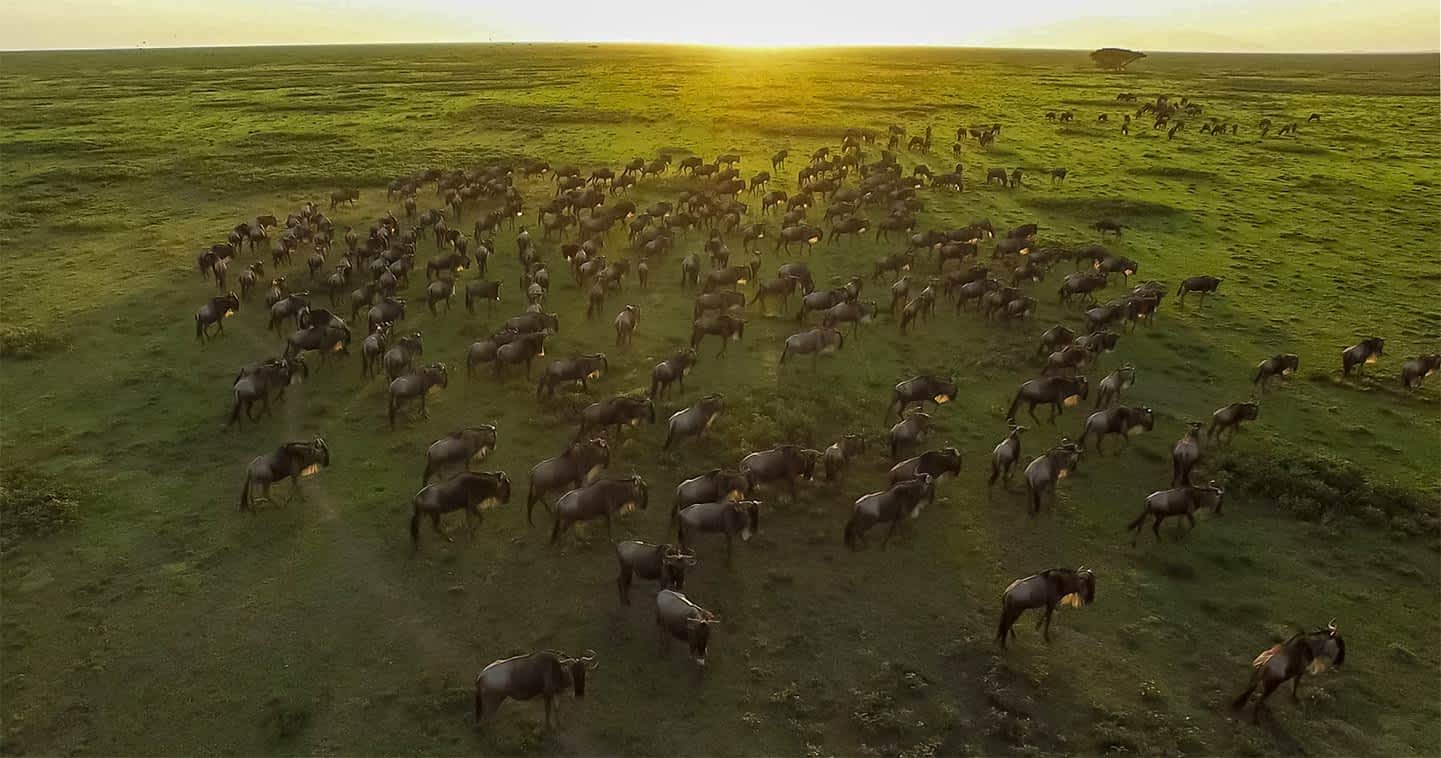
By November, the herds have largely left the northern Serengeti and Masai Mara, moving southward toward the central and southern plains of Serengeti National Park. This movement is driven by the first seasonal rains, which stimulate fresh grass growth, creating ideal grazing conditions.
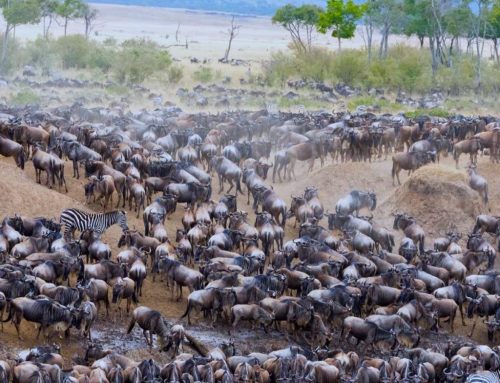
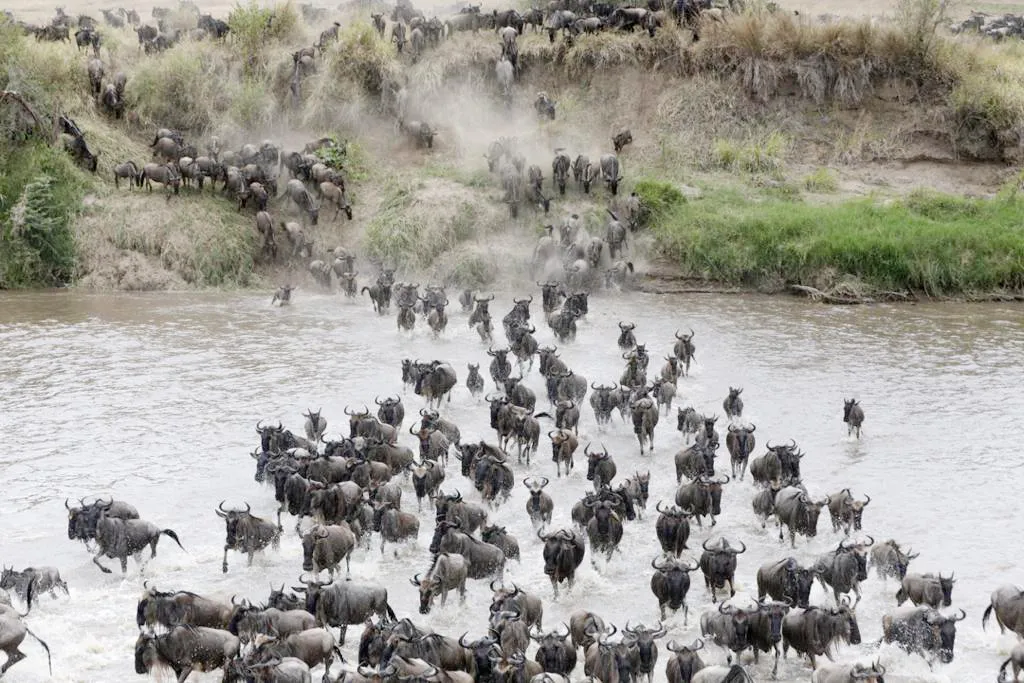
On the ground, travellers can witness long lines of wildebeest gradually advancing across the landscape, often interspersed with zebras, gazelles, and other herbivores. Herd density in the south begins to increase, providing ample opportunities for wildlife viewing and photography.
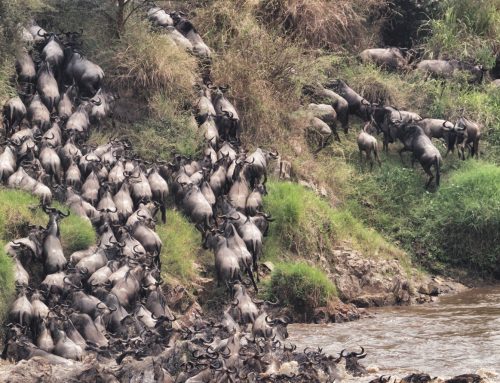
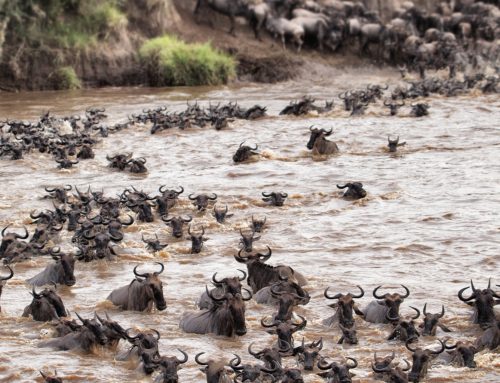
Unlike the chaotic Mara River crossings, November offers continuous movement and regrouping, allowing travellers to observe the migration’s rhythm in a more fluid, less hurried environment.
The Start of Calving Season
November heralds the onset of the calving season, which will reach its peak in January and February. While only a small proportion of calves are born in November, the southern Serengeti begins to see newborn wildebeest scattered among adult herds.
This is a critical time for the ecosystem, as predators begin to focus on vulnerable calves, increasing sightings of lions, cheetahs, hyenas, and crocodiles in areas where herds congregate. Travellers may witness early predator-prey interactions linked to the calving process, providing insight into the dynamics that will define the coming months.
Wildlife Encounters Beyond Wildebeest
November is not just about wildebeest movement. The southern Serengeti supports a diverse array of resident wildlife, and the returning herds attract opportunistic predators and scavengers.
Visitors can expect to see:
- Lions and leopards positioning themselves near calving herds
- Hyenas tracking vulnerable individuals
- Elephants, giraffes, and buffalo grazing peacefully alongside migrating animals
- Birdlife increasing in abundance, particularly scavengers such as vultures
The mixture of resident and migratory species creates a dynamic and engaging safari experience.
Landscape and Weather Conditions
November falls within the short rainy season in the Serengeti, bringing sporadic showers and verdant landscapes. This transition from dry to green adds dramatic contrast to the scenery, with golden plains beginning to be replaced by fresh green growth.
Road conditions can be variable due to rain, but experienced guides with 4×4 vehicles ensure access to key areas. The combination of cooler mornings, occasional rain, and lush scenery creates comfortable conditions for game drives and photography.
Predator Dynamics During Early Calving
Predator activity begins to escalate in November, particularly around congregating herds in the southern Serengeti. While the full intensity of calving predators occurs later, early calves provide target opportunities for lions, hyenas, and cheetahs, offering travellers the chance to witness natural predation.
This period is ideal for observing hunting strategies, stalking behavior, and the interplay between predator and prey, without the overwhelming crowds typical of river crossing months.
Photography Opportunities
November offers a unique photography experience, distinct from the dusty, high-contrast scenes of the dry season. The emerging greenery, scattered herds, and early calves create rich compositional possibilities.
Travellers can capture:
- Interaction between adults and newborns
- Predators observing or stalking herds
- Herd movement across vibrant landscapes
- Atmospheric lighting conditions enhanced by short rains
Photographers seeking storytelling and wildlife behavior shots will find November particularly rewarding.
Crowds and Safari Atmosphere
November sees a natural reduction in safari crowds, as the peak August–September season ends. This quieter period allows for more intimate and relaxed game drives, providing a sense of immersion in the migration without the heavy vehicle presence near river crossings.
This makes November ideal for travellers who value space, tranquility, and a focus on ecological interactions rather than high-intensity spectacles.
What Travellers Should Know
For a November safari, it’s important to understand the following:
- Crossings are rare or minimal; the focus is on herd movement and calving
- Weather can be variable due to early rains, so pack for both sun and showers
- Herd density is building, so multiple days in key southern areas improve wildlife encounters
- Guides with local migration knowledge are critical for positioning near calving herds
Travellers should approach November with an emphasis on observation, photography, and ecological understanding, rather than chasing dramatic river crossings.
Who Should Travel in November
November is ideal for travellers seeking fewer crowds, lush landscapes, and early calving action. It suits photographers, families, and wildlife enthusiasts who want a more reflective and immersive safari experience.
It also appeals to travellers who want to see the migration in its natural rhythm, understanding the journey rather than focusing solely on spectacle.
November represents the beginning of the calving season and the southward movement of the herds, offering a unique perspective on the Great Migration. While dramatic river crossings have passed, the migration’s story continues, revealing movement, predator-prey dynamics, and the emergence of new life.
For 2026 travellers, November provides a rich, less crowded safari experience, blending vibrant landscapes, active wildlife, and the first signs of calving. It is an ideal month for those who want to witness the migration’s evolving cycle and gain a deeper appreciation of one of the planet’s most extraordinary natural events.