Great Migration August: Best Spots and River Crossing Odds
August is widely regarded as the peak month for witnessing the most dramatic phase of the Great Migration, as vast herds of Blue Wildebeest concentrate in the northern reaches of Serengeti National Park and spill into Masai Mara National Reserve. This is the period when the legendary Mara River crossings occur most frequently, creating the iconic scenes that define African safaris.
On the ground in August 2026, the migration reaches a critical point of tension and movement, where survival decisions unfold in real time. Understanding where to position yourself and what the actual crossing odds are can significantly influence your safari experience.
The Migration in August: Peak Concentration and Movement
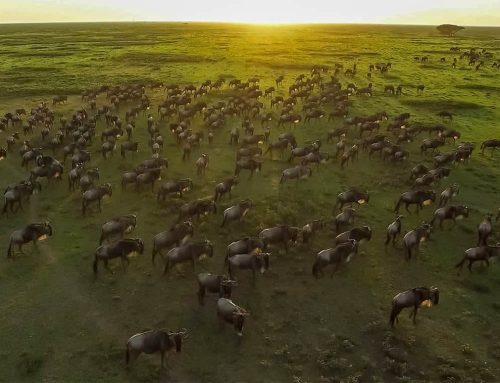
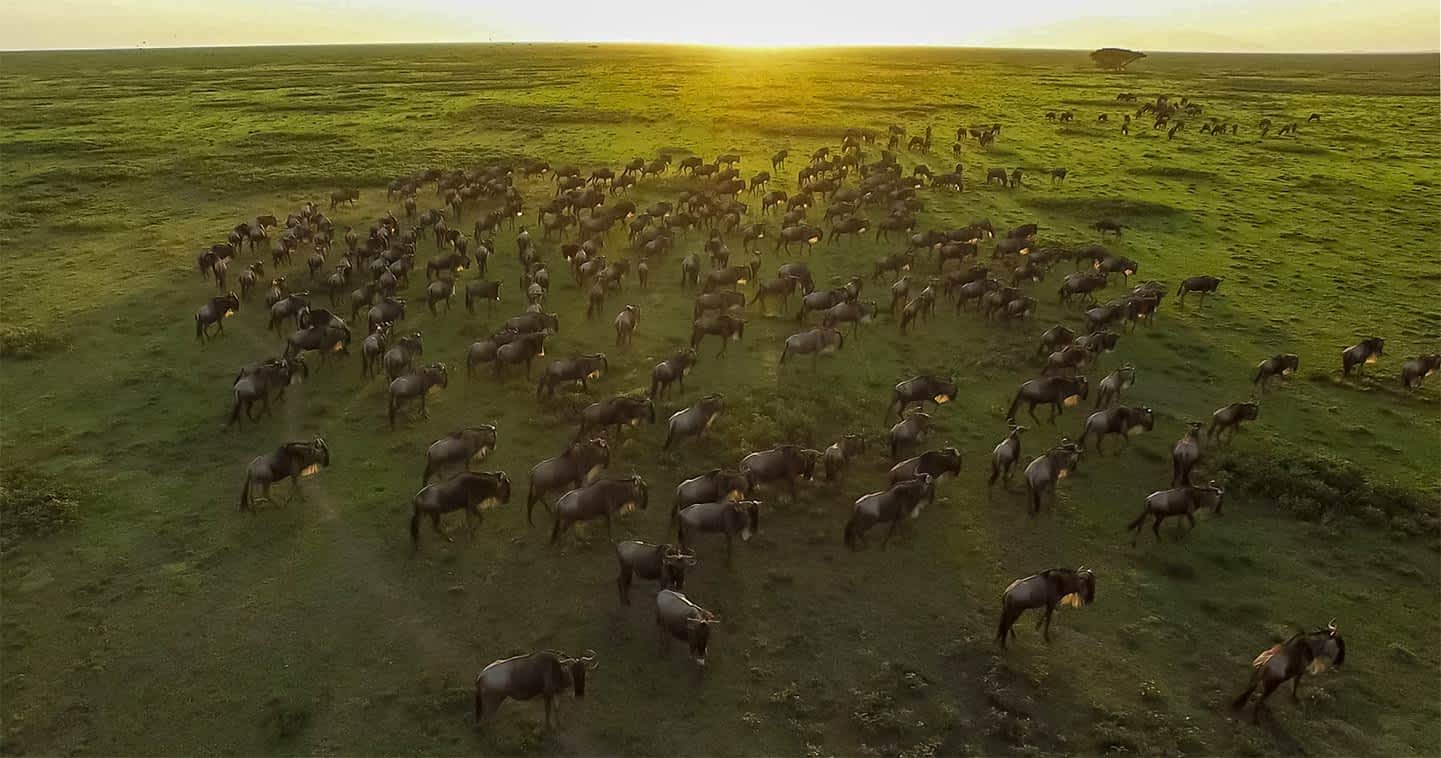
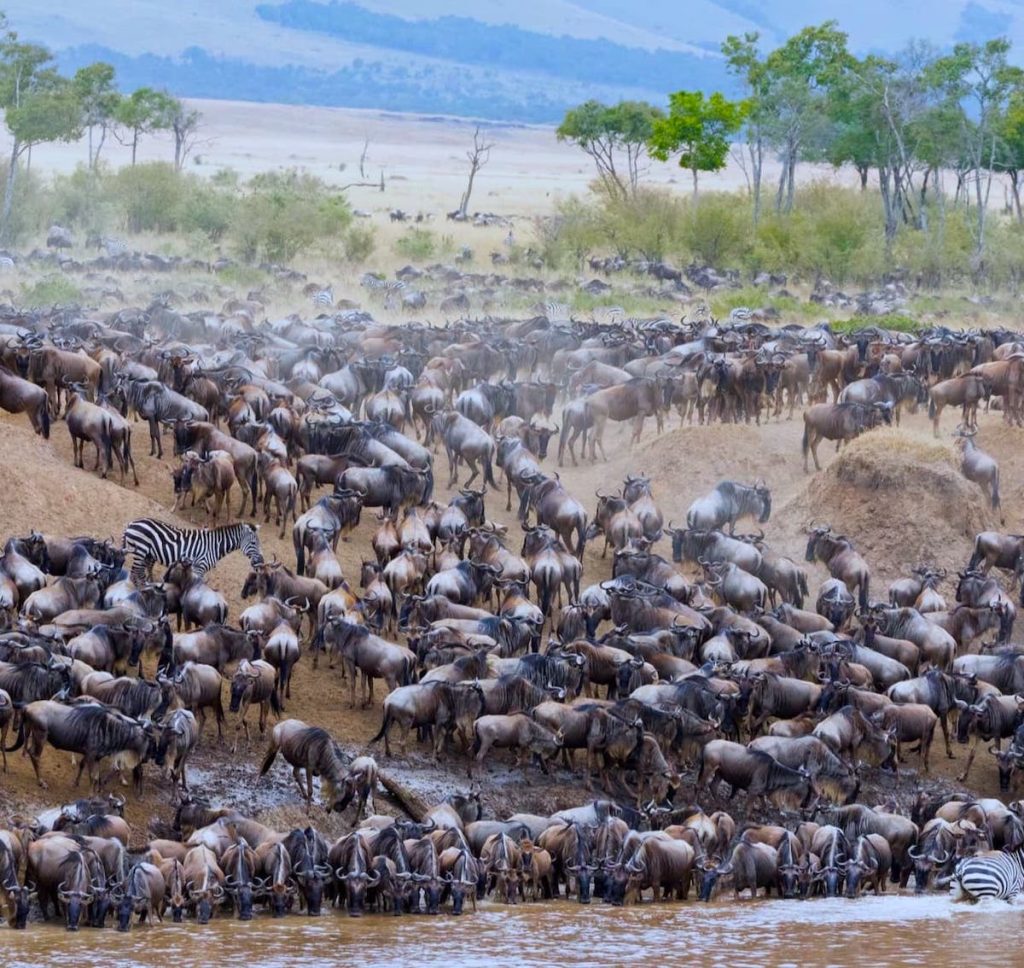
By August, the migration has reached its most visually impressive stage. Hundreds of thousands of wildebeest gather in the northern Serengeti and along the Mara River, forming dense herds that stretch across the plains.
This concentration creates a high-energy environment, with constant movement as herds push toward crossing points. Unlike July, which is transitional, August delivers consistent large-scale action, with multiple herds arriving, waiting, and attempting crossings throughout the month.
The landscape becomes a stage for decision-making and instinct, as animals react to water levels, predator presence, and herd pressure. This makes every day in the field unpredictable and potentially spectacular.
Best Spots in the Northern Serengeti
The northern Serengeti is the primary hotspot in August, particularly areas surrounding the Mara River. Key regions include Kogatende, Lamai Wedge, and nearby river crossing points.
These locations offer strategic vantage points where herds gather before crossing. Travellers staying in mobile camps or lodges near these zones have the best chance of being in position when crossings occur.
On the ground, guides monitor herd movements closely, often repositioning vehicles throughout the day to track where crossings are most likely to happen. Being close to the river is essential, as crossings can occur suddenly and last only a short time.
Masai Mara: The Kenyan Side of the Action
Across the border in the Masai Mara National Reserve, the migration continues with equally dramatic crossings. Areas such as the Mara Triangle and Talek region are known for frequent activity during August.
The advantage of the Masai Mara is the open landscape, which allows for easier viewing and photography. Herds often cross back and forth between Tanzania and Kenya, increasing the chances of witnessing multiple crossings during a single stay.
However, the Mara can be busier than the Serengeti, particularly at well-known crossing points, making lodge location and guide expertise critical for a high-quality experience.
River Crossing Odds in August
August offers the highest probability of seeing river crossings, but it is important to approach this with realistic expectations.
On average, travellers spending several days in key areas have a strong chance—often estimated at 70–90%—of witnessing at least one crossing, especially when guided by experienced trackers.
However, crossings are not scheduled events. Wildebeest may gather at the riverbank for hours or even days without crossing, only to suddenly surge into the water in a matter of minutes.
Factors influencing crossing odds include:
- Herd pressure and size
- Water levels and current strength
- Predator presence, especially crocodiles
- Weather and rainfall patterns
Because of this unpredictability, staying at least 3–4 nights in the northern Serengeti or Masai Mara significantly improves your chances of success.
What a Crossing Looks Like on the Ground
A river crossing is as much about anticipation as it is about action.
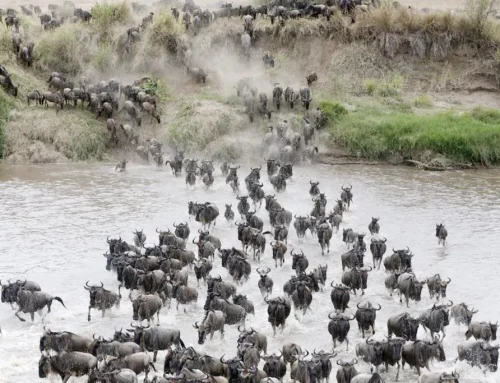
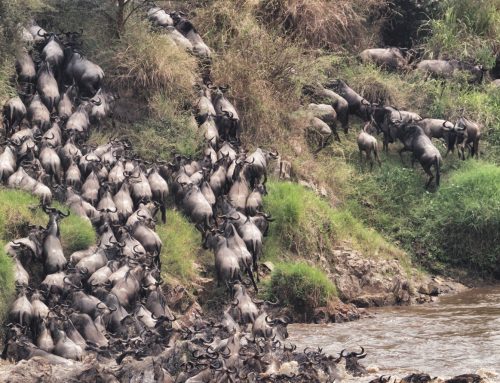
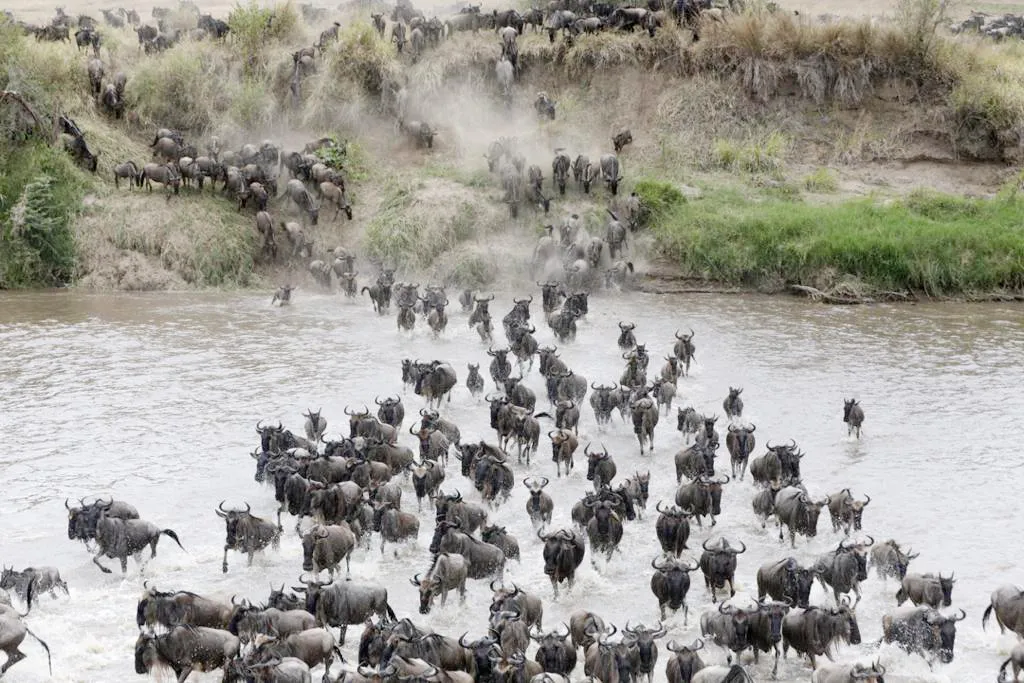
Herds gather at the riverbank, creating tension as individuals move forward and retreat repeatedly. The air fills with dust and noise, while crocodiles wait silently in the water.
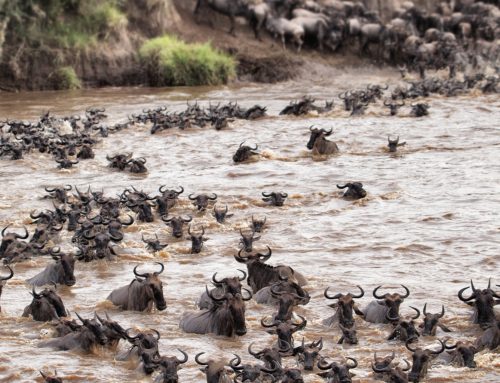
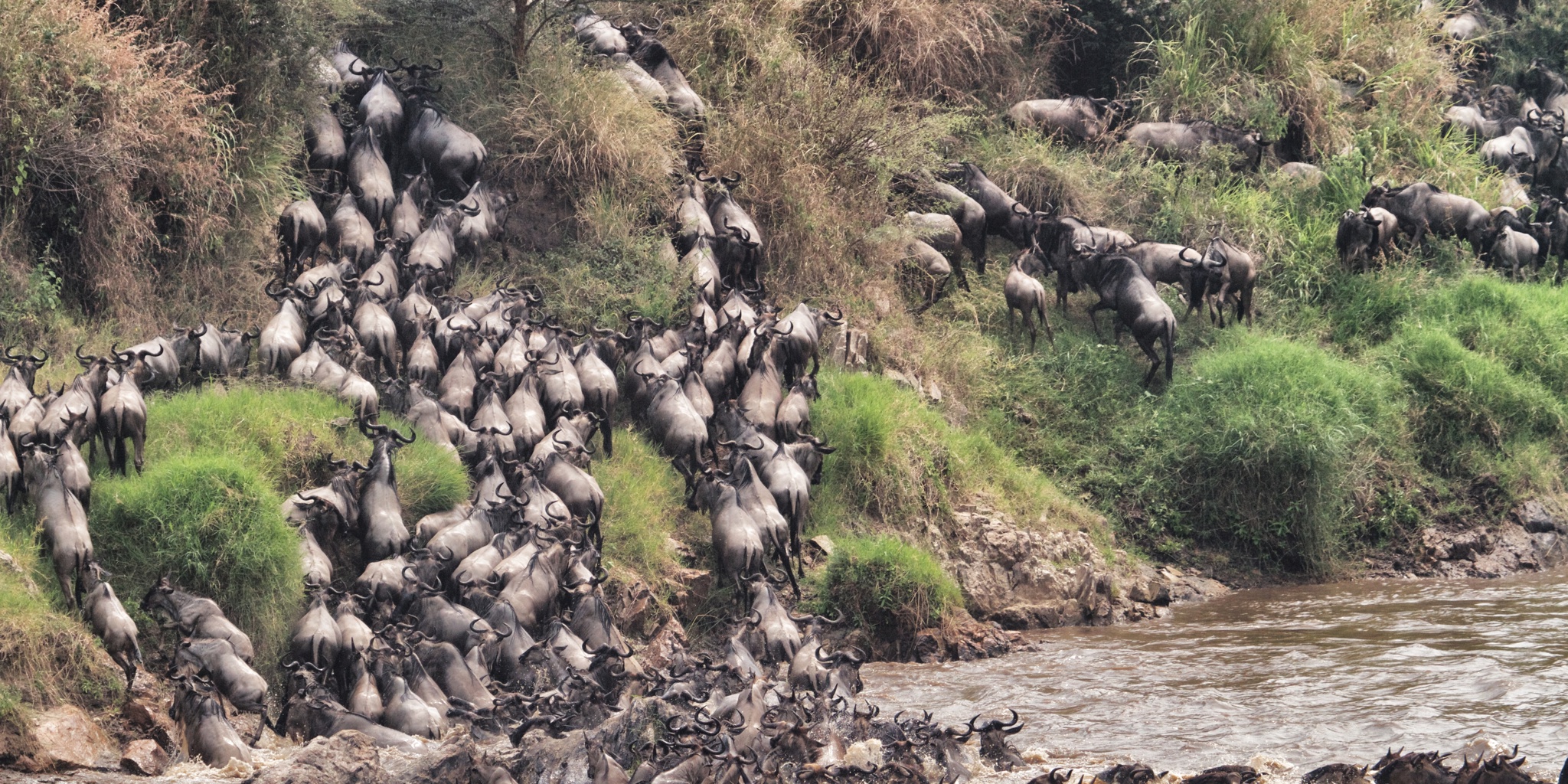
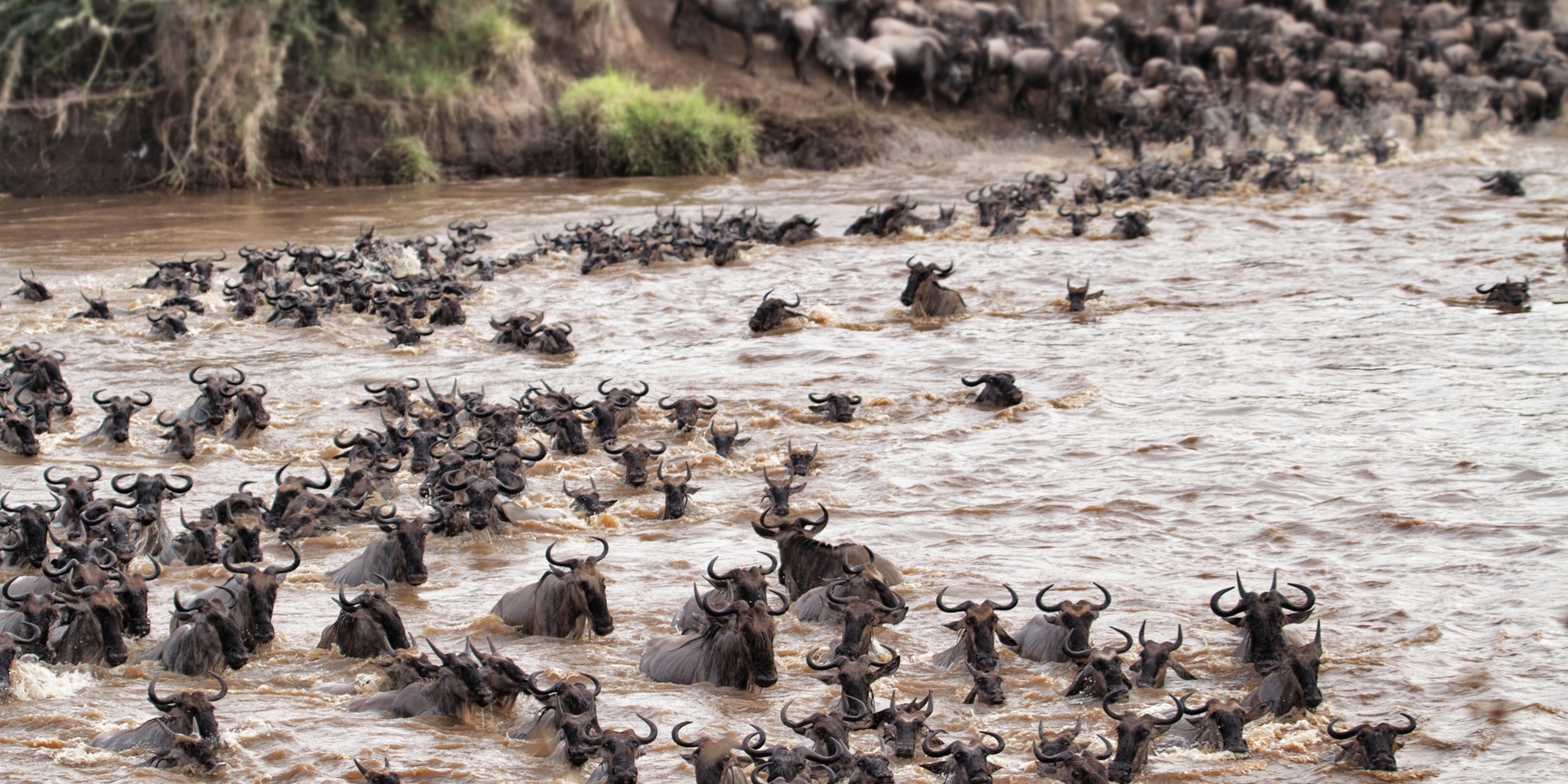
When the crossing begins, it is sudden and chaotic. Hundreds or thousands of wildebeest plunge into the river, scrambling against strong currents and steep banks. Some make it across quickly, while others struggle or fall victim to predators.
The entire event can last just a few minutes, making timing and positioning crucial. For those who witness it, the experience is intense, emotional, and unforgettable.
Crowd Reality in August
August is peak safari season, and this comes with increased visitor numbers. Popular crossing points can attract multiple vehicles, especially in the Masai Mara.
That said, the vastness of the Serengeti often allows for more exclusive viewing experiences, particularly in less crowded sections of the northern region. Choosing the right lodge or mobile camp is key to avoiding congestion.
Early morning and late afternoon game drives can also help minimize crowd exposure while maximizing wildlife activity.
Photography Conditions and Opportunities
August is one of the best months for wildlife photography. The combination of dry-season light, open landscapes, and concentrated wildlife creates ideal conditions for capturing dramatic scenes.
River crossings provide opportunities for action photography, while the surrounding plains offer wide-angle compositions of massive herds. Dust clouds, golden light, and predator interactions add depth and emotion to images.
Photographers benefit from staying close to crossing points and working with guides who understand positioning, light angles, and animal behavior.
Strategic Tips for Maximizing Your Experience
Positioning is everything in August. Staying in the northern Serengeti or Masai Mara near active crossing points significantly increases your chances of success.
Time on location matters. A minimum of three to four days in one area allows for better tracking of herd movement and increases the likelihood of witnessing crossings.
Flexibility is essential. Be prepared to adjust plans based on real-time information from guides, as herd movements can change quickly.
Manage expectations. Even in peak season, crossings are not guaranteed, but the overall experience of the migration remains extraordinary.
Conclusion
August is the prime month for experiencing the Great Migration at its most dramatic, with the highest concentration of herds and the best chances of witnessing Mara River crossings. From the northern reaches of the Serengeti to the plains of the Masai Mara, this period delivers unmatched wildlife action, scale, and intensity.
While river crossing odds are among the highest of the year, the experience still depends on timing, patience, and expert guidance. For travellers in 2026 seeking the ultimate migration safari, August offers the perfect combination of drama, density, and unforgettable moments in one of the world’s most iconic ecosystems.