How Many Wildebeest Are in the Great Migration?
The Great Migration stands as one of the most extraordinary natural events on the planet, unfolding across the sweeping plains of Serengeti National Park and the rolling savannahs of Masai Mara National Reserve. Every year, this vast ecosystem becomes the stage for a continuous movement of wildlife driven by instinct, rainfall, and survival. At the heart of this phenomenon lies a single, dominant species whose numbers define the scale of the spectacle: the wildebeest.
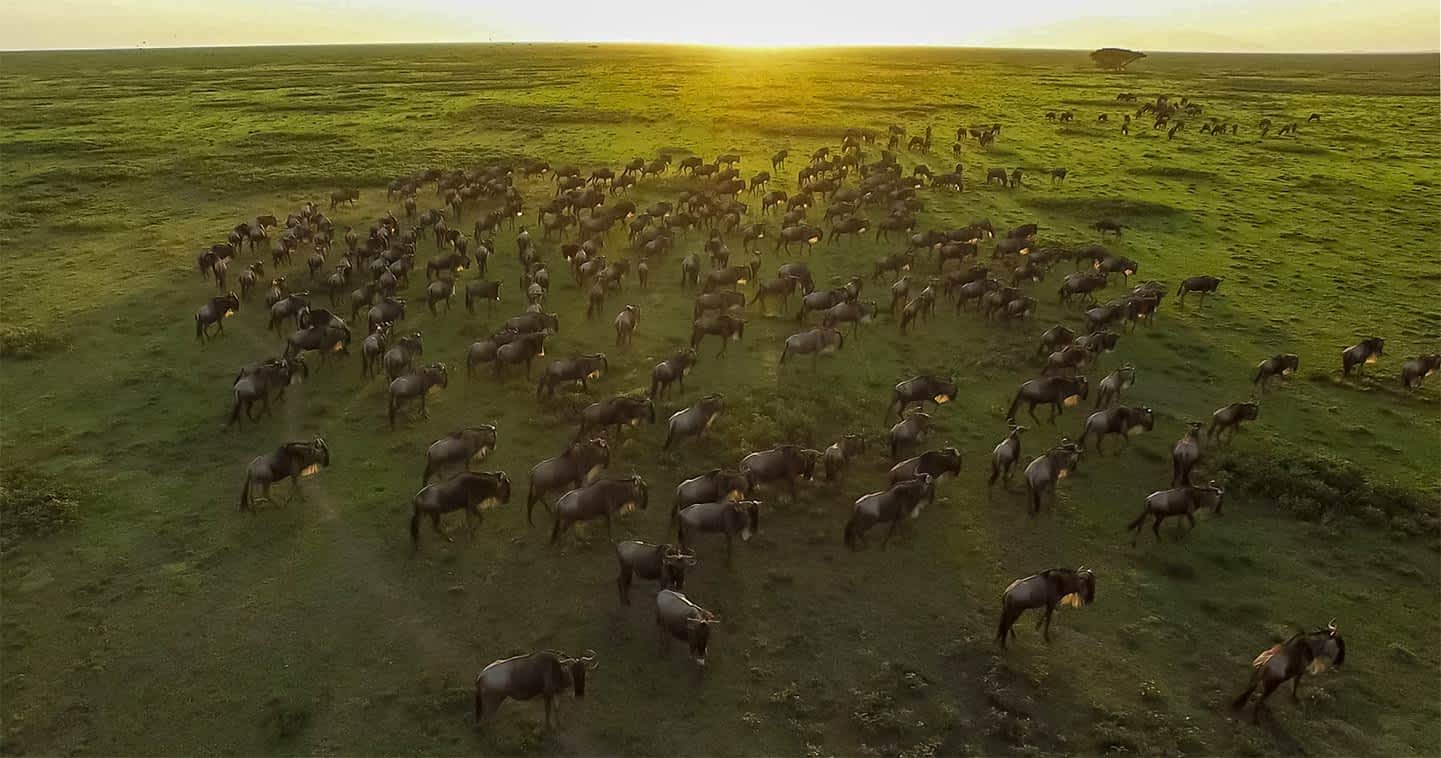
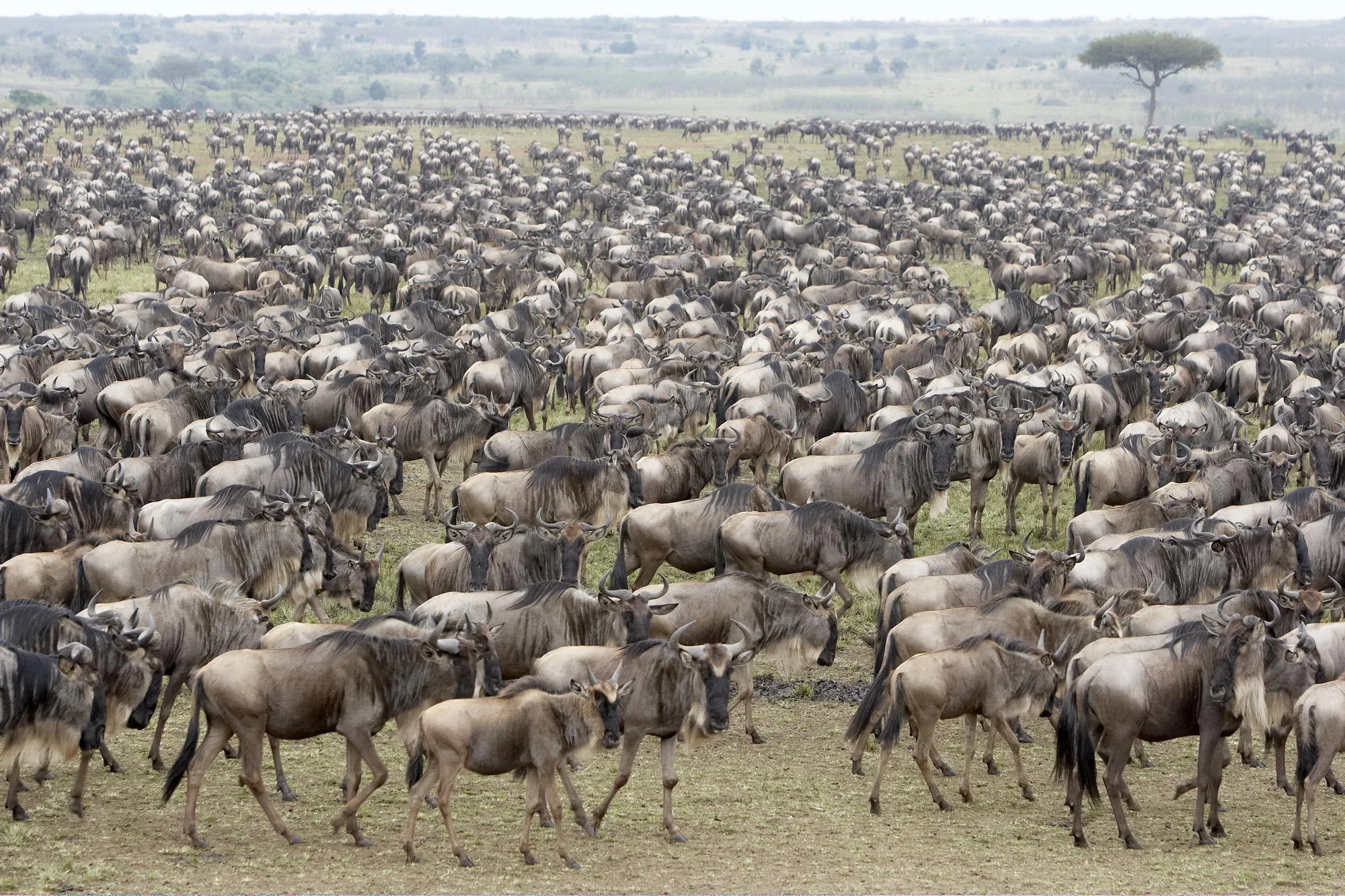
In 2026, the Great Migration continues to be powered by an estimated 1.3 to 1.5 million wildebeest, forming the largest overland migration of mammals anywhere on Earth. These animals move in a circular pattern spanning hundreds of kilometers, constantly following the rains in search of fresh grazing. While the figure itself is impressive, it only begins to explain the complexity and grandeur of what is happening on the ground.
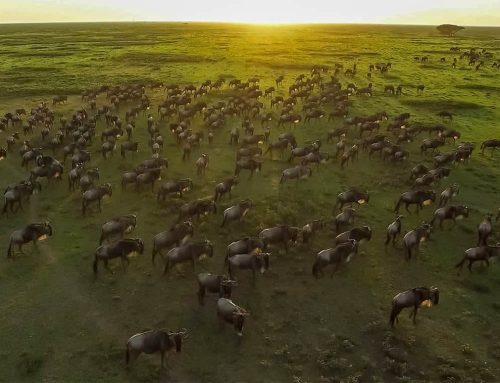
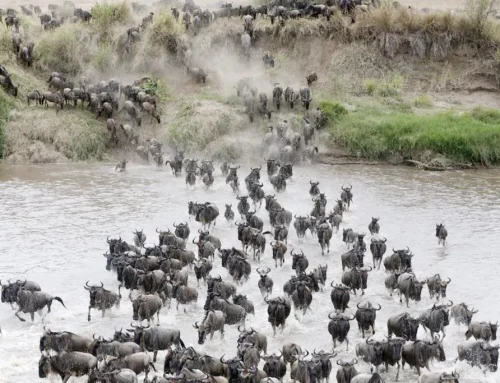
The migration is not a static event but a dynamic, ever-changing system. The wildebeest population is spread out across vast areas at times, then suddenly concentrated into dense, dramatic formations during river crossings or calving season. This fluid movement makes the migration both unpredictable and endlessly fascinating, offering a different experience depending on the time of year and location.
Understanding how many wildebeest are involved is essential, but equally important is recognizing how these numbers translate into ecological impact, predator-prey interactions, and the visual drama that has made the Great Migration one of Africa’s most iconic experiences.
The Core Population of the Migration
At the center of the Great Migration is the Blue Wildebeest, a species uniquely adapted to life on the open plains. These animals are built for endurance, capable of traveling long distances across challenging terrain in search of food and water. Their social structure, reproductive patterns, and migratory instincts all contribute to their ability to sustain such a massive population.
The estimated 1.3 to 1.5 million individuals represent a relatively stable population that has been maintained over decades through a combination of natural balance and conservation efforts. This stability is remarkable when one considers the numerous threats faced by the herds, including predation, drought, disease, and environmental changes.
What makes this population particularly fascinating is its synchronization. Unlike many other species, wildebeest tend to move in coordinated patterns, forming large herds that can stretch for kilometers. During peak migration periods, especially in the southern Serengeti during calving season, the density of animals becomes so high that the landscape itself appears to move.
The population is not evenly distributed throughout the year. Instead, it fluctuates geographically, with large concentrations forming in specific areas depending on rainfall and grass availability. This movement ensures that the ecosystem remains balanced, preventing overgrazing in any one location while supporting the nutritional needs of the herd.
The Supporting Cast: Zebras and Gazelles
While wildebeest dominate the migration numerically, they are part of a much larger ecological movement that includes other grazing species. Zebras and gazelles accompany the wildebeest, creating a multi-species migration that exceeds two million animals in total.
Zebras play a crucial role in this system by feeding on the taller, coarser grasses that wildebeest cannot easily digest. This grazing behavior effectively prepares the land for the wildebeest, which prefer shorter, more nutrient-rich grass. Gazelles follow behind, feeding on the most delicate regrowth.
This layered grazing strategy is an example of ecological efficiency, where each species contributes to the overall health of the ecosystem. The presence of multiple species also increases the resilience of the migration, as it spreads risk and ensures that resources are utilized effectively.
The interaction between these species highlights the complexity of the migration. It is not simply a mass movement of animals but a finely tuned system in which different species coexist and cooperate, whether intentionally or instinctively, to maximize survival.
Seasonal Distribution and Movement Patterns
The movement of the wildebeest is governed primarily by rainfall patterns, which determine the availability of fresh grass. This creates a predictable yet dynamic cycle that repeats each year, forming the basis of the Great Migration.
In the early months of the year, particularly from January to March, the herds gather in the southern plains of the Serengeti. This region offers nutrient-rich grasses that are ideal for calving. During this period, hundreds of thousands of calves are born within a short timeframe, dramatically increasing the population and creating one of the most intense wildlife spectacles on Earth.
As the dry season approaches, the herds begin moving northwest, gradually making their way toward the central and western Serengeti. By mid-year, they continue their journey northward toward the Masai Mara, driven by the promise of greener pastures.
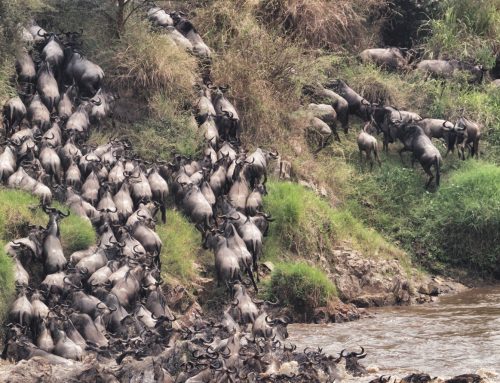
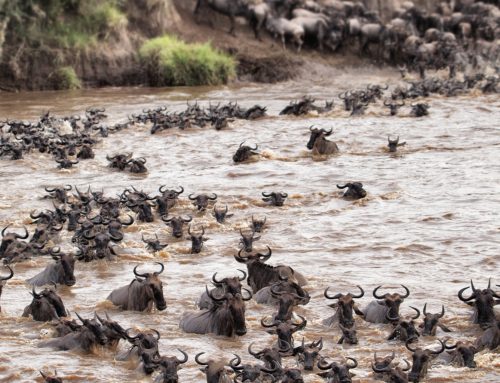
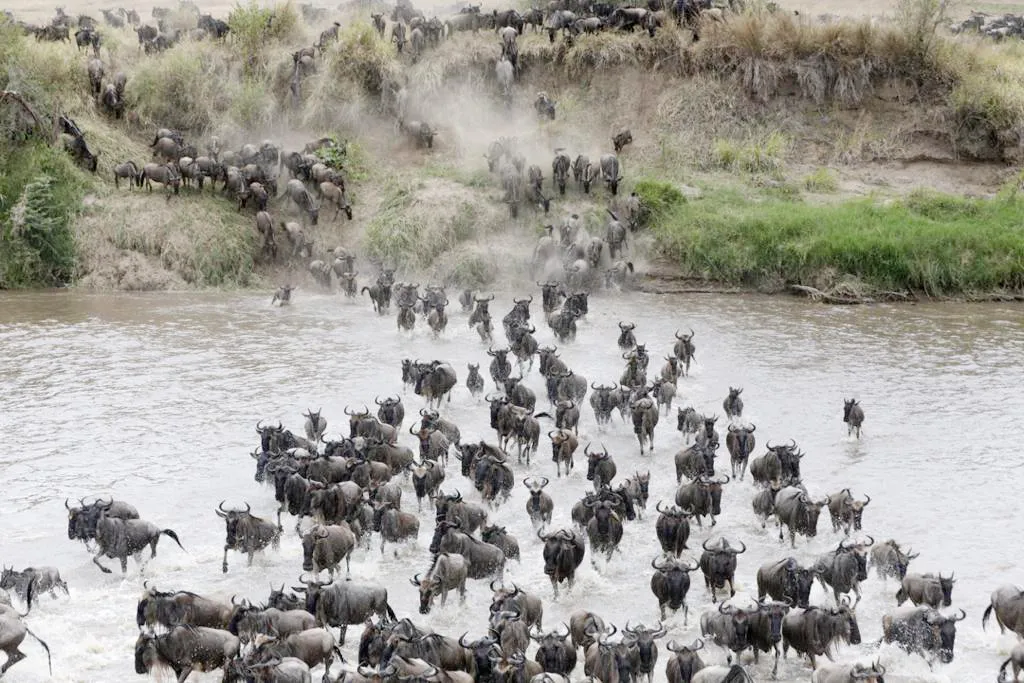
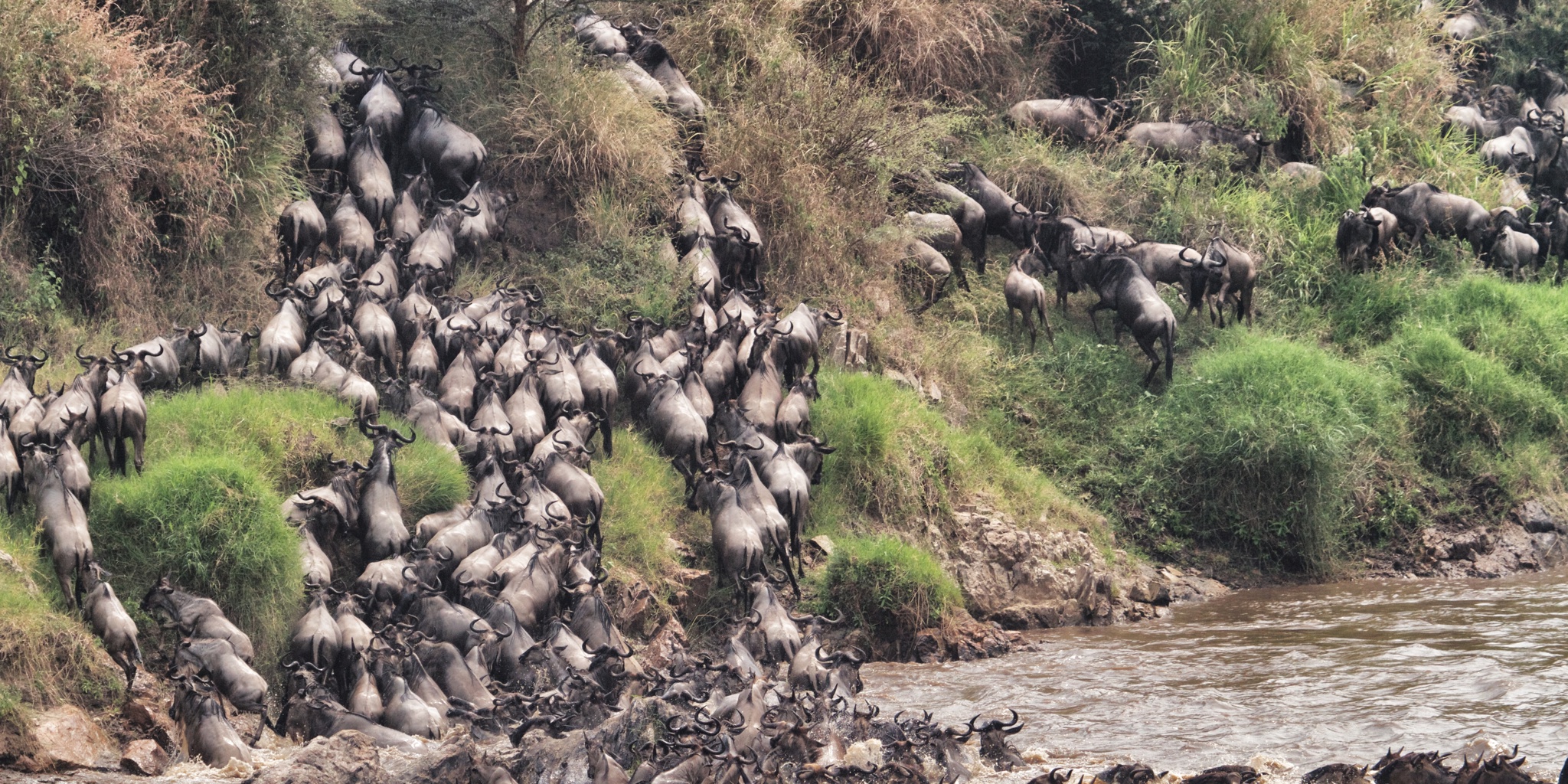
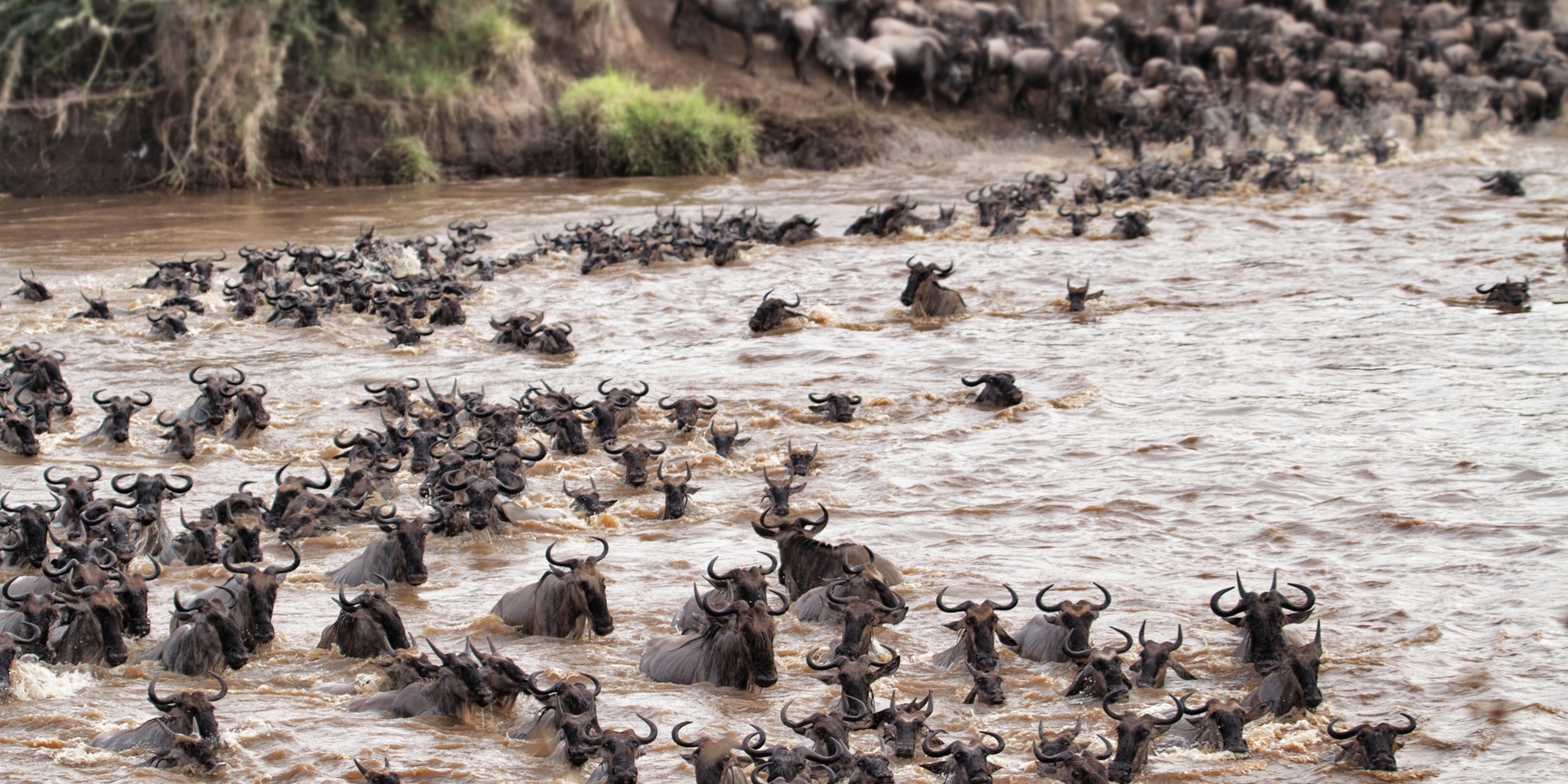
The river crossings that occur between July and October are among the most dramatic moments of the migration. Here, large concentrations of wildebeest gather at riverbanks, hesitating before plunging into crocodile-infested waters. These crossings are chaotic, dangerous, and visually stunning, often involving thousands of animals moving simultaneously.
As the rains return to the southern Serengeti, the herds begin their journey back, completing the cycle. This continuous movement ensures that the wildebeest population remains in balance with the environment, adapting to changing conditions while maintaining its numbers.
Predation and Natural Selection
The presence of such a large population inevitably attracts predators, making the Great Migration a focal point for some of Africa’s most iconic carnivores. Lions, hyenas, cheetahs, and crocodiles all rely on the migration as a primary food source.
Despite the constant threat, the wildebeest population remains stable due to its sheer size and reproductive strategy. The synchronized calving season ensures that predators cannot consume enough individuals to significantly impact the population. Instead, the system reaches a natural equilibrium where predation becomes a necessary component of ecological balance.
Predation also plays a role in maintaining the health of the herd. Weak, sick, or injured animals are more likely to fall prey, ensuring that the overall population remains strong and resilient. This process of natural selection is essential for the long-term survival of the species.
The interaction between predators and prey adds another layer of complexity to the migration, transforming it into a dynamic and often dramatic display of survival. It is this balance between life and death that gives the Great Migration its raw and authentic character.
Environmental and Ecological Impact
The movement of over a million wildebeest has a profound impact on the environment. As the herds travel across the plains, they graze on vast amounts of vegetation, shaping the landscape and influencing plant growth patterns.
Their grazing helps to maintain the health of grasslands by preventing overgrowth and promoting new growth. At the same time, their waste contributes nutrients to the soil, supporting plant life and maintaining the fertility of the ecosystem.
The migration also influences other species, from predators that depend on the herds for food to scavengers that feed on carcasses. Even insects and microorganisms benefit from the nutrient cycles created by the movement of the herds.
This interconnected system highlights the importance of the wildebeest population not just as a spectacle but as a critical component of the ecosystem. Without the migration, the balance of the Serengeti-Mara ecosystem would be fundamentally altered.
Conservation and Population Stability
The continued existence of such a large wildebeest population is the result of decades of conservation efforts. Protected areas such as the Serengeti and Masai Mara have been instrumental in preserving the migration routes and ensuring that the herds can move freely.
Anti-poaching measures, sustainable tourism practices, and community engagement have all contributed to maintaining the population at its current levels. These efforts demonstrate the importance of conservation in preserving not just individual species but entire ecosystems.
However, challenges remain. Climate change, habitat fragmentation, and human-wildlife conflict pose potential threats to the migration. Ensuring the long-term survival of the wildebeest population requires ongoing commitment and cooperation between governments, conservation organizations, and local communities.
The Visual and Emotional Impact of the Migration
Beyond the numbers, the Great Migration is a sensory experience that leaves a lasting impression on those who witness it. The sight of thousands of wildebeest moving across the plains, the sound of hooves pounding the الأرض, and the dust rising into the air create a scene that is both powerful and humbling.
For photographers, the migration offers endless opportunities to capture dramatic moments, from river crossings to predator interactions. For travellers, it provides a deeper connection to nature and an appreciation for the complexity of the natural world.
The scale of the migration is difficult to comprehend until it is experienced firsthand. It is not just the number of animals but the way they move, interact, and respond to their environment that makes the migration truly extraordinary.
Conclusion
The Great Migration is driven by an estimated 1.3 to 1.5 million wildebeest, forming the largest land-based animal movement on Earth. Centered around the ecosystems of the Serengeti and Masai Mara, this migration represents a delicate balance of survival, adaptation, and ecological harmony.
In 2026, the migration continues to captivate the world, offering a powerful reminder of the resilience and beauty of nature. While the numbers provide a sense of scale, they cannot fully capture the complexity and drama of this incredible journey.
From calving season in the southern plains to the perilous river crossings in the north, the wildebeest migration is a story of life, movement, and survival. It is a testament to the strength of nature and the importance of preserving the ecosystems that make such phenomena possible.
Ultimately, the question of how many wildebeest are in the Great Migration leads to a deeper understanding of a system that is far greater than its numbers—a living, moving masterpiece of the natural world.