

Murchison Falls National Park: Uganda’s Mighty Waterfall and Wildlife Wonderland
Murchison Falls National Park is the largest national park in Uganda, covering approximately 3,840 square kilometers in the northwestern part of the country. Established in 1952, the park is a biodiversity hotspot, combining savannah plains, tropical forests, riverine wetlands, and the dramatic gorge of the Victoria Nile where it plunges over Murchison Falls. This combination of landscapes makes the park one of the most spectacular safari destinations in East Africa, offering both wildlife encounters and breathtaking natural scenery.
The park is divided into three main zones: the northern savannahs, which are ideal for traditional game drives; the central riverine area around the Victoria Nile, offering boat safaris and hippo watching; and the southern forested zones, which are home to primates such as chimpanzees and various monkey species. Murchison Falls National Park’s unique positioning, size, and diversity make it a must-visit destination for nature enthusiasts, photographers, and adventure travelers.
Iconic Murchison Falls
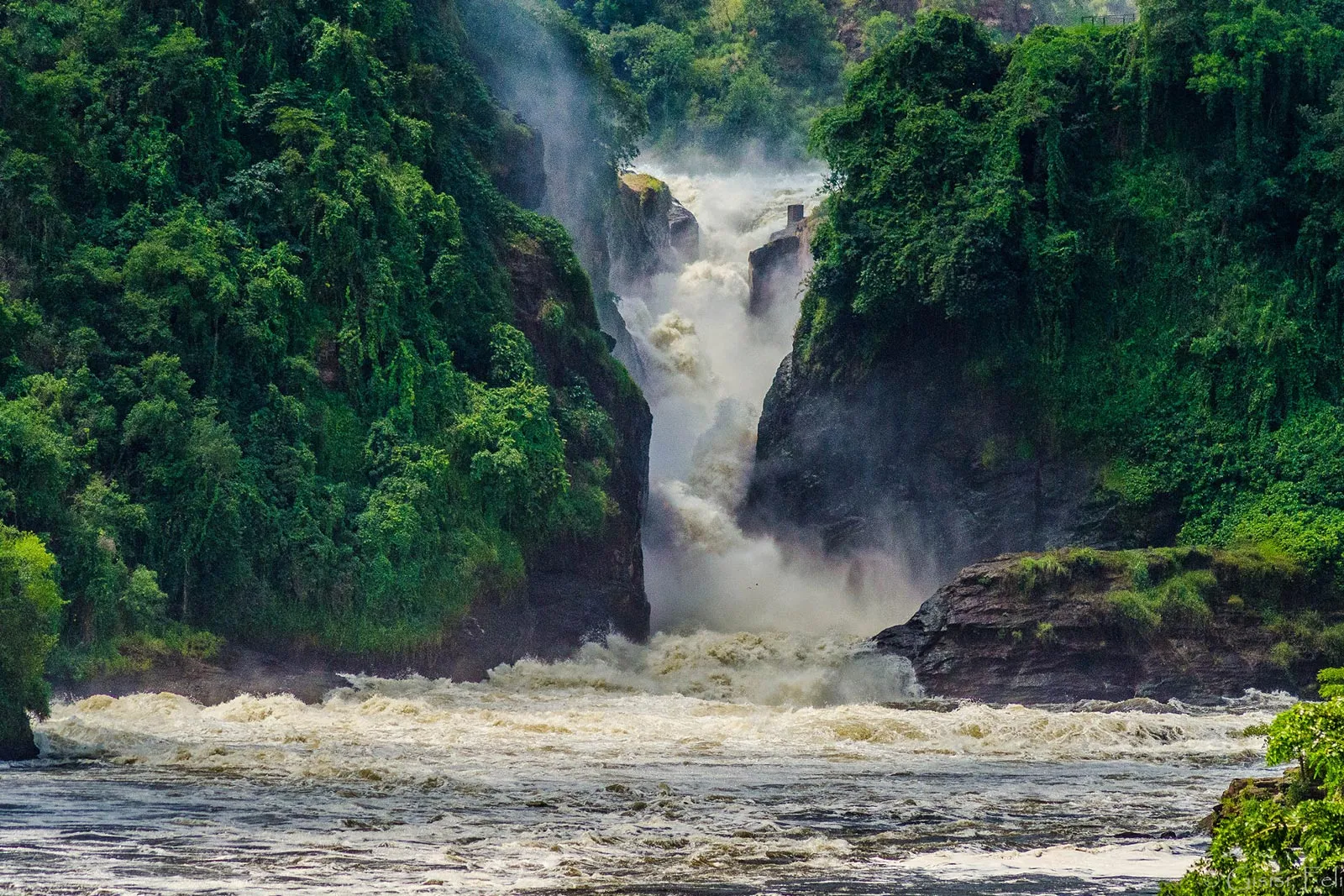
The park is named after the Murchison Falls, where the Victoria Nile squeezes through a narrow gorge just 7 meters wide before plunging 43 meters into the river below. The falls create a spectacular mist and roaring sound, providing an iconic landscape for photography and tourism. A boat cruise along the Nile to the base of the falls allows visitors to witness the sheer power of the water and observe hippos, crocodiles, and numerous waterbirds along the riverbanks.
Above the falls, the area offers hiking trails with panoramic views, ideal for sunset photography and appreciating the dramatic interplay between river, forest, and savannah. Murchison Falls is not just a visual spectacle—it is an ecological hub where riverine and terrestrial ecosystems meet, supporting a wide range of wildlife.
Wildlife Highlights
Murchison Falls National Park is renowned for its exceptional wildlife diversity, offering opportunities to see the “Big Five” (lion, elephant, buffalo, leopard, and rhinoceros) along with numerous other species.
- Elephants: The park hosts a significant population of savannah elephants that can be observed roaming the open plains and riverine forests.
- Lions and Leopards: Predators are abundant, with lions often spotted in the grasslands and leopards in the wooded areas.
- Buffalo and Uganda Kobs: Herds of buffalo and Uganda kobs, the endemic antelope species, are common in the northern savannah.
- Primates: Forested zones in the south harbor chimpanzees, black-and-white colobus monkeys, and vervet monkeys. Chimpanzee tracking is a growing activity in these areas.
- Hippos and Crocodiles: The Victoria Nile and its tributaries host large numbers of hippos and Nile crocodiles, easily observed during boat safaris.
- Birdlife: The park is a birdwatcher’s paradise, with over 450 species recorded, including shoebills, African fish eagles, and the rare Nahan’s partridge.
Ecological Diversity
Murchison Falls National Park is characterized by varied habitats, from savannah plains to tropical forests and wetlands. This diversity allows the park to support both large herds of herbivores and elusive forest-dwelling species. Seasonal rivers and wetlands create breeding grounds for fish, amphibians, and waterbirds, while open plains provide ideal hunting grounds for predators. The park’s diverse ecosystems also support smaller mammals such as bushbucks, oribi, and African civets, adding to the richness of wildlife encounters.
Activities in Murchison Falls National Park
Visitors to Murchison Falls can enjoy a wide array of activities, making it more than just a traditional safari park:
- Game Drives: Morning and evening drives allow tourists to see elephants, lions, buffalo, Uganda kobs, and giraffes. Northern savannah zones are particularly productive for Big Five sightings.
- Boat Safaris: Cruises along the Victoria Nile provide close encounters with hippos, crocodiles, and a variety of waterbirds. The boat ride to the base of the falls offers dramatic views and photography opportunities.
- Hiking: Trails to the top of Murchison Falls provide panoramic views of the Nile, surrounding plains, and distant mountains. The hike also offers the chance to spot monkeys, birds, and other wildlife along the trail.
- Chimpanzee Tracking: Forested areas in the southern sector allow guided chimpanzee trekking, offering close observation of these intelligent primates in the wild.
- Fishing: The Nile provides opportunities for sport fishing, including tilapia and Nile perch, popular among both local and international anglers.
Seasonal Considerations
The best time to visit Murchison Falls National Park is during the dry seasons from December to February and June to September. These months provide optimal game viewing, easier access to trails and roads, and clearer skies for photography. During the wet seasons (March to May and October to November), the park becomes lush and green, rivers swell, and wildlife may be more dispersed. While travel can be more challenging during the rains, the wet season offers dramatic landscapes, waterfalls in full flow, and excellent birdwatching.
Conservation Efforts
Murchison Falls National Park plays a critical role in Uganda’s conservation efforts. The park is protected by the Uganda Wildlife Authority (UWA), which manages anti-poaching patrols, habitat preservation, and wildlife monitoring. Conservation programs focus on protecting elephants from poaching, supporting chimpanzee populations, and maintaining the ecological integrity of wetlands and forests. Community engagement is also a priority, with programs designed to involve local populations in eco-tourism and conservation activities, ensuring sustainable management of the park’s natural resources.
Accommodation and Accessibility
The park offers a variety of lodging options ranging from luxury safari lodges to budget-friendly campsites. Accommodations are strategically located near key wildlife areas, riverbanks, and the falls to maximize wildlife sightings and visitor convenience.
Murchison Falls is accessible by road from Kampala, approximately a 5–7 hour drive, and by domestic flights to Pakuba or Bugungu airstrips. Guided tours are recommended for first-time visitors to navigate the park efficiently and ensure safe wildlife encounters.
Cultural Significance
The region around Murchison Falls has historical and cultural importance. Indigenous communities, including the Acholi and Alur peoples, have lived alongside the park for centuries. Cultural tours and community visits provide insights into traditional practices, local folklore related to the Nile and the falls, and sustainable ways communities interact with their natural environment.
Conclusion
Murchison Falls National Park is special because it combines dramatic natural features with rich biodiversity, rare wildlife, and cultural heritage. From the thunderous plunge of the Victoria Nile at Murchison Falls to intimate encounters with elephants, lions, chimpanzees, and rare birds, the park offers a multi-dimensional safari experience. Its size, ecological variety, and scenic beauty make it a standout destination for photographers, wildlife enthusiasts, and travelers seeking both adventure and tranquility.