

What’s Unique About Semuliki’s Hot Springs?
Introduction
Tucked away in the far western corner of Uganda lies a natural wonder that defies expectations and leaves visitors awe-struck—the hot springs of Semuliki National Park. While Uganda is most renowned for its gorillas and savannah wildlife, Semuliki stands out as a geothermal marvel. At Great Migration Adventure, we believe Semuliki’s hot springs are one of Uganda’s best-kept secrets. With bubbling waters, healing steam, and a dramatic cultural history, these springs offer more than just visual appeal—they tell a story of science, spirituality, and the untamed beauty of Africa.
Whether you’re a nature lover, photographer, cultural explorer, or adventurer, a visit to Semuliki’s hot springs will be an unforgettable addition to your Ugandan safari.
Where Is Semuliki National Park?
Semuliki National Park lies within the remote Bundibugyo District, near the Democratic Republic of Congo border. It’s part of the Albertine Rift Valley, where the western arm of the East African Rift drops down to form a dramatic escarpment and the Semuliki River meanders through tropical lowland rainforest. This park is a botanical and faunal extension of the Ituri Forest in Congo, meaning its ecology is entirely different from most of Uganda’s more famous savannah parks.
Despite its compact size (220 square kilometers), Semuliki is one of the most biologically diverse parks in Uganda. However, its hot springs—Sempaya male and female springs—are what make it truly stand out.
The Legendary Sempaya Hot Springs
There are two main geothermal features in the park—Sempaya Male Hot Spring (locally called Bintente) and Sempaya Female Hot Spring (known as Nyasimbi). Each spring is steeped in tradition, surrounded by legend, and offers a different sensory experience.
The Female Hot Spring: Nyasimbi
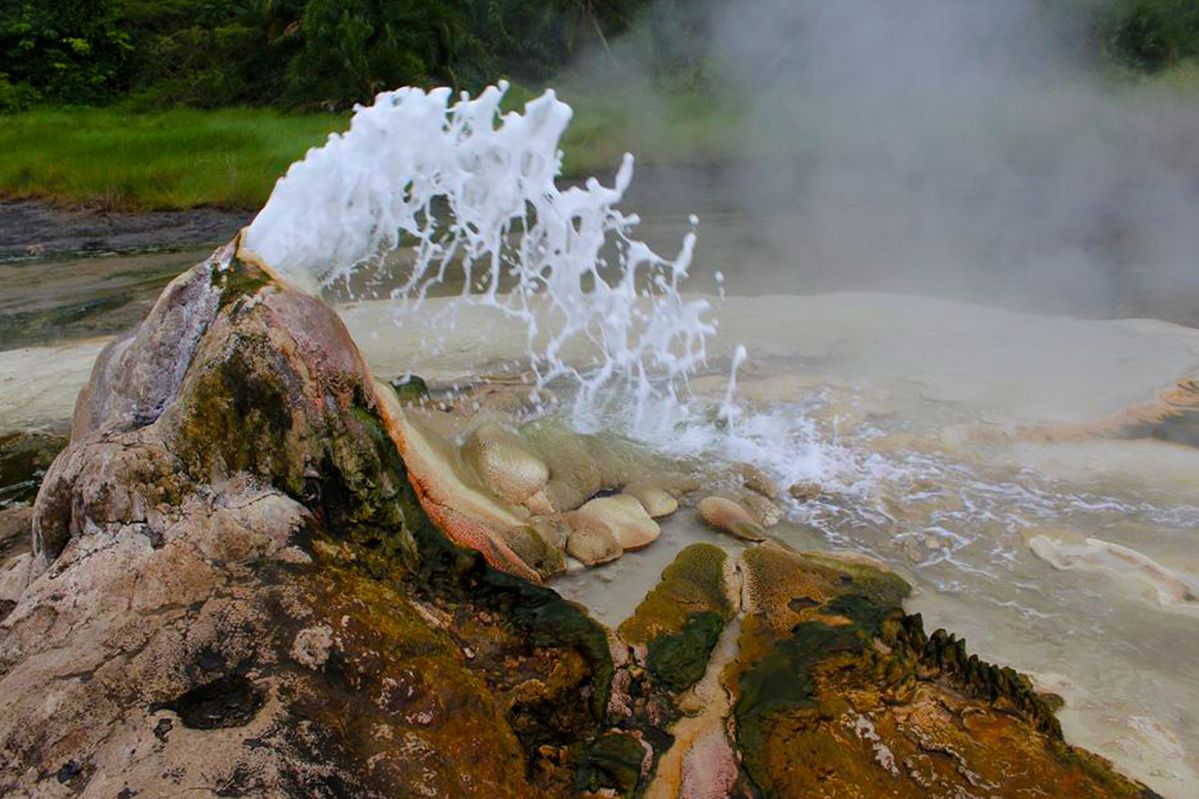
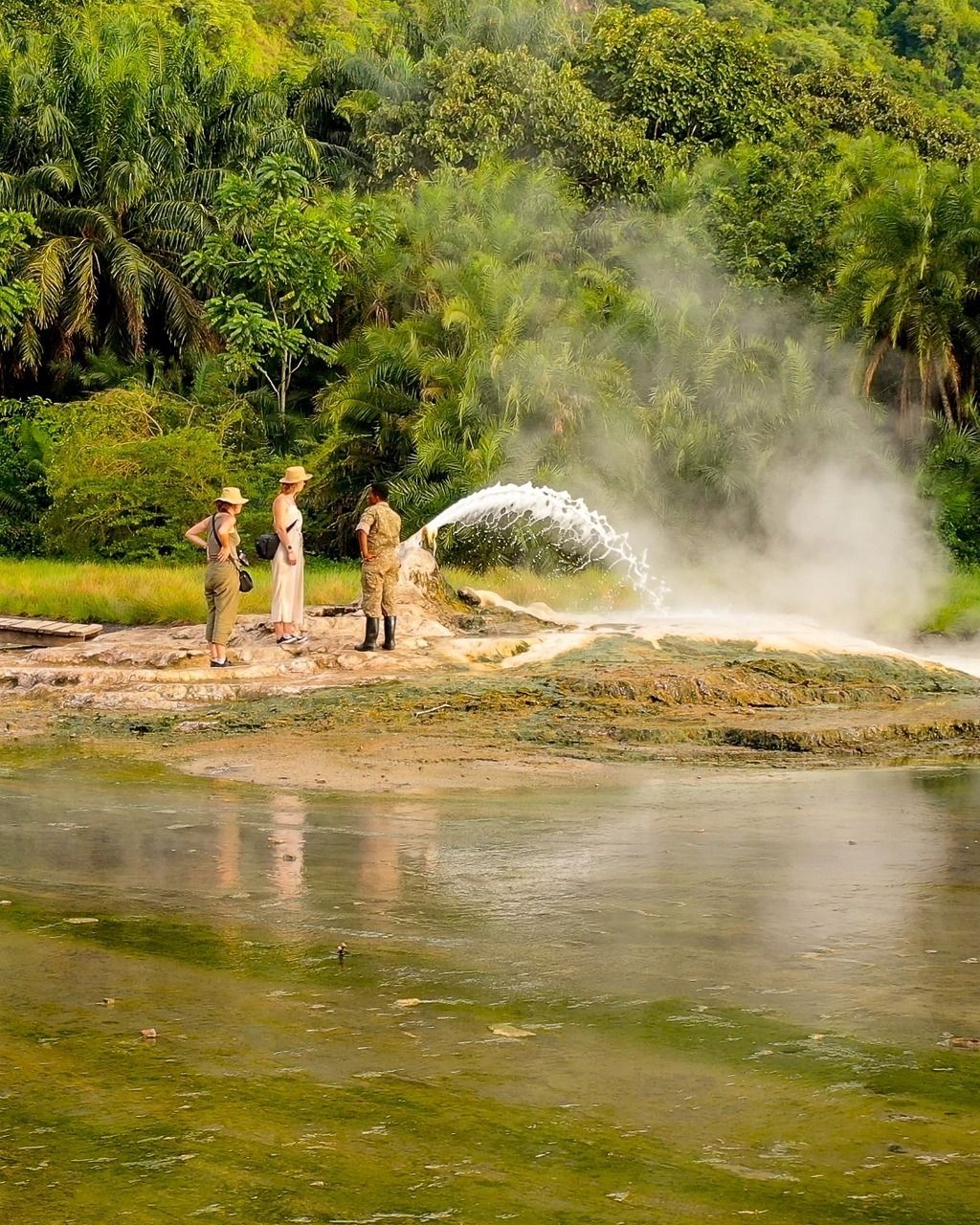
Nyasimbi is the more dramatic of the two. It erupts in a powerful column of steam and hot water that can shoot up to 2 meters in the air. Temperatures here reach up to 103°C, hot enough to cook an egg or plantain in just minutes—a fun and interactive demonstration that our Great Migration Adventure guides enjoy sharing with guests.
Nyasimbi is regarded with reverence by the local Bamaga people, who believe the spring is inhabited by a powerful female spirit. In fact, women in the surrounding communities once performed fertility rituals at this spring. For the cultural explorer, Nyasimbi is not just a natural marvel but a spiritual one, embodying the deep connection between people and nature.
The Male Hot Spring: Bintente
Bintente is less violent but just as fascinating. It is a broad, boiling pool about 12 meters wide. It’s surrounded by dense forest, and reaching it requires a nature walk through a boardwalk trail—a fantastic opportunity to spot monkeys, birds, butterflies, and unusual flora. Steam constantly rises from the spring, creating an ethereal atmosphere that feels like stepping into another realm.
Bintente is named after a male spirit believed to have followed Nyasimbi into the forest. Together, these springs symbolize balance—masculine and feminine forces in harmony.
Why Visit Semuliki’s Hot Springs with Great Migration Adventure?
At Great Migration Adventure, we create immersive safari experiences beyond game drives. Visiting Semuliki’s hot springs isn’t just about snapping photos—it’s about walking the ancient forest trails, learning from local storytellers, boiling eggs in bubbling water, and feeling the pulse of the Earth under your feet. Here’s why we think Semuliki’s geothermal treasures are unmatched:
1. A Rare Geothermal Wonder in Uganda
Uganda isn’t typically known for geothermal activity, so the presence of such potent hot springs in Semuliki is a geological surprise. Unlike the vast geysers in other parts of the world, Semuliki’s hot springs are unique for their setting—deep within a tropical rainforest, accessible only on foot, and enveloped by myths.
The springs offer a glimpse into tectonic processes shaping the Rift Valley. For science lovers and curious travelers, it’s a classroom like no other.
2. Culturally Rich Experience
The Bamaga people’s spiritual connection to the springs adds a profound cultural dimension to the visit. During our Great Migration Adventure safaris, we partner with local guides and elders who share the origin myths, traditional uses, and ceremonial importance of the springs. You won’t just see a boiling pool—you’ll understand its place in the living heritage of western Uganda.
Our cultural extensions allow you to engage respectfully with local communities through storytelling, music, and guided forest walks.
3. Stunning Nature Walks
To reach the springs, visitors embark on a guided walk through the lowland rainforest. The boardwalk to the female hot spring is an attraction on its own. Along the way, you’ll likely encounter red-tailed monkeys, black-and-white colobus monkeys, and mangabeys. The forest is also alive with bird calls and insect chirps, offering a sensory overload of sights and sounds.
With our expert guides, each step becomes a lesson in biodiversity. For photographers and birders, this is a golden opportunity to capture forest life at its most vibrant.
4. Photographic Beauty
The hot springs are not only scientifically fascinating but also photogenic. Billowing steam against the emerald backdrop of a tropical forest, the glisten of bubbling water, and the occasional rainbow in the mist make for award-winning photography moments. Our Great Migration Adventure safaris provide enough time and expert guidance to help you frame that perfect shot.
Early morning visits are especially magical, when soft light filters through the steam for a mystical jungle effect.
5. Wellness & Therapeutic Possibilities
Locals believe that the steam from the hot springs has healing properties. While there are no commercial spa setups, many visitors enjoy standing in the steam clouds or dipping their feet in the warm runoff (where safe) for a therapeutic experience. While not a medical treatment, it offers a peaceful, almost meditative moment—a chance to reconnect with nature.
Some of our packages include picnic breakfasts near the springs, creating a serene setting for relaxation after the walk.
6. Off-the-Beaten-Path Adventure
If you’re seeking a safari that goes beyond the typical game drive circuit, Semuliki’s hot springs offer a different kind of thrill. It’s a destination for travelers who want to get off the beaten path and experience something raw and authentic. There are no crowds, no rush—just the forest, the springs, and you.
Our Great Migration Adventure itineraries to Semuliki are customizable and ideal for second-time visitors to Uganda or those looking to deepen their connection with nature.
When Is the Best Time to Visit Semuliki Hot Springs?
Semuliki National Park can be visited year-round, but the best months are during the dry seasons—from December to February and June to August. During these times, the trails are more manageable, the forest is less slippery, and visibility is higher for wildlife and photography.
The hot springs themselves never run dry and are impressive in every season. However, in the wet season (March–May and September–November), access may be more challenging due to muddy trails. For those seeking dramatic photography, the misty atmosphere during the rainy season adds a magical touch.
Great Migration Adventure always monitors weather conditions and adjusts trip plans for your comfort and safety.
Nearby Attractions to Combine with Your Visit
One of the perks of visiting Semuliki is that it’s close to other western Uganda gems. Consider combining the hot springs with:
1. Kibale Forest National Park
Just a few hours away, Kibale is the primate capital of East Africa. Combine your hot spring visit with chimpanzee trekking for a full forest experience. Our “Rainforest Circuit” itinerary blends both parks beautifully.
2. Semuliki Wildlife Reserve
Separate from the national park, the reserve offers savannah wildlife such as elephants, buffalo, and leopards, alongside Lake Albert’s scenic shores. It’s one of Uganda’s most underrated wildlife areas.
3. Rwenzori Mountains
The fabled “Mountains of the Moon” rise just east of Semuliki. For hiking enthusiasts, a trek into the lower slopes of the Rwenzoris is a fantastic add-on.
4. Toro-Semliki Wildlife Corridor
This narrow corridor between Kibale and Semuliki is full of forest patches, wetlands, and migratory paths—an excellent zone for community-based tourism.
At Great Migration Adventure, we help you create seamless, well-paced itineraries so you don’t miss any of these incredible highlights.
What to Pack for Your Visit
Here’s what we recommend bringing for a comfortable and enjoyable visit to Semuliki’s hot springs:
-
Sturdy walking shoes or hiking boots – Trails can be slippery, especially in the wet season.
-
Light, breathable clothing – The forest can be humid.
-
Rain jacket or poncho – Even during dry seasons, brief showers are possible.
-
Insect repellent – Mosquitoes are common in the forest.
-
Binoculars and camera – There’s so much to see and capture.
-
Reusable water bottle – Stay hydrated during the walks.
-
Snacks or packed lunch – Especially if you plan to explore more of the park.
Our safari vehicles come equipped with drinking water, and our guides carry first-aid kits and picnic gear for your comfort.
Accommodation Options
While Semuliki is remote, it offers a range of lodging options to suit different travel styles. Great Migration Adventure partners with eco-friendly lodges and community guesthouses to give you the best experience:
1. Semuliki Safari Lodge
This luxury option offers canvas tented rooms with beautiful views and top-notch service. It’s ideal for travelers who want a rustic yet comfortable stay.
2. Ntoroko Game Lodge
Located near Lake Albert, it’s a good base for exploring both the park and the wildlife reserve.
3. Community Guesthouses
Budget travelers and cultural enthusiasts will enjoy community-run guesthouses that offer simple but warm hospitality and locally sourced meals.
We help you choose the right lodge based on your itinerary and preferences.
Responsible Travel and Community Impact
Semuliki National Park borders vulnerable communities. At Great Migration Adventure, we’re committed to responsible tourism. Our trips to Semuliki include:
-
Hiring local guides and storytellers
-
Visiting local craft markets
-
Partnering with conservation initiatives
-
Offering eco-friendly itineraries that limit waste and carbon footprint
Every guest who visits with us contributes to the sustainable development of the Bundibugyo area.
While Uganda is bursting with iconic attractions—from gorilla trekking in Bwindi to safaris in Queen Elizabeth—Semuliki’s hot springs offer something distinct and deeply enriching. They are not just natural features; they are living legends, spiritual sanctuaries, scientific wonders, and cultural storytelling tools rolled into one.
At Great Migration Adventure, we specialize in crafting journeys that go beyond the usual. A visit to Semuliki isn’t just a detour—it’s a revelation. It’s where the forest breathes, the Earth boils, and tradition lingers in every steam cloud.