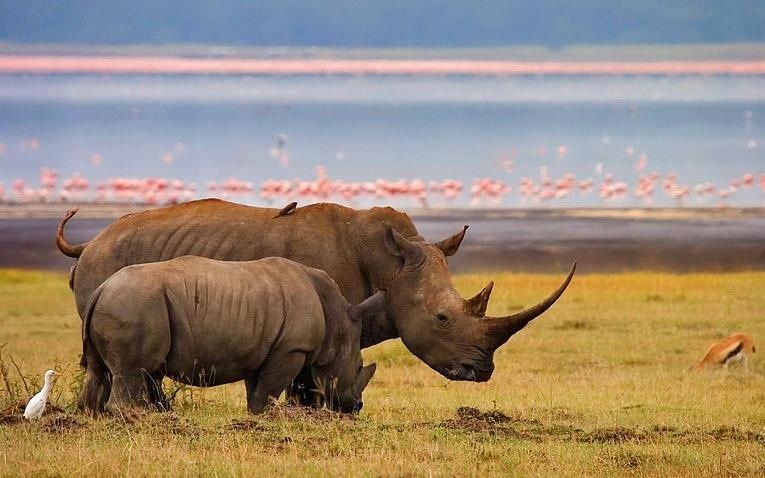
Can I See Black Rhinos in Ngorongoro?
There’s something profoundly compelling about witnessing one of Africa’s most elusive creatures in its natural habitat. Among the Big Five, the black rhinoceros is perhaps the rarest and most guarded, making any sighting an unforgettable highlight. A frequent question from safari enthusiasts is: “Can I see black rhinos in Ngorongoro Crater?”
The answer is an encouraging yes—though sightings require a blend of expert planning, optimal timing, and a bit of luck. In this comprehensive blog, we dive into the history, status, and tips for spotting black rhinos in the iconic Ngorongoro Crater, and explain how booking with Great Migration Adventure ensures you travel with the best possible chance of success.
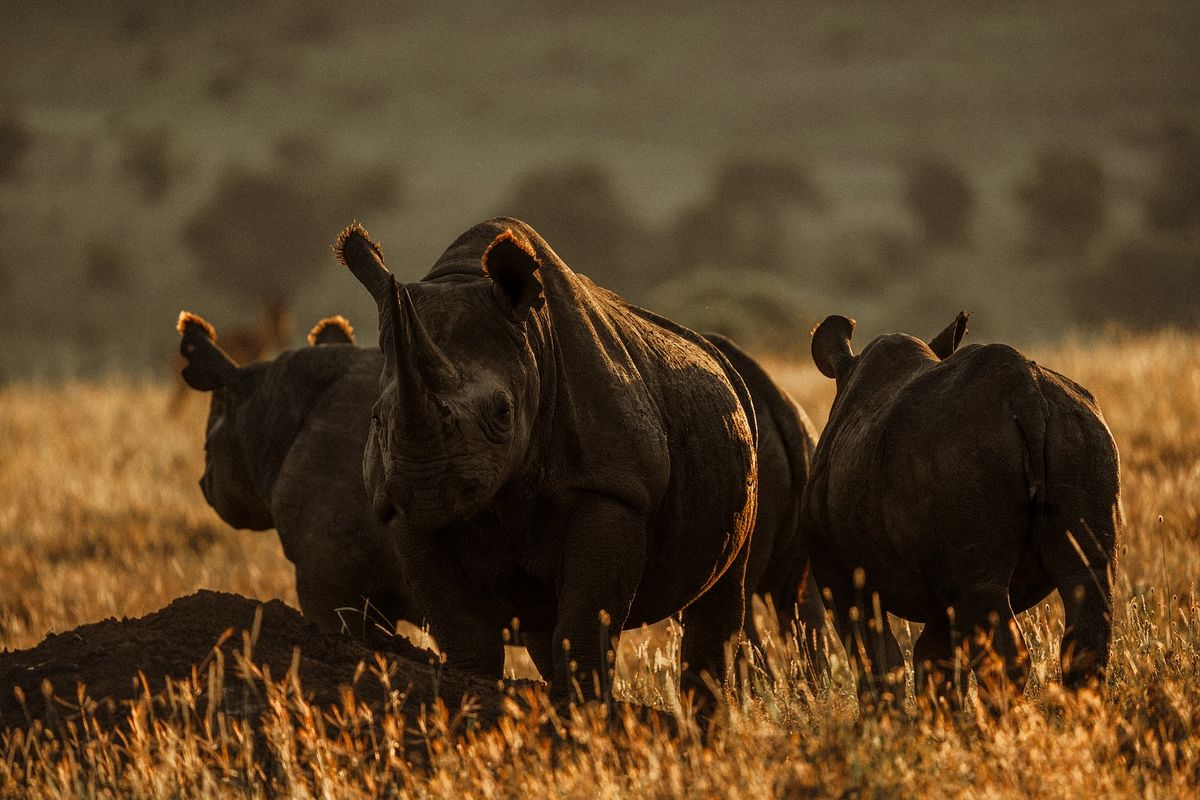
1. Historical Context: Rhinos of Ngorongoro
From the 1960s to the 1990s, black rhino numbers in Ngorongoro plummeted due to widespread poaching. The population dropped from over 100 animals in the 1960s to just around a dozen by the mid-1990s. Through rigorous anti-poaching efforts and translocation programs, authorities and conservation groups gradually rebuilt the population.
By 2018, the population rebounded to approximately 55 individuals, thanks to efforts by the Ngorongoro Conservation Area Authority, Frankfurt Zoological Society, WWF, and others.
2. Current Population and Protection Measures
Today, Ngorongoro Crater holds one of Tanzania’s last free‑ranging black rhino populations, with estimates between 20–55 animals—most recent reliable counts placing around 55 as of a few years ago.
These rhinos are part of a closely monitored program. Each animal is fitted with radio transmitters and protected by armed rangers and surveillance systems to minimize poaching threats.
3. Where to Look: Rhino Hotspots Within the Crater
Rhinos in Ngorongoro tend to follow specific patterns and favor certain locations:
-
Lerai Forest: Dense acacia woodland provides shade and cover, especially favored at dawn.
-
The area between Lerai and Gorigor Swamp (or Mandusi Swamp): Offers vegetation and water during morning grazing.
-
Open grasslands: Some rhinos venture into more exposed terrain early or late in the day. Guides often head there following ranger alerts.
Ngorongoro guides and rangers often share real‑time information to improve sighting chances.
4. Best Time for Rhino Sightings
Timing is crucial. Here’s what gives you the best odds:
-
Early morning (6:00–9:00 AM): When rhinos leave Lerai Forest to graze, visibility is increased.
-
Late afternoon (4:00–6:30 PM): Cooler temperatures can bring rhinos out again towards fringes of shade.
-
Dry season (June–October): Animals congregate near water, making rhinos slightly easier to locate.
-
Wet season (November–May): Vegetation thickens, lowering sighting chances—but fewer crowds make any sighting more private.
5. Understanding Viewing Limitations
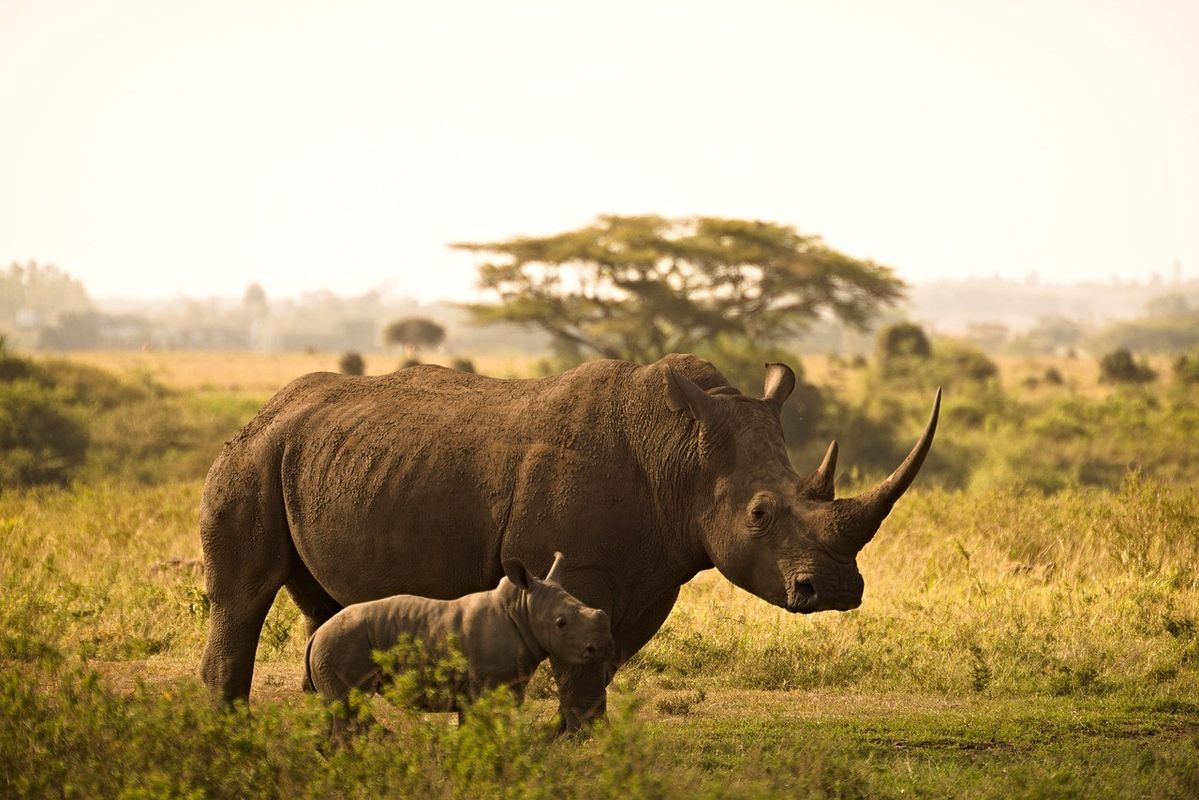
Ngorongoro is strictly regulated:
-
No off‑road driving is allowed, to protect sensitive habitat.
-
Rhinos can be elusive, often seen from a distance of 50–200 meters.
-
Leopards and rhinos are rare and shy, so patience is key—even during morning drives.
6. Enhancing Your Chance: Role of Guides and Rangers
At Great Migration Adventure, we tap into ranger networks and GPS data to maximize your chances:
-
Guides receive rhino movement updates from ranger teams relying on radio collars.
-
Experienced driver-guides know where rhinos favor certain times of day and terrains.
-
Private or small group vehicles allow flexible scheduling to align with rhino patterns.
7. What Makes Ngorongoro Special for Rhino Sightings
A few unique advantages make the crater one of the best places in East Africa for black rhino sightings:
-
It’s essentially an enclosed crater floor—naturally restricting animal movement and concentrating wildlife.
-
High levels of monitoring and anti-poaching patrols enhance safety and increase probability of sightings.
-
The crater houses all Big Five species in relatively high densities, so combining rhino with other wildlife is seamless.
8. Tips to Maximize Your Chances
To maximize your odds of seeing a black rhino:
-
Plan morning and late-afternoon drives, focusing on Lerai Forest and nearby swamp zones.
-
Ask for two days in the crater if your schedule allows—it’s legal to descend only once per vehicle per day
-
Travel during dry season for visibility, or shoulder season to avoid crowds.
-
Stay at lodges near Beru or Lerai gate, minimizing morning transfers.
9. Sample Itineraries Featuring Rhino Viewing
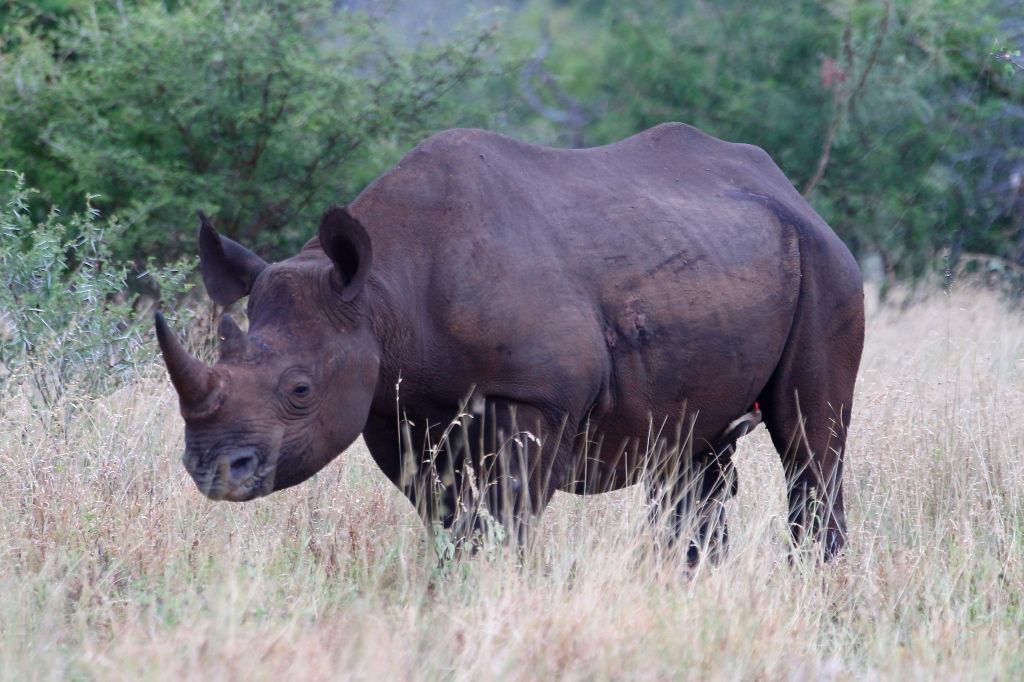
3-Day Ngorongoro Rhino Safari
-
Day 1: Arrive Arusha and overnight near crater edge
-
Day 2: Full-day crater descent for rhino and Big Five viewing
-
Day 3: Early morning optional drive, then departure
7-Day Wildlife Circuit (Including Ngorongoro)
-
Serengeti (3 nights) → Ngorongoro (2 nights) → Tarangire or Lake Manyara (2 nights)
This setup provides variety and a strong chance of rhino sightings.
10. Why Choose Great Migration Adventure for Rhino Safaris
Tailored Itineraries
We design routes that build in optimal timing and prime crater locations for rhino tracking.
Local Network Access
We work closely with certified guides and park rangers to access up-to-date animal movement data.
Eco-Conscious Stays
We partner with lodges near crater gates, offering early starts and light impact tourism.
Continuous Support
Your experience is monitored throughout to ensure changes in rhino activity or reserve rules are quickly incorporated.
11. Conservation: Why Your Support Matters
Your visit to Ngorongoro supports conservation directly:
-
Rhino revenues help fund anti-poaching patrols and habitat protection.
-
Monitoring programs (via rhino horn tracking, ranger support, aerial surveillance) receive financial backing from park fees and international grants.
-
Tourism also benefits Maasai communities living around the crater, reinforcing local cooperation in wildlife protection.
12. Answering Common Questions
Q: Are there white rhinos in Ngorongoro?
A: No. Only the critically endangered eastern black rhino (Diceros bicornis michaeli) inhabit this area. No white rhinos are present.
Q: How many rhinos can I expect to see?
A: With great planning, 1–2 rhino sightings over two days is realistic. Still, even a single sighting is rare and special.
Q: Can I photograph them up close?
A: No off-road driving means views may be at distance, but early morning light and binoculars or zoom lenses can produce excellent images.
13. Guest Experiences
-
A recent safari group witnessed a mojito-hour sighting near Lerai: a solitary rhino emerged from the shade to graze a few meters away before retreating at sunrise.
-
Another guest got lucky spotting a female rhino and her calf near Mandusi Swamp during a morning descent.
These rare encounters underscore the value of early start times and guide expertise tied to ranger data.
14. Conservation Context for Photographers and Wildlife Lovers
Ngorongoro is a powerful example of how sustained conservation can reverse wildlife declines. From near-extinction levels in the 1990s to a stable small population today, rhino recovery underscores the importance of ongoing vigilance, protected status, and tourism-funded conservation.
By traveling with Great Migration Adventure, you support these broader efforts to protect the crater’s delicate ecosystem and endangered species.
15. Final Thoughts
Yes—you can see black rhinos in Ngorongoro, but it requires thoughtful planning, ideal timing, and expert guidance. The environment is strictly regulated, the rhinos are few and shy, and sightings are never guaranteed—but with the crater’s high level of protection and ranger support, your chances are among the best in East Africa.
At Great Migration Adventure, our mission is to turn wildlife dreams into reality—ethically, sustainably, and memorably. Whether it’s rhinos, leopards, or the Maasai pastoralists, we shape your safari into an experience that resonates.