What’s Unique About Mount Kenya National Park?
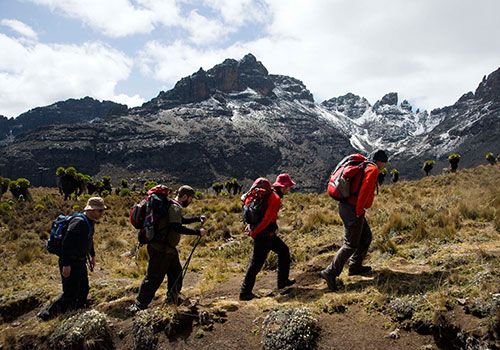
Mount Kenya National Park is more than just a backdrop—it’s an alpine wonderland, a biodiversity hotspot, a cultural tapestry, and a year-round adventure zone. For Great Migration Adventure, it stands out as a springboard for unforgettable high-altitude trekking, extraordinary wildlife experiences, conservation stories, and community engagement.
Mount Kenya National Park
This article will be structured around:
-
Introduction & Global Significance
-
Geology & Unique Mountain Environment
-
Ecosystem Diversity
-
Wildlife & Endemism
-
Cultural & Historical Significance
-
Activities & Adventure Options
-
Conservation, Research & Education
-
Experiential Considerations
-
Great Migration Adventure Highlights
-
Practical Planning Guide
-
Sample 10‑Day Itinerary
-
Testimonials & Client Stories
-
Sustainable and Community-Focused Tourism
-
Visual & Photography Opportunities
-
Conclusion & Call-to-Adventure
1. Introduction & Global Significance
Mount Kenya rises majestically, Africa’s second-highest peak, revered by climbers, conservationists, and theologians alike. An equatorial glacier-clad massif reaching 5,199 m, the mountain is a UNESCO World Heritage Site, an ecological crossroad, and a spiritual landmark—defying ordinary definitions of “tropical” mountain.
2. Geology & Unique Mountain Environment
-
A long-extinct volcano, Mount Kenya formed ~3 million years ago. Its multiple volcanic cones, glacial cirques, and moraines offer dramatic terrain sculpted by time.
-
Year-round snowfields and equatorial glaciers are rare outside high latitudes—witness the Oberland, Lewis, and Darwin glaciers.
-
Its elevation brings unique climate zones all in one massif: montane forest, bamboo forest, heath, alpine moorland, and nival/glacial zones.
3. Ecosystem Diversity
Mount Kenya’s slopes host a staggering range of ecological zones:
-
Montane Forest (1,800–3,000 m) – giants of olive and cedar, cinnamon trees, rich understory of ferns, orchids.
-
Bamboo & Hagenia Zone (2,400–3,000 m) – dense bamboo thickets sheltering primates and forest birds.
-
Heath & Moorland (3,000–4,000 m) – lobelia and giant groundsels create an otherworldly landscape.
-
Alpine Zone (4,000–5,000 m) – tussock grasses, rocks, glaciers, alpine lakes—frigid, stark terrain.
-
Nival Zone (>5,000 m) – permafrost and ice. Unique flora and fauna have adapted to extremes.
4. Wildlife & Endemism
Mount Kenya is home to rare and endemic species:
-
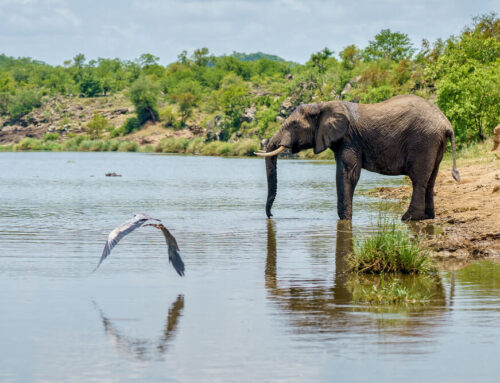
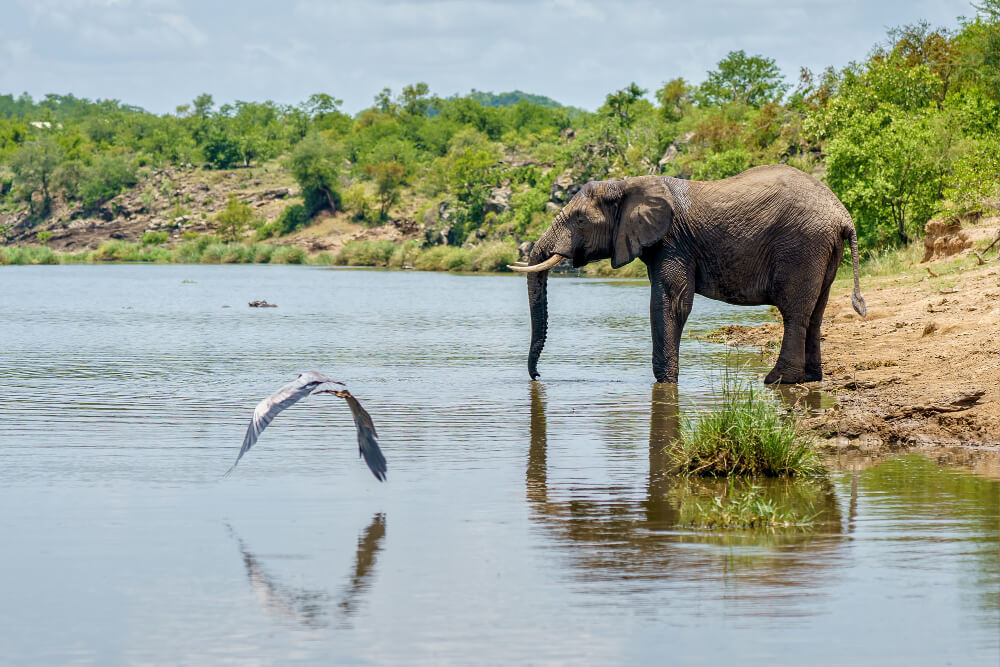
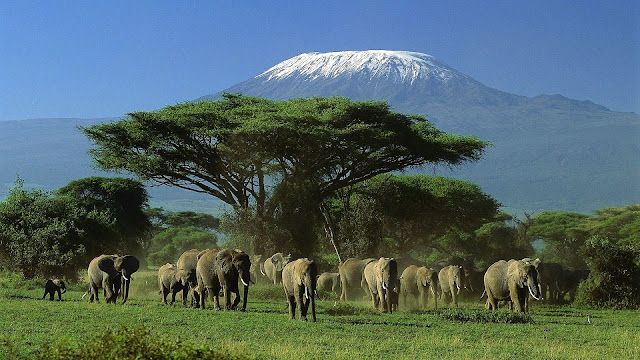
Elephants adapting to cold at higher elevations.
-
Mount Kenya bongo, rare forest antelope (one of Kenya’s “Big Five forest mammal”).
-
Black and white colobus monkeys, blue monkeys thrive in upper forest canopy.
-
Birdlife: Hall’s, Jackson’s francolins, Mount Kenya hyraxes, alpine accentors.
-
Butterflies, frogs, and reptiles specialized for altitude.
-
Seasonal big game at lower slopes: buffalo, lion at forest edge, elephant corridors.
5. Cultural & Historical Significance
-
Sacred to the Agikuyu (Kikuyu)—Mt. Kenya (Kirinyaga) seen as Kiru-niaga, the home of their god.
-
Place names reflect worship, with community traditions including offerings and pilgrimages.
-
European exploration by Mackinder (1899), European-first ascents (Lewis and Shipton) shape mountaineering history.
-
British colonial presence left forest conservation and early national park designation in 1949.
6. Activities & Adventure Options
-
Trekking Routes: Sirimon, Chogoria, Burguret, Naro Moru—with varied terrain and camping experiences.
-
Technical Climbs: Ragged, Lewis, and Nelion peaks via ice axe and ropes (guide-required).
-
Boardwalk tracks in the forest for gentle forest walks.
-
Birding trips, photography tours, botany treks.
-
High-altitude acclimatization at camps and wildlife viewing at lower altitudes for hybrid safari trekkers.
7. Conservation, Research & Education
-
First National Park Crowned a UNESCO World Heritage Site in 1997.
-
Managed by Kenya Wildlife Service, supported by conservation NGOs.
-
Research stations study glacial retreat, climate change, forest ecology.
-
Projects include elephant corridors linking Mount Kenya Ecosystem to Aberdares, protecting Mt Kenya bongo.
8. Experiential Considerations
-
Best times: January–February; July–October for clear skies. Glaciers are retreating rapidly.
-
Permits: required for national park entry, camping, technical climbing.
-
Acclimatization is crucial; altitude sickness preparation necessary.
-
Food & logistics: mountain huts, organized camping; packing tips include layered gear.
-
Guides & porters required for safety and ecological management.
9. Great Migration Adventure Highlights
-
Inclusive experiences: from guided forest walks in Kemeri, to alpine camping on Shipton’s Camp.
-
Specialized photography treks spanning heath and glaciers, capturing endemic flora and sunrise over peaks.
-
Community immersion: visits to Kikuyu homesteads, coffee cooperatives beneath Mount Kenya.
-
Conservation engagement: visiting Kenya Wildlife Service rangers and local ecosystem educators.
10. Practical Planning Guide
-
Transport: Nairobi → Nanyuki or Nyeri; short scenic drive to park gates.
-
Accommodation: eco-lodges, mountain huts (Mackinders, Simba), KWS campsites.
-
Gear checklist: cold weather layers, trekking boots, sleeping bag, headlamp, water purification, windproof gear.
-
Health & insurance: yellow fever, rabies recommended; altitude considerations, travel insurance with evacuation.
11. Sample 10‑Day Itinerary
Day 1: Arrive Nairobi, drive to lodge at Mount Kenya foothills
Day 2: Montane forest walk and wildlife viewing
Day 3: Trek into bamboo zones via Sirimon, overnight at Old Moses Camp
Day 4: Acclimatization day, botany trek and birdwatching
Day 5: Summit attempt via Shipton’s Camp, altitude prep
Day 6: Summit Mt Kenya’s Nelion, descend to Met Station
Day 7: Descend to park gate, transfer to Samburu or Ol Pejeta
Day 8–9: Great Migration Adventure safari extension
Day 10: Return to Nairobi
12. Testimonials & Client Stories
“Climbing at equator feels surreal. Great Migration Adventure paced us right—no altitude sickness.” — Anna, UK
“The glowing alpine lobelias under a snow-capped peak… unforgettable.” — David, USA
13. Sustainable & Community Tourism
-
Lodge partnerships purchase locally grown agricultural products.
-
Porter empowerment program ensures fair wages and training.
-
Community profits from tourism fund clinics, schools, and renewable energy projects in Mukurweini area.
14. Visual & Photography Opportunities
-
Sunrise over Batian and Nelion from Shipton’s Camp
-
Dramatic moorland landscapes: giant lobelia silhouettes
-
Forest canopy shots, elephants silhouetted
-
Macro flora and insect photography
-
Star trails above the high plateau—ideal for astrophotography
15. Conclusion & Call-to-Adventure
Mount Kenya is not just a mountain—it’s an ecosystem, a culture, a classroom, and a spiritual mountain of experiences. As Great Migration Adventure, we invite you to stand at the summit, walk among giants, witness conservation in climate-critical zones, and immerse yourself in a place where every altitude brings a new wonder.