


Olare Motorogi Conservancy: Exclusive Safari
Few places offer a wild experience like Olare Motorogi Conservancy: Exclusive Safari. It is located on the edge of Kenya’s famous Maasai Mara National Reserve. This amazing conservancy lets travelers see lots of wildlife in a way. They do not have to share with other vehicles. Visitors get to enjoy game drives, camps, and meet the local Maasai people.
For travelers who want more than a safari, this conservancy is great. Every drive feels special every wildlife encounter is long. Every night stay helps conservation. It is a place where you can watch a pride of lions for hours without interruption. You can also follow a cheetah hunting in the grasslands.
Discovering the Heart of the Greater Maasai Mara
Olare Motorogi Conservancy is part of the Greater Maasai Mara ecosystem. It covers 35,000 acres of protected land. The conservancy is next to the Maasai Mara National Reserve. This lets wildlife move freely.
Unlike parks, the conservancy has rules to protect wildlife. A few safari camps are allowed, and each camp has a limit on guests. This keeps the number of vehicles down and protects wildlife habitats.
The land belongs to Maasai landowners. They lease it to conservation groups and tourism partners. The money from tourism helps families. Encourages wildlife protection. This model is one of Kenya’s examples of community-based conservation.
Visitors notice the atmosphere. There are open plains, acacia trees, rivers, and rocky areas. Each landscape has its own species. This creates an ecosystem that changes daily.
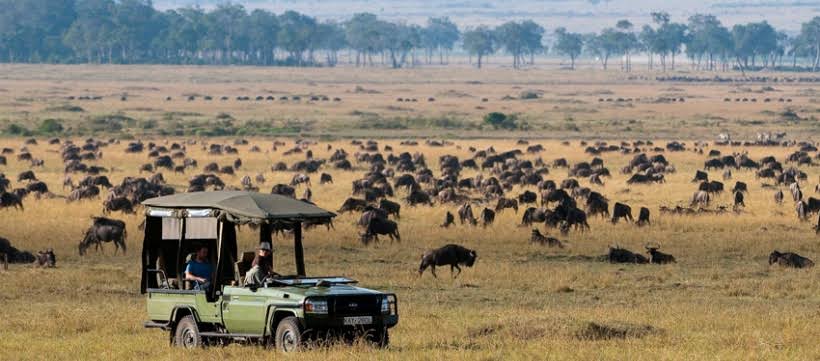
Safari vehicles crossing Olare Motorogi Conservancy during morning game drive among abundant wildlife gracefully.
Wildlife Encounters That Feel Personal
One of the things about visiting this conservancy is seeing wildlife up close. The area has predators, herbivores, and birds.
Lions are an attraction. Several prides live here. Guides know their movements. Early morning drives often show lions returning from hunts or resting.
Cheetahs live in the grasslands. They chase gazelles and impalas. This gives photographers opportunities to take pictures.
Leopards live in riverine forests and woodlands. Guides can find them resting or stalking prey.
There are also hyenas, jackals, servals, foxes, and badgers. The plains have elephants, giraffes, buffaloes, zebras, and many antelope species. Hippos and crocodiles live in rivers.
Each drive is different because animals roam freely. There are no fences to separate them from other areas.
Olare Motorogi Conservancy is a great place to see big cats.
Wildlife photographers think it is one of the best places in Kenya to see big cats.
There are no visitors, so the guides can put the vehicles in good spots without other cars being in the way.
The guides do not have to rush from one animal to another.
They can take the time to explain what the animals are doing.
People can learn how lions talk to each other in their groups, how cheetahs pick where they want to hunt, and how leopards mark their territories near the rivers.
This way, people can see things that they would not see in busy safari places.
You can watch the little lions play for a time or see the lions work together to hunt.
This is because there are no cars around, so you do not have to leave quickly.
Photographers like it here because they can move their cameras around, wait for the sun to be in a spot, and take pictures of the animals being natural habitat.
They do not have to worry about other cars being in the way.
The Great Migration is a thing to see.
It happens every year when the wildebeests move to a place to eat.
This is between July and October. It depends on when it rains.
During this time, a lot of wildebeests, zebras, and gazelles move to areas to eat.
Some of these animals go through the Maasai Mara National Reserve. Some of them also go through Olare Motorogi.
This is a thing because you can see a lot of animals without all the other people.
The animals that eat meat are very active during this time.
Lions, hyenas, cheetahs, and crocodiles all try to catch the wildebeests and zebras.
This makes for some cool things to see.
People like to come to Olare Motorogi because it’s nice and private.
The places where you sleep are very nice and comfortable.
They are like tents with big beds, private decks, and nice bathrooms.
You can see the animals from your really cool deck.
The people who work here are very nice. They get to know you.
They make you feel like you are at home.
At night, you can have dinner outside with lanterns and a fire.
You can talk about all the things you saw that day.
There are a lot of things to do here besides driving around.
You can go for a walk with a guide. They can show you all the little things that you might miss from a car.
They can show you plants that’re good for you, animal tracks, and birds.
You can also go for a drive at night. See animals that are awake at night.
This is really cool because you can see animals that you would not see during the day.
There are also a lot of birds
Than 450 kinds of birds live in this area.
You can see birds like eagles and ostriches and smaller birds, like rollers and bee-eaters.
If you like to take pictures, you can go on a safari just for that.
You can take pictures of the animals in the morning and evening when the sun is shining.
The guides can help you take pictures.
Connecting With Maasai Culture
A safari is more fun when you know about the people who have lived with animals for a long time.
Many safari trips include visits to Maasai communities. There you can learn about homes, taking care of animals, making colorful beads, music, dancing, and daily life.
These cultural visits are respectful. Led by the community. This way, local people can share their stories instead of performing for tourists.
Visitors understand better how saving wildlife and helping communities work together. The money from tourism helps with education, healthcare, jobs, and infrastructure. It also encourages people to protect wildlife.
The partnership shows that saving wildlife works when both animals and people benefit.
Conservation That Creates Lasting Impact
Every safari trip helps protect this ecosystem.
The money from tourism helps pay for ranger patrols, fixing habitats, monitoring predators, helping animals, stopping poaching, and teaching about the environment.
Scientists in the conservancy collect information on predators, elephants, where they move, and how healthy the ecosystem is.
Partnerships with communities reduce problems between humans and wildlife. They pay landowners to keep habitats instead of turning them into farms.
This balanced approach makes sure future generations can enjoy wildlife while supporting local livelihoods.
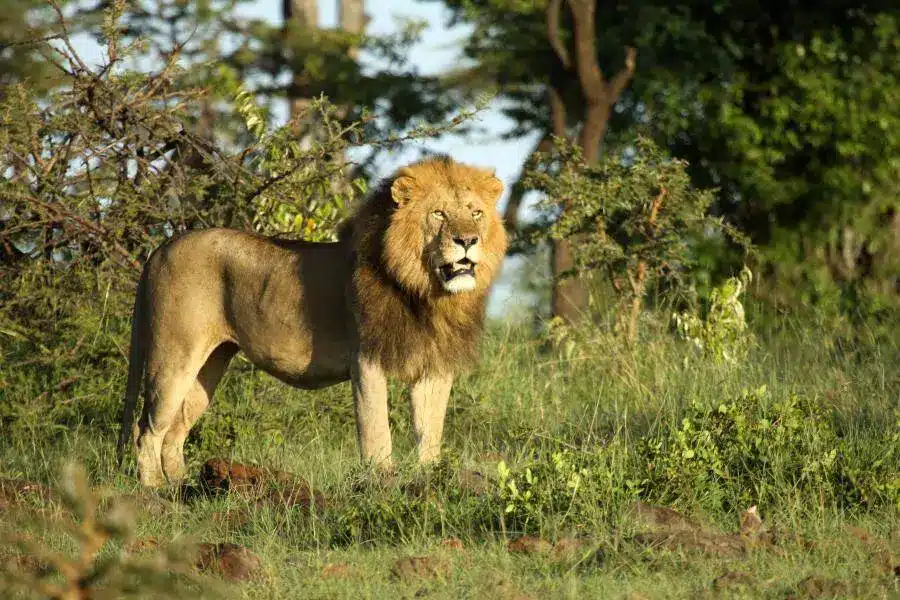
Lion standing proudly in Olare Motorogi Conservancy grasslands during an unforgettable safari experience.
Best Time to Visit
The conservancy has wildlife viewing all year round.
From January to March, it’s usually warm and easy to spot predators. The vegetation is short, making it easier to see animals.
In April and May, some rain makes the landscape green. Birds are very active. The scenery is great for photography.
From June to October, it’s dry. Coincides with the famous migration. Wildlife gathers around water sources, making it easier to see them.
In November and December, there are rains that make grazing areas fresh. This attracts birds and newborn animals.
Each season is unique, making it worth visiting
Planning an Unforgettable Safari
Travelers usually fly from Nairobi’s Wilson Airport to airstrips. Road transfers are also possible. Flights are much faster.
Most visitors stay for three to five nights. This allows time for game drives, walking safaris, cultural experiences, and relaxation.
When packing, bring colored clothes, binoculars, sunscreen, a hat, comfortable shoes, insect repellent, sunglasses, a water bottle, and a good camera.
Morning temperatures can be cool. It warms up quickly. Lightweight layers are an idea.
Travel insurance is recommended for trips with domestic flights and outdoor activities.
A Safari Worth Remembering
Choosing Olare Motorogi Conservancy: Exclusive Safari means choosing a more meaningful way to experience Kenya’s amazing wildlife. With visitors, great predator sightings, luxurious camps, and genuine community partnerships, it creates a unique atmosphere.
Visitors remember moments that can’t be scheduled. Watching elephants cross the plains at sunrise, listening to lions roar, following leopard tracks, or sharing stories by the campfire become memories.
For anyone seeking an African safari where conservation, comfort, and unforgettable wildlife exist in perfect balance, this conservancy sets the standard. It shows that protecting nature and creating travel experiences can work together.


