



Ruaha’s Baobab Forest: One of East Africa’s Surreal Landscapes
Ruaha Baobab Forest is a cool place. It is one of the landscapes in East Africa.
A time ago, this place was shaped by time and silence.
When you go to Ruaha’s interior, you will notice it is very quiet. The noise of the city fades away. All you hear is the wind blowing and the sun shining on the open land. The land in Ruaha Baobab Forest is very open. It goes on forever. One of the things about this place is Ruahas Baobab Forest. It is a place where old trees grow out of the ground.
The baobab trees in Ruaha Baobab Forest do not grow close together. They are spaced out so you can see each one clearly. It is like the land is saying, “Here is some space for you.” The trunks of these trees are big. They store water. This helps them survive when it is dry. The way these trees survive is what makes Ruaha Baobab Forest so special. You are not walking through a forest. You are walking through a place that shows you how to survive.
When you walk or drive through Ruaha National Park, it changes how you think about distance. It is hard to tell how far away things are. A tree might look close. It takes a long time to get to it. The light in Ruaha Baobab Forest changes especially in the late afternoon. It makes shadows that look like they are moving across the ground.
In Ruaha Baobab Forest, one of East Africa’s amazing landscapes, the baobabs are not just background features. They define the look of the region. Some of these trees are estimated to be hundreds or over a thousand years old. Their bark shows marks of time like scratches from elephants and natural hollows formed over years of weather.
The shape of each baobab tells a story.
Some look like roots reaching, while others look like big columns shaped by wind and heat.
During the season, their bare branches look like skeletal arms against a pale sky.
In the season, they soften a bit with sparse green leaves that look almost temporary.
Local communities view these trees with respect. They are not ordinary trees. They are part of memory, survival, and daily life in a landscape that can feel huge. Even wildlife responds to them. Elephants use baobab bark as a water source, stripping sections when other water is scarce. Birds nest in cavities carved naturally over time.
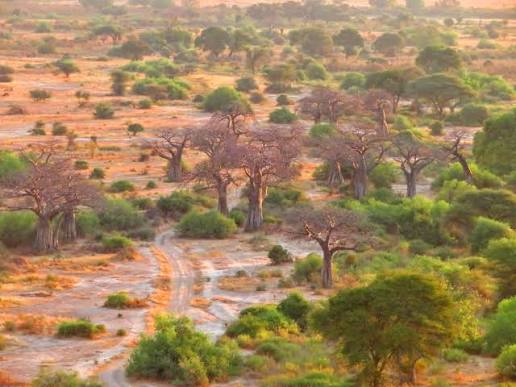
Ancient baobab trees in Ruaha National Park creating surreal dry landscape scene
Light, land, and changing perception
One of the impressions of Ruaha Baobab Forest is how dramatically light changes the environment.
Morning light enters softly, showing texture on the bark and dust patterns on the ground.
Midday heat makes colors flat. Creates a stark contrast between tree shadows and exposed earth.
Evening light, however, changes everything.
At sunset, baobabs become silhouettes. Their shapes turn simple and bold like drawings against a glowing horizon.
This is when the forest feels most amazing.
The landscape seems like a place and more like a stage where time slows down.
Photographers often say it’s hard to capture this atmosphere
The challenge is not just technical.
It’s emotional.
The scene changes so quickly that no single picture feels complete.
What you remember most is not what you saw but how the air felt at that moment, warm and dry with a slight cooling shift, as the sun sets.
Wildlife interactions within the baobab landscape
The baobab forest looks still. It is actually part of a big system that is always moving. In Ruaha National Park, big animals like elephants and buffalo, giraffes, and different kinds of antelopes walk through these spaces all the time. They move from water to food. They use the baobab trees to find their way.
The baobab trees are like landmarks. Predators like lions also use these paths. They follow the routes as the other animals. Lions like to rest in the shade of trees when it is hot outside. They wait until it is cooler to start moving. Because the land is so open, you can see the animals clearly. There are no trees or bushes to block your view.
The baobab trees help the animals in various ways. Sometimes birds, bats, and insects live in the parts of the trees. When the trees drop fruit, smaller animals come to eat it. The fruit is very good for them. Even when the trees are not growing, they still help the animals.
Cultural memory and land identity
The baobab forest in Ruaha is a special place. The trees have a lot of meaning for the people who live nearby. In stories and legends, the baobab trees are symbols of strength and memory. They live for a long time, much longer than people. That is why they are markers for the community.
For the people who live near the park, the baobab trees are like signs. They help people find their way. They are also connected to memories and stories. People tell stories about the trees. They pass these stories down to their children. The stories are about events like droughts, migrations, and community gatherings.
When you visit the forest, you are not just looking at nature. You are also seeing a place where people have lived for a time. The forest is connected to the people’s history and the natural world.
Seasonal transformation of the baobab forest
The baobab forest in Ruaha looks different in different seasons. When it is dry, the ground is light brown and dusty. You can see the trees clearly. The landscape looks very big and open.
When the rain comes, everything changes. The ground gets darker and pools of water form. New plants start to grow. The baobab trees are always there. Everything around them is changing. The grass grows fast. There are more insects and birds.
The seasons make the forest feel always changing. It is never the same. Sometimes it is dry and empty. Sometimes it is green and full of life. Each season shows you a side of the forest.
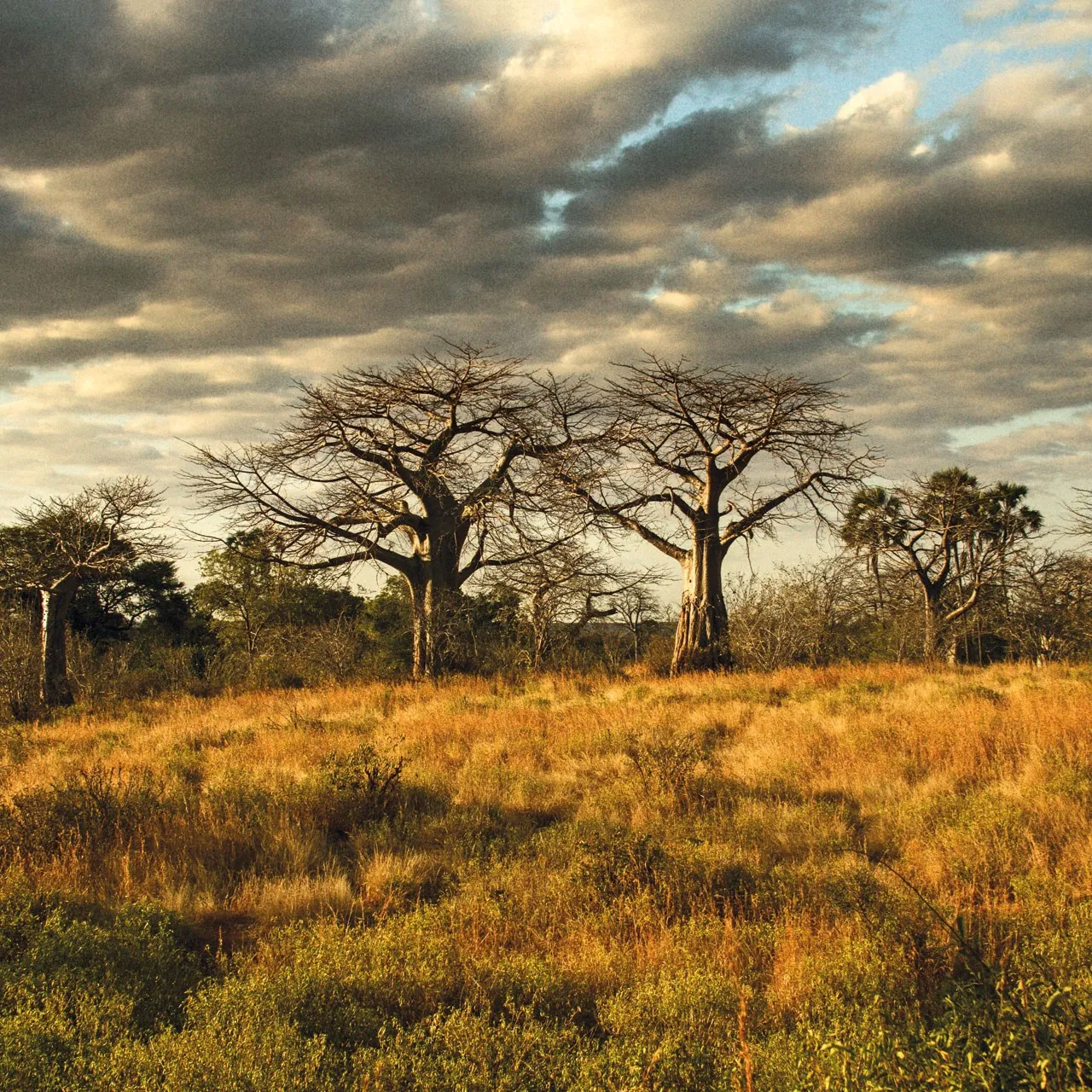
Ruaha Baobab Forest showcases the surreal beauty of the East African landscape
A place that changes how you pay attention
When you spend time in Ruaha Baobab Forest, which’s one of the really cool landscapes in East Africa, it changes how your attention works. At first, you look for things that are moving or a lot of details to look at. After a while, you start to notice small things that are changing. Like when the shadows get a little longer.. When a bird lands for a second inside a hollow tree trunk.. When dust blows across the ground in a thin line.
The more time you spend there, the more natural it feels to pay attention in this slower way. The landscape helps you be patient without making you feel like you have to be. There is nothing about the pace of things. It is about the heat, how far things are, and the natural cycles that keep going even when people are not around.
In Ruaha National Park, this sense of time is the same in places, but the baobab forest makes it feel even stronger. The trees are like anchors, giving your eyes something to focus on in an open space that is always changing.
being and how big it is
Ruaha Baobab Forest, which is one of the really cool landscapes in East Africa, leaves a big impression on you because it takes away all the distractions. It shows you how big things are in a simple way with distance, silence, and the shape of things all right there in front of you. The baobab trees have been standing there for a time, watching the environment change around them as the heat, rain, and movement all come and go.
What stays with you is not one moment but a memory of the whole space that has a lot of layers. The big open horizons, the bark on the trees, the way the light changes, and the quiet movement all come together to make a place that feels solid and big at the same time. The forest does not need you to think about what it means. It just. That is what stays with you long after you leave Ruaha Baobab Forest.


